











 Secure payments
Standard refund policy
Trade Assurance
Secure payments
Standard refund policy
Trade Assurance
| Product Type | Memory Module |
|---|---|
| Compliance Standards | RoHS,WEEE |
| Memory Capacity | 8 GB |
| Memory Technology | DDR4 |
| Product Voltage | 1.2V |
| RAM Speed | 2666MHz |
| RAM Standard | DDR4-2666/PC4-21300 |
| Error Identifying | ECC |
| Signal Type | Registered |
| Column Access Strobe (CAS) | CL19 |
| Rank | Dual Rank x8 |
| Quantity of Pins | 288-pin |
| RAM Genre | RDIMM |
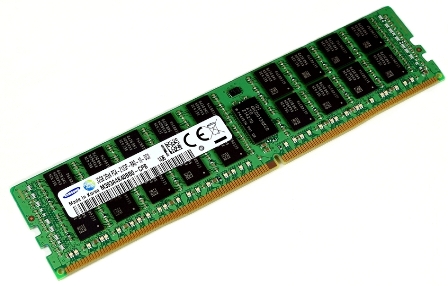
This RDIMM is purpose-built for server platforms, leveraging registered signal buffering and ECC to ensure robust data integrity in virtualization, in-memory databases, and other mission-critical workloads. Its dual-rank x8 organization enhances memory bandwidth utilization at DDR4-2666, while the CL19 latency provides a balanced profile for consistent 24/7 operation in multi-DIMM configurations.
1. Registered clock driver buffers command and address signals, enabling large memory populations essential for dense virtualization hosts without signal integrity degradation.
2. ECC error correction safeguards data integrity by detecting and fixing single-bit errors, critical for financial databases and long-running computational tasks.
3. Dual Rank x8 organization sustains interleaved access across banks, delivering consistent throughput under the heavy, mixed workloads of multi-tenant environments.
4. Low operating voltage reduces power draw per DIMM, directly improving data center power usage effectiveness and lowering cooling overhead in rack-scale deployments.
5. High transfer speed ensures ample memory bandwidth to keep pace with modern multi-core server CPUs, accelerating in-memory analytics and reducing latency in cache-intensive applications.
The M393A1G43EB1-CTD6Q is an 8GB DDR4-2666 ECC Registered DIMM built for server environments where data integrity and uptime are paramount. In a virtualized cluster, its ECC silently corrects single-bit errors—preventing cosmic-ray-induced bit flips from crashing critical services or corrupting VM states. Meanwhile, the registered buffer stabilizes command/address lines, enabling denser memory configurations without overloading the CPU memory controller, so your hypervisor can confidently scale to high capacities. For in-memory databases like Redis or SAP HANA, every transaction resides in RAM. A single undetected error could propagate incorrect financial results or lose session data; ECC eliminates that risk. The dual-rank x8 layout and 2666MT/s bandwidth interleave access to boost throughput for real-time analytics. Finally, the low 1.2V supply reduces power and cooling overheads in dense data centers, directly lowering TCO. This memory forms a resilient, high-performance foundation.
General Virtualization
For a typical hypervisor host running multiple moderate VMs, populate at least four of these 8 GB RDIMMs (32 GB total) across balanced memory channels to provide headroom for memory overcommitment. Use identically specced modules in a symmetric configuration (e.g., two DIMMs per channel on a dual-socket system) to maintain NUMA locality and consistent ECC performance. This density works well for entry-level virtualization nodes where cost per gigabyte is a priority.
In-Memory Database
In-memory databases such as Redis or SAP HANA demand both capacity and data integrity. Equip the server with a full set of these 8 GB registered ECC modules — typically 16 or 24 sticks across all channels — to reach 128–192 GB while leveraging the dual-rank design for better bandwidth utilization. Populate channels evenly and enable mirroring or sparing if mission-critical uptime requires additional fault tolerance beyond standard ECC.
High-Performance Computing
HPC clusters prioritizing memory bandwidth per core should install these modules in multiples of the channel count, usually 6 or 8 DIMMs per socket, to saturate the memory controller. The 2666 MHz registered ECC specification ensures stable operation under sustained parallel workloads. For capacity-light, bandwidth-sensitive jobs, deploy one dual-rank DIMM per channel to maximize interleaving benefits, while scaling to two DIMMs per channel only when dataset size growth justifies the potential latency trade-off.
This server memory is stringently validated and compatible with Dell PowerEdge R740, HPE ProLiant DL380 Gen10, Lenovo ThinkSystem SR650.
Q: Can I mix this M393A1G43EB1-CTD6Q with other memory modules of different brands or speeds?
A: Mixing is not recommended. For server stability, use identical RDIMMs with the same speed, rank, and ECC. Mixed modules often cause POST failures or unpredictable errors.
Q: Is this memory compatible with my system?
A: It is designed for servers using Intel Xeon Scalable or AMD EPYC platforms that support DDR4-2666 Registered ECC modules. Confirm your motherboard accepts 288-pin RDIMMs and the PC4-21300 standard.
Q: What is the recommended DIMM population order for optimal performance?
A: Follow your server board’s guide. Typically, populate identical dual-rank DIMMs symmetrically across memory channels (e.g., A1 and B1) to enable balanced interleaving and maximum throughput.
Q: Does this module support overclocking or XMP profiles?
A: No. This is a JEDEC-compliant Registered ECC DIMM built for 2666MHz operation. Server memory prioritizes data integrity; overclocking and XMP are not supported.
Q: What warranty and typical failure rate can I expect?
A: It includes a 1-year warranty. Enterprise DDR4 RDIMMs like this exhibit very low annualized failure rates, typically under 0.5% in properly cooled, 24/7 operating environments.