











 Secure payments
Standard refund policy
Trade Assurance
Secure payments
Standard refund policy
Trade Assurance
| Product Type | Memory Module |
|---|---|
| Memory Capacity | 8 GB |
| Memory Technology | DDR4 |
| Product Voltage | 1.2V |
| RAM Speed | 2933MHz |
| RAM Standard | DDR4-2933/PC4-23400 |
| Error Identifying | ECC |
| Signal Type | Registered |
| Column Access Strobe (CAS) | CL21 |
| Rank | Single Rank x8 |
| Quantity of Pins | 288-pin |
| RAM Genre | RDIMM |
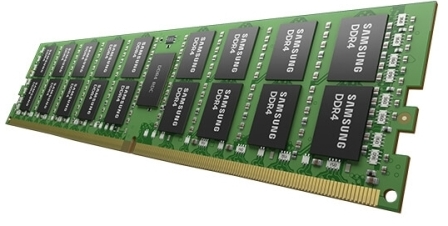
Designed for server-class platforms, this Samsung 8GB DDR4-2933 Registered DIMM (RDIMM) with ECC is optimized for memory-intensive enterprise workloads such as virtualization, in-memory databases, and mission-critical applications where data integrity is paramount. Its single-rank x8 configuration with CL21 latency and 1.2V operating voltage provides a balance of low power consumption and stable signal integrity through the registered clock driver, ensuring reliable performance in dense multi-DIMM configurations.
1. ECC error correction proactively detects and corrects single-bit data errors, ensuring memory integrity that is non-negotiable for financial transactions and 24/7 database operations.
2. Registered signal type buffers the command and address lanes, stabilizing signal integrity across fully loaded memory channels in multi-socket server configurations.
3. Single Rank x8 organization reduces electrical loading on the memory bus, enabling reliable 2933MHz operation even when all 24 DIMM slots are populated in a storage server.
4. 8GB capacity per module offers a finely gradated building block, allowing precise right-sizing of memory for containerized microservices without wasting resources.
5. 2933MHz clock speed pushes peak transfer bandwidth to roughly 23.5 GB/s per channel, directly shrinking processing time for in-memory analytics datasets.
When you deploy a virtualized cluster or an in-memory database like SAP HANA or Redis, every nanosecond of latency and every undetected bit flip carries real financial risk. The Samsung M393A1K43DB1-CVFBQ, an 8GB DDR4-2933 Registered DIMM, is purpose-built to neutralize those risks. Its ECC engine continuously corrects single-bit memory errors, which is critical when a single faulty cell in a hypervisor host could silently corrupt dozens of virtual machines and force a server restart during peak transaction hours. The registered architecture buffers command and address signals through an on-DIMM driver, allowing your server to populate all 24 or more memory slots without signal degradation; this is the difference between confidently scaling a 768 GB virtualization farm and facing unexplained random crashes due to electrical loading. With a 2933 MT/s transfer rate, tight CL21 timing, and a single-rank x8 design, memory interleaving is more efficient, giving your database engine the low-latency, high-bandwidth access pattern needed for real-time analytics on terabytes of data. It runs at just 1.2 V, trimming power consumption and thermal output across a dense rack so that cooling overhead shrinks and operational stability rises. For your data center, that means fewer outages, lower TCO, and uninterrupted performance under memory-intensive workloads.
General Virtualization
For a typical virtualization host running multiple VMs, balance capacity and memory bandwidth. Start with six or eight identical 8GB RDIMMs (48–64 GB total) to populate one channel per socket, ensuring registered ECC reliability. Scale by adding matching modules in sets of six or eight to maintain balanced memory channels and avoid performance penalties.
In-Memory Database
In-memory databases like Redis or SAP HANA demand large, low-latency memory pools. Use the maximum supported DIMMs per server—often 12 or 16 of these 8GB RDIMMs to reach 96–128 GB. Configure evenly across all channels and sockets for symmetric access, and favor single-rank modules like this to maintain high 2933 MHz speed under full population, reducing latency for real-time analytics.
High-Performance Computing (HPC)
HPC workloads benefit from high bandwidth and ECC integrity. Populate all memory channels per node with one 8GB RDIMM per channel (typically 8 modules for 64 GB) to maximize channel interleaving and 2933 MT/s throughput. For capacity-hungry simulations, double the count to two DIMMs per channel (16 modules, 128 GB). Monitor rank limits—using single-rank x8 DIMMs helps keep speeds up in two-DIMM-per-channel configurations.
Rigorously tested for compatibility with Dell PowerEdge R740, HPE ProLiant DL380 Gen10, and Lenovo ThinkSystem SR650.
Q: Can I mix this M393A1K43DB1-CVFBQ with other memory modules of different brands or speeds?
A: Mixing is not recommended. Registered ECC DIMMs demand identical ranks, timings, and chipsets to maintain signal integrity. Mismatched modules can cause POST failures, instability, or silent data corruption in server workloads.
Q: Is this memory compatible with my system?
A: This is a DDR4-2933 ECC RDIMM for servers using Intel Xeon Scalable or AMD EPYC platforms. Verify your motherboard or server model supports 1.2V registered DIMMs and check the manufacturer’s Qualified Vendor List for this specific M393A1K43DB1-CVFBQ part.
Q: What is the recommended DIMM population order for optimal performance?
A: Follow the server’s motherboard guide. Typically, populate identical DIMMs per channel starting with the slot farthest from the CPU (often blue slots first). Balance memory across all memory channels to maximize throughput and maintain ECC efficiency.
Q: Does this module support overclocking or XMP profiles?
A: No. This JEDEC-compliant RDIMM operates strictly at 2933MHz with CL21 timings. Overclocking is not supported on registered server memory to ensure 24/7 data reliability and error correction functionality.
Q: What warranty and typical failure rate can I expect?
A: This module carries a one-year warranty. As a genuine Samsung RDIMM built to rigorous standards, its annualized failure rate is typically below 0.5% in properly cooled enterprise environments.