











 Secure payments
Standard refund policy
Trade Assurance
Secure payments
Standard refund policy
Trade Assurance
| Product Type | Memory Module |
|---|---|
| Memory Capacity | 64 GB |
| Memory Technology | DDR4 |
| Product Voltage | 1.2V |
| RAM Speed | 1600MHz |
| RAM Standard | DDR4-1600/PC4-12800 |
| Error Identifying | ECC |
| Signal Type | Registered |
| Column Access Strobe (CAS) | CL11 |
| Quantity of Pins | 276-pin |
| RAM Genre | CDIMM |
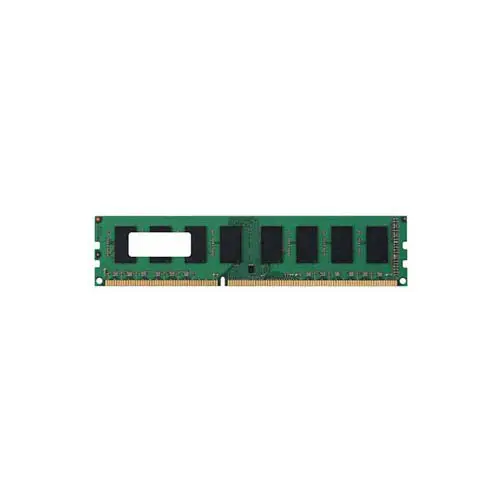
Designed for server environments, this 64GB DDR4-1600 Registered ECC CDIMM is purpose-built for memory-intensive workloads such as virtualization, in-memory databases, and mission-critical enterprise applications where data integrity is paramount. Its Registered signal type ensures stable operation under high-density configurations, while ECC technology provides single-bit error correction to prevent silent data corruption in 24/7 operation.
1. ECC memory detects and corrects single-bit errors automatically, preventing silent data corruption in financial transactions and database operations that demand 24/7 accuracy.
2. Registered signal type buffers command and address lines, allowing dense 64 GB modules per DIMM to coexist in high-capacity servers without signal degradation.
3. 64 GB per module maximizes virtualization density, enabling more virtual machines per physical host and reducing the need for costly server expansion.
4. 1.2 V operating voltage trims thousands of watts across a full rack over time, lowering both electricity bills and cooling overhead in data centers.
5. 1600 MHz clock speed sustains a balanced throughput per channel, supporting consistent performance for memory-constrained workloads like in-memory analytics while maintaining energy efficiency.
When you are managing a virtualized server cluster or running an in-memory database like SAP HANA, the DDR4 Registered DIMM M350A8K43BB0-CK0M0 is not simply a component—it is your final safeguard against costly silent data corruption and unplanned downtime. Its ECC technology actively detects and corrects single-bit errors caused by background radiation, ensuring that every financial transaction or customer record committed to memory remains mathematically pristine. The registered signal buffer stabilizes the electrical load across densely populated server boards, so you can confidently populate all channels with this substantial 64 GB module without sacrificing signal integrity—even under the heaviest multi-tenant workloads. In a hypervisor hosting dozens of virtual machines, that directly translates to fewer memory-related crashes and smoother live migrations. Meanwhile, the low 1.2 V operating voltage compounds across a full rack of servers, noticeably reducing power draw and cooling costs while keeping the memory thermally stable during extended batch processing. For your in-memory database, the 64 GB density allows larger datasets to reside closer to the CPU, slashing storage I/O latency and accelerating real-time analytics; combined with ECC and registered reliability, it means your critical services stay responsive and accurate around the clock.
Based on the specifications — DDR4, ECC, Registered, 276-pin CDIMM — this is a server-class memory module. The 64GB capacity per stick, 1.2V low voltage, and buffered architecture make it ideal for dense, reliable enterprise deployments. Below are capacity planning recommendations for typical server workloads.
General Virtualization
For a dual-socket server with 16 DIMM slots, populate at least one DIMM per channel (8 modules, 512GB total) to balance memory bandwidth and density. This configuration comfortably supports 40–60 virtual machines with typical resource allocations. If using memory overcommitment, prioritize fully populating channels with these 64GB RDIMMs to increase headroom without sacrificing performance.
In-Memory Database
Aim for population across all memory channels with identical 64GB registered DIMMs to achieve maximum capacity and interleaving. A 16-DIMM server fully loaded provides 1TB of RAM, enough to hold large datasets entirely in memory. Configure memory as a single uniform array to avoid NUMA latency penalties; always install equal capacity in all sockets for symmetrical access.
High-Performance Computing (HPC)
Balance bandwidth and rank count by installing one or two 64GB DIMMs per channel. A typical dual-processor node with 8 populated slots (512GB) delivers sufficient memory bandwidth for most MPI workloads while keeping per-core memory adequate. For bandwidth-sensitive jobs, use two DIMMs per channel, but verify the platform’s support for dual-rank configuration to avoid speed downgrades.
This rigorously tested server memory is compatible with Dell PowerEdge R730, HP ProLiant DL380 Gen9, and Lenovo x3650 M5.
Q: Can I mix this M350A8K43BB0-CK0M0 with other memory modules of different brands or speeds?
A: Mixing with different brands or speeds is strongly discouraged for registered ECC memory. Inconsistent timings and signal integrity issues can compromise server stability and lead to data corruption.
Q: Is this memory compatible with my system?
A: This DDR4-1600 Registered ECC CDIMM suits Intel Xeon E5 v3/v4 or select AMD EPYC platforms. Verify your server board supports 64GB LRDIMM/RDIMMs at 1.2V with 276-pin configuration.
Q: What is the recommended DIMM population order for optimal performance?
A: Follow your server board manual; generally, populate identical DIMMs per channel starting from the furthest slot from the CPU. Balanced interleaving across memory channels maximizes bandwidth and reduces latency.
Q: Does this module support overclocking or XMP profiles?
A: No. As an enterprise Registered ECC module, it adheres strictly to JEDEC DDR4-1600/PC4-12800 standards. XMP and overclocking are not supported to guarantee data integrity and 24/7 stability.
Q: What warranty and typical failure rate can I expect?
A: This module includes a 1-year warranty. Built with server-grade components and rigorous screening, it exhibits extremely low annualized failure rates under continuous operation in compliant environments.