











 Secure payments
Standard refund policy
Trade Assurance
Secure payments
Standard refund policy
Trade Assurance
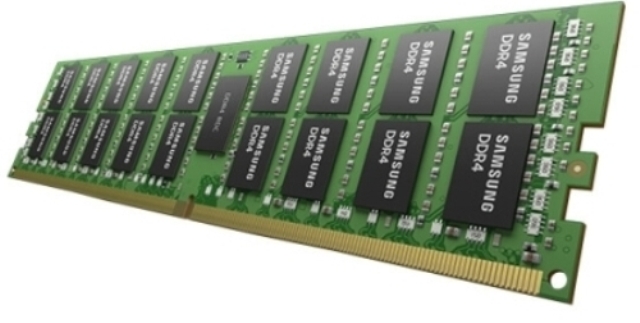
| Product Type | Memory Module |
|---|---|
| Memory Capacity | 256 GB |
| Memory Technology | DDR4 |
| Product Voltage | 1.2 V |
| RAM Speed | 2933 MHz |
| RAM Standard | DDR4-2933/PC4-23400 |
| Error Identifying | ECC |
| Signal Type | Registered |
| Column Access Strobe (CAS) | CL21 |
| Rank | Octal Rank x4 |
| Quantity of Pins | 288-pin |
| RAM Genre | RDIMM |
Designed for enterprise servers, this 256GB DDR4-2933 Registered ECC module with an octal-rank x4 organization delivers exceptional memory density and data integrity, making it ideal for virtualization farms and in-memory databases that demand maximum capacity and reliability. The registered signal type combined with ECC ensures robust electrical stability on high-capacity memory channels, while the CL21 latency and octal-rank architecture optimize bandwidth utilization under heavy, multi-threaded workloads.
1. The 256GB capacity allows a single server to host hundreds of virtual machines or massive in-memory databases, drastically reducing hardware sprawl.
2. ECC protection proactively corrects single-bit memory errors, safeguarding transactional integrity and preventing silent data corruption in mission-critical workloads.
3. Registered signal buffering stabilizes command and address lines at high capacities, enabling fully populated server boards to scale without compromising signal integrity.
4. Octal Rank x4 construction maximizes vertical density per module, delivering the deepest memory footprint for memory-bound analytics and virtualization hosts.
5. 2933 MT/s speed combines high throughput with power-efficient operation, efficiently feeding multi-core CPUs in scale-out data-center deployments.
When you are running a dense virtualization cluster or an in-memory database like SAP HANA, the M386ABG40M5B-CYFB0 256GB DDR4-2933 RDIMM becomes the foundation of your uptime and performance. Its four defining characteristics directly answer the most painful risks you face. First, ECC error correction actively prevents silent data corruption. A single bit flip in a hypervisor’s memory can crash dozens of virtual machines or poison your database; ECC detects and corrects those errors in real time, keeping financial transactions and customer records provably accurate. Second, the registered signal buffer stabilizes massive memory populations. When you fully populate 24 DIMM slots in a virtualization host, the register re-drives command signals so every module sees a clean, synchronized clock, eliminating the instability that would otherwise crash an entire node. Third, the Octal Rank x4 architecture is not just a density enabler — it multiplies internal bank groups, dramatically raising concurrent access parallelism. This means your memory-resident analytics experience up to 23.4 GB/s of bandwidth with far lower queuing delays, turning random lookup storms into smooth throughput. Finally, the monolithic 256GB capacity lets you pack 8TB of RAM into a standard 32-slot 2U server, eliminating the storage I/O bottleneck entirely. You consolidate vastly more virtual machines on fewer physical servers, or load your entire transactional database into a single memory tier for deterministic, microsecond response. Every design choice in this module translates directly to fewer server reboots, zero data corruption, and headroom for your most latency-sensitive workloads.
General Virtualization
Deploy 256 GB RDIMMs in a balanced multi-channel configuration—typically eight modules per dual-socket server to populate all memory channels. This density supports 30–40 moderate VMs per host without NUMA penalties, and the registered ECC design ensures data integrity under sustained consolidation workloads. Leverage the 2933 MT/s speed to keep latency low for mixed tenant applications.
In-Memory Database
Maximize capacity with fully populated DIMM slots, using 256 GB octal-rank modules to achieve 4–6 TB per server for large Redis or SAP HANA footprints. The low 1.2 V operating voltage reduces thermal strain when all banks are active, while CL21 latency and registered signaling maintain stable access times under extreme throughput. Pair with balanced memory interleaving to avoid rank starvation during high-concurrency queries.
High-Performance Computing
Install modules in a symmetric population pattern—one DIMM per channel across two processors—to maximize bandwidth-sensitive workloads like CFD or molecular dynamics. The DDR4-2933 Registered ECC interface guards against silent data corruption during multi-day simulation runs, and octal-rank construction allows dense nodes without sacrificing per-core memory bandwidth. Plan for 1–2 spare modules per rack for rapid fault recovery.
Strictly tested for compatibility with servers including Dell PowerEdge R760, HPE ProLiant DL380 Gen10, and Lenovo ThinkSystem SR650.
Q: Can I mix this M386ABG40M5B-CYFB0 with other memory modules of different brands or speeds?
A: Mixing is not advised for server environments. Non-identical DIMMs may compromise ECC integrity and system stability. Always use identical part numbers to ensure proper registered memory operation.
Q: Is this memory compatible with my system?
A: This 256GB DDR4-2933 ECC RDIMM is built for Intel Xeon Scalable and AMD EPYC platforms. Confirm your server board supports 256GB octal-rank x4 DIMMs and check the vendor's qualified list.
Q: What is the recommended DIMM population order for optimal performance?
A: Follow your server’s population guide. Typically, populate identical DIMMs evenly across all memory channels, starting with the first slot in each channel, to balance interleaving and maximize bandwidth.
Q: Does this module support overclocking or XMP profiles?
A: No. This is a JEDEC-compliant registered server DIMM. Overclocking and XMP are disabled to maintain strict data reliability and uptime, which are critical in enterprise operations.
Q: What warranty and typical failure rate can I expect?
A: It carries a 1-year warranty. Enterprise ECC RDIMMs demonstrate extremely low failure rates when operated within specified voltage and thermal limits, ensuring reliable 24/7 operation.