











 Secure payments
Standard refund policy
Trade Assurance
Secure payments
Standard refund policy
Trade Assurance
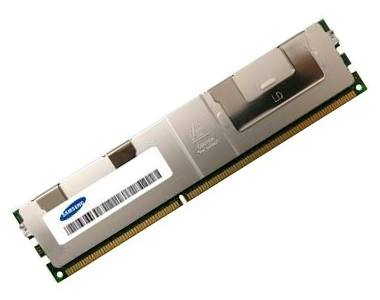
| Model | M386B4G70DM0-CMA3Q |
|---|---|
| Product Type | Memory Module |
| Compliance Standards | CE,WEEE,RoHS |
| Memory Capacity | 32 GB |
| Memory Technology | DDR3 |
| Product Voltage | 1.5V |
| RAM Speed | 1866MHz |
| RAM Standard | DDR3-1866/PC3-14900 |
| Error Identifying | ECC |
| Signal Type | Registered |
| Column Access Strobe (CAS) | CL13 |
| Rank | Quad Rank x4 |
| Quantity of Pins | 240-pin |
| RAM Genre | RDIMM |
Designed for server platforms, this 32GB DDR3-1866 RDIMM excels in memory-intensive workloads such as virtualization and in-memory databases where data integrity is critical. Its registered signal architecture and ECC ensure reliable signal integrity and error correction across the quad-rank x4 configuration, enabling high-capacity deployments without sacrificing stability.
1. 32GB capacity per module enables dense memory configurations in dual-socket servers, supporting more virtual machines and larger in-memory databases without scaling node count.
2. ECC error correction eliminates silent data corruption, a must-have for financial transactions and long-running analytics where data integrity directly impacts business outcomes.
3. Registered signal buffering decouples the address bus from the memory controller, allowing fully populated 24-DIMM systems to operate stably under heavy load.
4. Quad Rank x4 organization drives higher bank-level parallelism, keeping throughput consistent across simultaneous OLTP queries and backup jobs on a single physical host.
5. 1866MT/s throughput balances bandwidth and latency for multi-core Xeon processors, ensuring responsive application delivery without excessive power draw in rack-dense environments.
The M386B4G70DM0-CMA3Q is a registered DDR3 RDIMM built for servers, where uptime and data integrity directly impact business continuity. Its four defining characteristics solve real pain points in virtualized clusters and in-memory databases.
First, ECC error correction actively detects and corrects single-bit memory errors caused by background radiation or electrical noise. In a dense virtualization host running dozens of VMs, a silent bit flip in a guest’s kernel memory can corrupt transactions or crash services—ECC eliminates that risk, keeping financial or healthcare workloads accurate. Second, the registered signal type uses an onboard buffer to stabilize command and address lines. This lets you fully populate all channels without signal degradation, critical when scaling a database server to 256 GB or more for large Redis or SAP HANA instances. Third, the quad-rank x4 organization packs 32 GB onto a single module, maximizing capacity per slot. With limited DIMM slots in 1U or 2U servers, this density postpones costly forklift upgrades and leaves room for future expansion. Finally, the 1866 MHz speed at CL13 delivers the bandwidth to stream hot data sets at near-CPU speed, reducing query latency under concurrent loads. Together, these features ensure that your mission-critical infrastructure remains stable, responsive, and cost-efficient—exactly what data centers demand.
General Virtualization
For general virtualization hosts, capacity per server dictates module count. With 32 GB RDIMMs, deploying six to eight modules per dual-socket system (192–256 GB total) balances VM density and cost. Populate all memory channels symmetrically (e.g., one DIMM per channel) to sustain 1866 MT/s throughput and avoid NUMA imbalances.
In-Memory Database
In-memory databases demand maximum capacity and fault tolerance. Fully populate each memory channel with a single quad-rank 32 GB RDIMM, achieving 256 GB or 384 GB on typical two-socket boards while preserving rated speed. Leverage ECC and registered signaling to prevent data corruption during large, sustained writes, and plan for identical spare modules to minimize downtime.
High-Performance Computing (HPC)
HPC workloads favour bandwidth over raw density. Configure one 32 GB RDIMM per channel across all memory controllers to deliver peak memory bandwidth with 1.5 V operation. Avoid mixing quad-rank DIMMs on the same channel, as speed typically downshifts. For capacity-optimized nodes, populate two DIMMs per channel knowing that 1866 MHz may degrade; test memory-bound code scaling before finalizing.
Rigorously tested, compatible with Dell PowerEdge R720/R620, HP ProLiant DL380p Gen8, Lenovo ThinkServer RD630, and similar DDR3 ECC registered servers.
Q: Can I mix this M386B4G70DM0-CMA3Q with other memory modules of different brands or speeds?
A: Mixing is not recommended. This registered ECC module must match existing RDIMMs in speed, rank, and timings to maintain stability. Server platforms strictly require identical memory for validated compatibility.
Q: Is this memory compatible with my system?
A: This DDR3 registered ECC RDIMM is designed for Intel Xeon E5 and AMD Opteron 6300 series platforms. Verify your server board supports 1866MHz, quad-rank, 1.5V modules and 240-pin RDIMM slots.
Q: What is the recommended DIMM population order for optimal performance?
A: Populate identical quad-rank RDIMMs per channel following the server manual's guidelines. Typically, populate the farthest slot from the CPU first, ensuring balanced memory across memory channels to maximize bandwidth.
Q: Does this module support overclocking or XMP profiles?
A: No, this server RDIMM adheres to JEDEC specifications without XMP. Registered ECC memory is engineered for data integrity and 24/7 stability, not overclocking.
Q: What warranty and typical failure rate can I expect?
A: This module comes with a 1-year warranty. Enterprise-grade DDR3 RDIMMs exhibit very low failure rates under proper operating conditions, typically with an annualized failure rate below 0.5%.