











 Secure payments
Standard refund policy
Trade Assurance
Secure payments
Standard refund policy
Trade Assurance
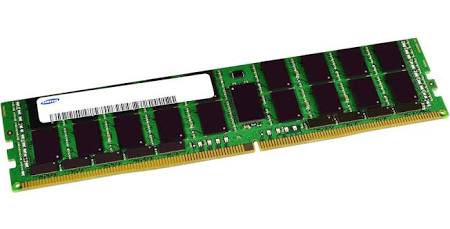
| Model | M393A1G40EB1-CPB0Q |
|---|---|
| Product Type | Memory Module |
| Compliance Standards | CE,WEEE,RoHS |
| Memory Capacity | 8 GB |
| Memory Technology | DDR4 |
| Product Voltage | 1.2V |
| RAM Speed | 2133MHz |
| RAM Standard | DDR4-2133/PC4-17000 |
| Error Identifying | ECC |
| Signal Type | Registered |
| Column Access Strobe (CAS) | CL15 |
| Rank | Single Rank x4 |
| Quantity of Pins | 288-pin |
| RAM Genre | RDIMM |
This RDIMM is engineered for server platforms handling virtualization and in-memory databases, where its Single Rank x4 configuration delivers lower latency and improved signal integrity for dense memory configurations. The registered ECC design ensures robust data integrity and system stability, making it the preferred choice for mission‑critical enterprise workloads.
1. ECC support transparently detects and corrects single-bit errors, preserving data integrity for financial transactions and virtual machine memory states in always-on server environments.
2. Registered signal buffering stabilizes command and address lines across fully populated memory channels, enabling high-capacity deployments without compromising system reliability under heavy virtualization loads.
3. RDIMM form factor ensures compatibility with mainstream dual-socket server platforms, delivering the predictable, validated behavior that data center operations depend on for mission-critical workloads.
4. Single Rank x4 configuration reduces per-channel electrical loading, allowing the memory controller to sustain higher clock margins and consistent bandwidth even when multiple DIMMs are installed in dense server nodes.
5. DDR4-2133 speed grade provides a balanced 17 GB/s per-channel throughput, efficiently handling moderate VM density and multi-tenant database queries without introducing unnecessary power draw.
The M393A1G40EB1-CPB0Q is a server‑grade Registered ECC DDR4-2133 RDIMM engineered for data centers where minutes of downtime cascade into revenue loss. In virtualized clusters, a single cosmic‑ray bit‑flip can corrupt the hypervisor and crash dozens of VMs—ECC actively corrects these single‑bit errors in real time, keeping your entire virtualized stack intact. When you populate all memory channels to drive hundreds of VMs or an in‑memory database like Redis, the Registered architecture buffers control signals so signal integrity never falters, even under maximum load. Its single‑rank x4 DRAM organization further collaborates with ECC to handle a whole DRAM chip failure without data loss—a lifesaver for mission‑critical database nodes that demand 24/7 uptime. At 2133 MHz with CL15 latency and a mere 1.2 V, the module also delivers responsive 17 GB/s bandwidth while slashing power and cooling overhead, directly shrinking operational expenses in dense racks. For the database administrator and the infrastructure manager, that means unwavering data fidelity, safer virtualization density, and a tangible improvement in total cost of ownership.
This 288‑pin DDR4‑2133 Registered ECC module (M393A1G40EB1‑CPB0Q) is designed for server platforms. Its 8 GB capacity, single‑rank x4 organization, and RDIMM signalling make it suitable for the capacity‑planning scenarios below.
General Virtualization
Populate one 8 GB RDIMM per memory channel in a dual‑socket server—typically 12 modules for 96 GB of balanced capacity. This configuration delivers consistent latency, avoids NUMA imbalances, and supports moderate VM density. If extra headroom is needed, add a second identical DIMM per channel, accepting a slight drop in command rate.
In-Memory Database
Maximise capacity by populating all available DIMM slots; for example, fill 24 slots across a dual‑socket system to reach 192 GB. Such a setup suits small‑ to mid‑size in‑memory datasets, though production workloads often demand higher‑capacity modules. Always install identical DIMMs per channel to preserve full ECC protection and predictable access times.
High Performance Computing
Install precisely one 8 GB RDIMM per channel—12 modules giving 96 GB on a typical dual‑socket node—to maximise memory bandwidth. The single‑rank x4 design and registered signaling keep latency low under heavy loads. Refrain from populating a second DIMM per channel, as this forces 2T command timing and reduces throughput for bandwidth‑sensitive HPC applications.
Strictly tested, compatible with Dell PowerEdge R760, HPE ProLiant DL380 Gen10, Lenovo ThinkSystem SR650.
Q: Can I mix this M393A1G40EB1-CPB0Q with other memory modules of different brands or speeds?
A: It is strongly recommended to use identical modules (same model, speed, rank, and timings) to ensure stability. Mixing different brands or speeds may cause signal integrity issues and system instability on servers.
Q: Is this memory compatible with my system?
A: This DDR4-2133 Registered ECC RDIMM is compatible with select Intel Xeon E5-2600 v3/v4 and AMD EPYC platforms. Please verify your motherboard’s qualified vendor list (QVL) for full support.
Q: What is the recommended DIMM population order for optimal performance?
A: Follow your server’s motherboard manual. Typically, populate identical DIMMs in each memory channel, starting with the farthest slot from the CPU (e.g., A1, B1 for dual-channel) to maximize interleaving.
Q: Does this module support overclocking or XMP profiles?
A: No. This is an enterprise-grade registered DIMM with JEDEC-standard SPD: no XMP or overclocking support. It operates only at specified 2133MHz/CL15 for data integrity and stability.
Q: What warranty and typical failure rate can I expect?
A: This module comes with a 1-year warranty. It is built with Samsung DRAM, delivering an extremely low annualized failure rate (AFR) typical for enterprise memory, ensuring reliable 24/7 operation.