











 Secure payments
Standard refund policy
Trade Assurance
Secure payments
Standard refund policy
Trade Assurance
| Product Type | Memory Module |
|---|---|
| Memory Capacity | 8 GB |
| Memory Technology | DDR4 |
| Product Voltage | 1.2 V |
| RAM Speed | 2400 MHz |
| RAM Standard | DDR4-2400/PC4-19200 |
| Error Identifying | ECC |
| Signal Type | Registered |
| Column Access Strobe (CAS) | CL17 |
| Rank | Single Rank x4 |
| Quantity of Pins | 288-pin |
| RAM Genre | RDIMM |
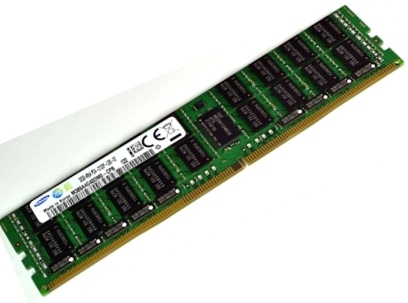
This is a server-class DDR4 module designed for enterprise platforms, ideal for virtualization and memory-intensive databases where data integrity is critical. Its Registered ECC design with single-rank x4 organization ensures stable signal integrity and strong error correction for 24/7 operation, while the DDR4-2400 speed at CL17 delivers a balance of latency and power efficiency at the standard 1.2V.
1. ECC correction safeguards transactional data integrity by detecting and correcting single-bit errors, preventing silent corruption in financial and database servers.
2. Registered clock driver stabilizes signal lines across fully populated memory channels, maintaining reliability under massive virtualization workloads.
3. Single Rank x4 organization reduces electrical loading on the memory controller, enabling consistent low-latency access for latency-sensitive cloud services.
4. 1.2V ultra-low operating voltage cuts power draw per DIMM, directly lowering cooling overhead in densely packed rack deployments.
5. DDR4-2400 bandwidth delivers a balanced throughput foundation, ensuring smooth multi-tenant performance in entry-level enterprise servers without exceeding thermal budgets.
In the data center, where every computation must be trusted, the Samsung M393A1G40EB1-CRC registered DIMM transforms server reliability from a specification into a business safeguard. Its ECC technology means that when a stray cosmic ray flips a memory bit inside a crowded virtualization cluster, the error is silently corrected before it can corrupt a live virtual machine or crash a financial transaction. Meanwhile, the registered architecture uses a dedicated clock buffer to stabilize the electrical load across dozens of DIMMs, which becomes indispensable when you fully populate a server for an in‑memory database like SAP HANA. Without this buffering, signal integrity degrades and capacity stalls. The single‑rank x4 organization further balances bandwidth and latency, letting a high‑frequency trading platform or dense container farm sustain consistent 2400‑MT/s throughput even under heavy simultaneous access. Running at a cool 1.2 V, it also reins in the thermal footprint of a rack‑scale deployment, cutting power draw without sacrificing the data integrity and uptime that define your service‑level agreements. This is not just memory; it is a risk‑engineered foundation for continuous operation.
This is a server-class memory module (DDR4-2400 ECC Registered RDIMM, 8GB, single-rank x4). Its ECC and registered signaling ensure data integrity and signal stability in multi-DIMM configurations, making it ideal for enterprise workloads. Below is capacity planning guidance for typical server scenarios.
General Virtualization
For general virtualization hosts, balance capacity and memory channels. Populate all memory channels with at least one identical DIMM per channel to maximize bandwidth. Starting with four modules (32GB) can support a modest number of VMs, while eight modules (64GB) handles denser consolidation. Always use ECC RDIMMs to prevent in-memory errors from compromising multiple tenants.
In-Memory Database
In-memory databases demand both high capacity and low latency. Using a server with many DIMM slots, fill all channels with identical 8GB modules to reach 64–128GB or more, while maintaining balanced interleaving. Configure memory at the maximum supported speed (2400 MT/s) and rely on ECC to protect critical data structures. Avoid mixing different ranks or capacities to preserve performance predictability.
High Performance Computing
HPC workloads prioritize memory bandwidth and error resilience. For dual-socket nodes, install one 8GB DIMM per channel (1DPC) to achieve the platform’s rated speed without clock downshifting. For example, 12 x 8GB (96GB) on a six-channel platform delivers uniform bandwidth. ECC and registered DIMMs maintain stability during long-running parallel computations where a silent data corruption could invalidate results.
Server DDR4 RDIMM rigorously tested; compatible with Dell PowerEdge R760, HPE ProLiant DL380 Gen10, Lenovo ThinkSystem SR650.
Q: Can I mix this M393A1G40EB1-CRC with other memory modules of different brands or speeds?
A: Mixing this Registered ECC RDIMM with different brands or speeds is strongly discouraged in server environments. It increases latency and may cause instability, negating the reliability benefits of ECC.
Q: Is this memory compatible with my system?
A: This 8GB DDR4-2400 ECC RDIMM requires a server motherboard supporting Registered DIMMs. Confirm your Intel Xeon E5-2600 v3/v4 or AMD EPYC platform explicitly validates 2400MT/s RDIMM operation.
Q: What is the recommended DIMM population order for optimal performance?
A: Follow your server board’s slot numbering: typically populate identical DIMMs into all blue slots first for balanced channel interleaving. With this single rank RDIMM, one DIMM per channel optimizes throughput.
Q: Does this module support overclocking or XMP profiles?
A: No. This server-grade Registered ECC DIMM adheres strictly to JEDEC DDR4-2400 standards for maximum data integrity. Overclocking or XMP is not supported; performance tuning is managed via BIOS timing adjustments only.
Q: What warranty and typical failure rate can I expect?
A: This module includes a one-year warranty. Enterprise RDIMMs like the M393A1G40EB1-CRC exhibit an extremely low annualized failure rate, typically below 0.5%, ensuring exceptional long-term reliability in 24/7 operation.