











 Secure payments
Standard refund policy
Trade Assurance
Secure payments
Standard refund policy
Trade Assurance
| Model | M393A1G40EB2-CTD |
|---|---|
| Product Type | Memory Module |
| Compliance Standards | EU RoHS,FCC |
| Memory Capacity | 8 GB |
| Memory Technology | DDR4 |
| Product Voltage | 1.2V |
| RAM Speed | 2666MHz |
| RAM Standard | DDR4-2666/PC4-21300 |
| Error Identifying | ECC |
| Signal Type | Registered |
| Column Access Strobe (CAS) | CL19 |
| Rank | Single Rank x4 |
| Quantity of Pins | 288-pin |
| RAM Genre | RDIMM |
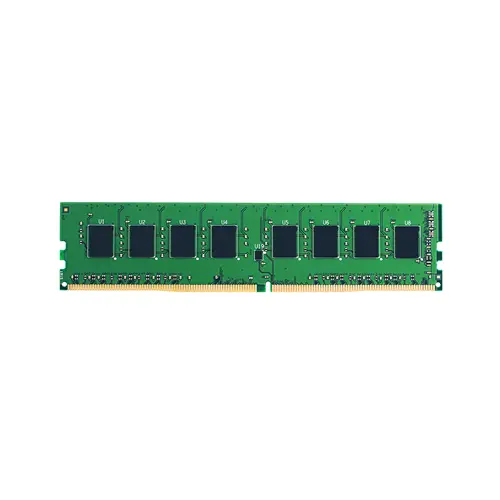
This Samsung M393A1G40EB2-CTD is a server-grade DDR4-2666 Registered DIMM with ECC, ideally suited for enterprise virtualization, in-memory databases, and data-integrity-critical workloads. Its single-rank x4 configuration and registered signal architecture ensure stable operation at high memory densities, while ECC and CL19 latency safeguard data reliability across 24/7 deployments.
1. ECC detects and corrects single-bit errors automatically, safeguarding transactional data integrity and preventing costly server downtime in mission-critical applications.
2. Registered clock driver reduces electrical load on the memory controller, enabling stable multi-DIMM configurations essential for dense virtualization platforms.
3. Single Rank x4 organization optimizes bank interleaving for predictable throughput, delivering consistent latency under mixed virtual machine workloads.
4. The 1.2V operating voltage lowers server power consumption and thermal output, directly decreasing cooling costs in large-scale data center deployments.
5. Running at 2666MT/s data rate, it supplies 21.3GB/s of bandwidth per channel, effectively feeding multi-core server CPUs for concurrent network services and in-memory databases.
The Samsung M393A1G40EB2-CTD is an 8GB DDR4-2666 Registered DIMM with ECC, purpose-built for server environments where data integrity and uptime are non-negotiable. In a virtualized cluster running dozens of VMs on a single host, a single undetected bit flip in DRAM can silently corrupt a hypervisor’s memory mapping, cascading into guest crashes and hours of forensic recovery. The module’s ECC engine actively corrects single-bit errors and detects multi-bit faults, turning unpredictable soft errors into a manageable, logged event rather than a 3 AM pager storm. Its Registered architecture buffers command and address signals, stabilizing the memory bus even as you populate all channels to scale capacity for in-memory databases like Redis or SAP HANA. Here, Single Rank x4 organization strikes a deliberate balance: the rank count avoids excessive electrical loading while delivering enough bank parallelism to sustain high throughput under the random, latency-sensitive access patterns of an OLTP engine. Operating at a cool 1.2V and compliant with EU RoHS and FCC standards, this RDIMM also reduces power draw per DIMM in dense 1U or 2U chassis, easing thermal headroom for CPUs to sustain boost frequencies. Whether you are consolidating containerized microservices or accelerating a financial trading database, this module provides the architectural reliability and signal integrity that commodity desktop memory simply cannot offer.
General Virtualization
For a typical hypervisor hosting multiple VMs, populate at least one DIMM per memory channel to balance capacity and bandwidth. A common configuration is six or eight identical M393A1G40EB2-CTD modules (48–64 GB total) operating at 2666 MHz, ensuring registered ECC reliability for live migration and fault tolerance. Reserve one spare DIMM per server to simplify future scaling.
In-Memory Database
Low-latency datasets demand the highest density with populated channels. Install two 8 GB RDIMMs per channel across all six or eight channels to reach 96–128 GB, maximizing rank interleaving while keeping CL19 latency predictable. ECC scrubbing protects in-memory tables from bit flips, and a balanced NUMA layout prevents remote memory access penalties.
High-Performance Computing
HPC workloads benefit from maximum memory bandwidth. Fill all channels evenly—deploying one M393A1G40EB2-CTD per channel on a dual-socket server achieves peak stream throughput and minimizes node contention. For capacity-bound simulations, scale to two single-rank x4 DIMMs per channel, using identically matched kits to maintain clock synchronization across thousands of cores.
Rigorously tested, this server memory is validated for Dell PowerEdge R740, HPE ProLiant DL380 Gen10, Lenovo ThinkSystem SR650, and more.
Q: Can I mix this M393A1G40EB2-CTD with other memory modules of different brands or speeds?
A: Mixing is not advised for server environments. Identical RDIMMs ensure signal integrity and reliability. Mismatched speeds force all modules to the lowest common speed, which may compromise ECC stability.
Q: Is this memory compatible with my Intel or AMD server platform?
A: This DDR4-2666 ECC RDIMM works with platforms supporting Registered ECC memory, such as Intel Xeon Scalable or AMD EPYC. Please consult your motherboard's QVL to confirm validated system compatibility.
Q: What is the recommended DIMM population order for optimal performance?
A: Populate identical DIMMs starting with the farthest slot per channel from the CPU. Follow your server's population guide to enable balanced memory interleaving and achieve full bandwidth utilization.
Q: Does this module support overclocking or XMP profiles?
A: No. Server ECC Registered memory runs at fixed JEDEC timings for maximum data integrity. Overclocking and XMP are not supported, as reliability takes precedence over adjustable performance.
Q: What warranty and typical failure rate can I expect?
A: It includes a 1-year warranty. The typical AFR is extremely low thanks to stringent testing and server-grade qualification, ensuring dependable operation well within industry reliability standards.