











 Secure payments
Standard refund policy
Trade Assurance
Secure payments
Standard refund policy
Trade Assurance
| Product Type | Memory Module |
|---|---|
| Memory Capacity | 8 GB |
| Memory Technology | DDR4 |
| Product Voltage | 1.2 V |
| RAM Speed | 2400 MHz |
| RAM Standard | DDR4-2400/PC4-19200 |
| Error Identifying | ECC |
| Signal Type | Registered |
| Column Access Strobe (CAS) | CL17 |
| Rank | Dual Rank x8 |
| Quantity of Pins | 288-pin |
| RAM Genre | RDIMM |
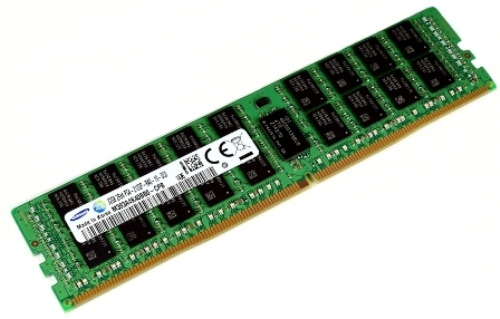
Designed as a server-class DDR4-2400 Registered DIMM with ECC, this module is purpose‑built for virtualization, in‑memory databases, and mission‑critical workloads that demand uncompromising data integrity. Its 1.2 V operating voltage, dual‑rank x8 configuration, and registered signal buffering together provide rock‑solid signal stability and enable higher memory density per channel, making it the optimal choice for sustained, error‑free operation in dual‑processor server platforms.
1. ECC protection silently corrects single-bit memory errors in real time, preventing data corruption in transactional databases and reducing costly application crashes.
2. Registered signal buffering stabilizes high-density memory configurations, allowing servers to scale up capacity without sacrificing signal integrity under continuous heavy loads.
3. Dual Rank x8 organization interleaves rank accesses to maximize channel utilization, delivering consistent bandwidth for virtualized workloads and reducing latency penalties during multi-tenant contention.
4. The RDIMM form factor ensures compatibility with enterprise-grade motherboards and adds command/address parity, enabling reliable operation in 24/7 data-center environments.
5. DDR4-2400 throughput provides a balanced blend of energy-efficient bandwidth, sustaining brisk response for containerized microservices while keeping rack-level power and cooling costs predictable.
As a server-grade RDIMM, the Samsung M393A1G43DB1-CRC transforms raw specifications into tangible reliability for mission-critical infrastructure. Its integrated ECC is your silent guardian against single-bit memory errors, which in a virtualized cluster hosting dozens of VMs could otherwise silently corrupt transactional data or trigger a cascading host failure. The Registered signal buffer directly addresses the pain of scaling density; when populating all twenty-four DIMM slots of a dual-socket server, the buffered address and command lines prevent signal degradation that would crash unregistered modules, ensuring your in-memory database like Redis can safely leverage every gigabyte without boot instability. That Dual Rank x8 organization then becomes your performance multiplier for virtualized workloads, using rank interleaving to keep the memory bus saturated while one rank refreshes, so a hypervisor running simultaneous live migrations and SAP HANA queries experiences measurably lower latency jitter. Backed by a standard 1.2V power envelope and a well-tuned CL17 at 2400MT/s, this module delivers consistent bandwidth under thermal constraints, meaning your colocation power budget stays predictable while database response times remain reliably crisp during month-end reporting surges.
General Virtualization
For modest virtualization hosts, this 8 GB DDR4-2400 RDIMM provides a reliable foundation. Deploy modules in multiples of four to populate balanced memory channels, targeting 64 GB to 128 GB total for mixed VM workloads. Dual‑rank x8 construction and ECC help maintain stability under sustained multi‑tenant pressure, but avoid single‑module setups as they cripple interleaving and halve available bandwidth.
In‑Memory Database
Memory‑centric databases demand both capacity and low latency. With this registered ECC module, start with eight to sixteen modules (64–128 GB) per socket, leveraging dual‑rank design for moderate rank interleaving. For larger datasets, scale to populated configurations that keep DIMMs per channel at two, balancing capacity against the 2400 MT/s speed limit to sustain high transaction rates without encountering severe latency cliffs.
High‑Performance Computing
In HPC clusters, memory bandwidth often matters more than sheer capacity. Install six or eight identical 8 GB RDIMMs to saturate all memory channels, giving 48–64 GB per node and maximum aggregate bandwidth. CL17 at 2400 MT/s offers predictable access times for floating‑point‑heavy loops, while registered ECC safeguards long‑running jobs. Reserve higher‑density modules for capacity‑bound solvers, but this 8 GB part excels in per‑core bandwidth‑tuned deployments.
Rigorously validated for Dell PowerEdge R740/R640, HPE ProLiant DL380 Gen10, and Lenovo ThinkSystem SR650 servers.
Q: Can I mix this M393A1G43DB1-CRC with other memory modules of different brands or speeds?
A: Mixing RDIMMs of different brands or speeds is not recommended. It may cause stability issues or fail to POST. For reliable operation, use identical modules with the same rank, speed, and CAS latency.
Q: Is this memory compatible with my server system?
A: This DDR4-2400 8GB Registered ECC DIMM requires a server platform supporting this standard, such as Intel Xeon E5-2600 v3/v4 or AMD EPYC. Verify your CPU and motherboard explicitly list RDIMM compatibility.
Q: What is the recommended DIMM population order for optimal performance?
A: Always populate DIMMs per your server manual. Typically, fill identical modules in the first slot of each memory channel (often blue slots) to enable balanced interleaving and optimal memory bandwidth.
Q: Does this module support overclocking or XMP profiles?
A: No. As an enterprise RDIMM, this module runs strictly at JEDEC standard DDR4-2400 with CL17 timing. Overclocking and XMP are not supported, prioritizing data integrity and long-term stability.
Q: What warranty and typical failure rate can I expect?
A: This module includes a one-year warranty. Built with Samsung components and rigorously tested, it delivers extremely low failure rates typical of enterprise-grade memory, ensuring reliable 24/7 operation.