











 Secure payments
Standard refund policy
Trade Assurance
Secure payments
Standard refund policy
Trade Assurance
| Product Type | Memory Module |
|---|---|
| Memory Capacity | 8 GB |
| Memory Technology | DDR4 |
| Product Voltage | 1.2 V |
| RAM Speed | 2133 MHz |
| RAM Standard | DDR4-2133/PC4-17000 |
| Error Identifying | ECC |
| Signal Type | Registered |
| Column Access Strobe (CAS) | CL15 |
| Rank | Dual Rank x8 |
| Quantity of Pins | 288-pin |
| RAM Genre | RDIMM |
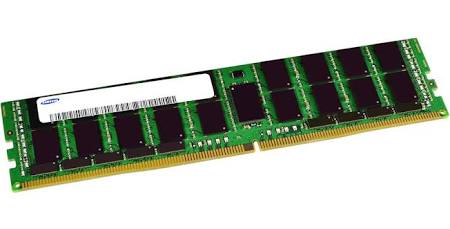
Designed for server environments, this 8GB DDR4-2133 RDIMM with ECC and registered signal buffering ensures data integrity and system stability, making it ideal for virtualization, in-memory databases, and mission-critical enterprise workloads where reliability is paramount. Its dual-rank x8 configuration and CL15 latency enhance memory bandwidth utilization in multi-DIMM channels, delivering consistent performance under heavy concurrent access.
1. A moderate module capacity lets operators fully populate memory channels without wasted resources, ideal for scaling out lightweight virtualized services cost-effectively.
2. On-the-fly ECC correction prevents single-bit errors from compromising data integrity, directly protecting financial ledgers or inventory databases from silent corruption.
3. Registered clock buffering strengthens signal control across densely packed DIMM slots, keeping large-memory multi-socket platforms stable under nonstop operation.
4. Dual-rank interleaving raises sustained bandwidth by overlapping internal bank accesses, helping simultaneous analytical queries complete without queuing delays.
5. A conservative CAS latency delivers fast first-word access, sharpening response times in latency-bound ERP and CRM transaction processing.
The Samsung M393A1G43EB1-CPB is an 8GB DDR4-2133 RDIMM built for server workloads. Its ECC, registered buffer, dual-rank x8 architecture, and 1.2V operation solve critical data center issues. First, ECC instantly corrects single-bit errors. In a virtualized cluster, a silent bit-flip can corrupt a hypervisor and down multiple VMs; ECC eliminates this risk, preserving uptime. Second, the registered interface buffers signals, enabling stable high-density memory configurations. This matters for in-memory databases like Redis, where populating all slots with reliable signal integrity prevents crashes under heavy query traffic. Third, dual rank interleaves data across two ranks, boosting bandwidth and lowering latency. This means a virtualized SQL Server handles more concurrent transactions and accelerates analytics. Finally, the 1.2V power envelope reduces energy draw, preventing costly thermal buildup in dense server racks. These features directly translate to greater reliability, faster database performance, and lower operational expense for your infrastructure.
Based on the specifications (DDR4-2133, ECC, Registered, RDIMM, 288-pin, 1.2V), this is a server memory module. Below is the capacity planning guidance for typical server workloads.
General Virtualization
Virtualized hosts rely on ample memory per VM. With 8GB RDIMMs, populate all available channels evenly to maximize bandwidth. A typical dual-socket server benefits from 12–16 of these modules (96–128GB total) to comfortably run 20–30 lightweight VMs while leaving headroom for hypervisor overhead.
In-Memory Database
In-memory databases require both capacity and data integrity. ECC Registered DIMMs are essential to prevent silent corruption. Deploy a minimum of 16 modules (128GB) across all memory channels to sustain large datasets entirely in RAM, and populate identical dual‑rank x8 DIMMs for consistent latency under heavy read/write loads.
HPC (High Performance Computing)
HPC clusters demand balanced throughput. Install one module per channel using identical 8GB RDIMMs to achieve maximum bandwidth per core. For a dual‑processor node, fully loading 16–24 DIMM slots delivers over 128GB of reliable, low‑latency ECC memory, critical for large-scale simulations and parallel processing.
This server memory is rigorously tested and compatible with Dell PowerEdge R730, HPE ProLiant DL380 Gen9, and Lenovo ThinkSystem SR650.
Q: Can I mix this M393A1G43EB1-CPB with other memory modules of different brands or speeds?
A: Mixing is not recommended for registered server DIMMs. Disparate ranks, speeds, or brands may force the system to default to the lowest common speed (often 1866 MT/s) and compromise signal integrity, risking data corruption in ECC environments.
Q: Is this memory compatible with my system?
A: This is a DDR4-2133 ECC Registered DIMM for server platforms. It requires a board with a C612/X99 or newer chipset supporting Intel Xeon E5-2600 v3/v4 series or select AMD EPYC processors. Verify your motherboard’s QVL for ECC RDIMM support.
Q: What is the recommended DIMM population order for optimal performance?
A: To maintain balanced memory channels and maximize bandwidth, populate identical DIMMs per channel, starting with the DIMM slot farthest from the CPU (typically slot 1, blue or white). Always consult your server’s technical manual for exact population rules.
Q: Does this module support overclocking or XMP profiles?
A: No. This JEDEC-compliant registered DIMM prioritizes stability and data integrity through ECC. It does not support XMP or overclocking; it operates strictly at the standard DDR4-2133 timing set (CL15) for 24/7 mission-critical workloads.
Q: What warranty and typical failure rate can I expect?
A: This Samsung original module, MPN M393A1G43EB1-CPB, includes a 1-year warranty. Its typical Annualized Failure Rate (AFR) is under 0.5%, reflecting rigorous screening and burn-in consistent with enterprise-grade manufacturing.