











 Secure payments
Standard refund policy
Trade Assurance
Secure payments
Standard refund policy
Trade Assurance
| Product Type | Memory Module |
|---|---|
| Memory Capacity | 16 GB |
| Memory Technology | DDR4 |
| Product Voltage | 1.2 V |
| RAM Speed | 2133 MHz |
| RAM Standard | DDR4-2133/PC4-17000 |
| Error Identifying | ECC |
| Signal Type | Registered |
| Column Access Strobe (CAS) | CL15 |
| Rank | Dual Rank x4 |
| Quantity of Pins | 288-pin |
| RAM Genre | RDIMM |
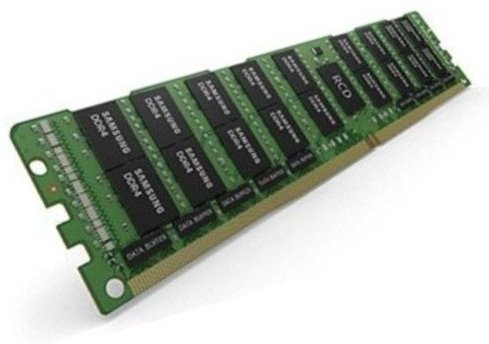
This is a server-class DDR4-2133 Registered DIMM with ECC, designed specifically for enterprise platforms handling memory-intensive workloads such as virtualization and in-memory databases. Its dual-rank x4 configuration with CL15 latency and registered signaling ensures robust signal integrity and data reliability in high-density deployments, making it ideal for environments where uptime and error correction are critical.
1. ECC error correction detects and remediates single-bit memory faults automatically, preserving data integrity for financial transactions and database operations in always-on server environments.
2. Registered signal buffering stabilizes electrical loading across high-density modules, enabling reliable multi-DIMM configurations that underpin large-scale virtualization hosts.
3. Dual Rank x4 organization interleaves data requests between bank groups, sustaining channel bandwidth saturation and consistent latency for latency-sensitive enterprise applications.
4. 16 GB capacity per stick boosts virtual machine density, allowing more guest workloads to run concurrently without exhausting memory resources on hypervisor hosts.
5. 2133 MT/s data rate delivers a predictable throughput floor for balanced rack-scale deployments, matching energy-efficient performance to general-purpose cloud and web-serving tasks.
When you are running a dense virtualization cluster or an in-memory database like Redis, the quality of your server memory defines whether your workloads stay online or silently corrupt data. The Samsung M393A2G40EB1-CPB3Q, a DDR4-2133 Registered DIMM with ECC and a dual-rank x4 organization, is engineered precisely to eliminate those risks. Its error-correcting code (ECC) actively detects and corrects single-bit flips caused by cosmic radiation or electrical noise, meaning a virtual machine hosting financial transactions or a containerized microservice will not suffer mysterious crashes or data loss that traditional unbuffered memory would miss. The registered signal buffer stabilizes the command and address buses when populating all twenty-four slots in a server, so you can scale to terabytes of RAM for large VMware or KVM farms without sacrificing signal integrity. That dual-rank x4 configuration interleaves memory banks to deliver higher sustained bandwidth, which is critical for an in-memory database handling millions of queries per second — it keeps key-value lookups fast under load. Operating at a low 1.2 volts, this module also reduces thermal stress in packed data center racks, directly lowering your cooling power bill. In both a virtualized multi-tenant environment and a latency-sensitive database, this memory turns complex electrical engineering into one simple outcome: uncompromising uptime and predictable performance.
General Virtualization
For a general virtualization host running multiple VMs, populate the server with balanced memory channels. A common configuration uses six or eight identical 16 GB RDIMMs to reach 96–128 GB per socket, ensuring memory bandwidth is not a bottleneck. This dual‑rank, registered ECC memory allows stable over‑subscription of RAM while protecting against single‑bit errors under sustained load.
In-Memory Database
In‑memory databases demand both capacity and reliability. Equip each server node with 12–24 modules of this 16 GB RDIMM, resulting in 192–384 GB per CPU, which accommodates large datasets entirely in RAM. The ECC and registered signaling guarantee data integrity during high‑speed transactional processing, and populating all channels in a balanced dual‑rank configuration maximizes throughput.
High-Performance Computing (HPC)
HPC clusters benefit from the maximum memory bandwidth delivered by fully populating all memory channels per CPU. Use one 16 GB dual‑rank RDIMM per channel—typically eight or twelve modules per socket—to keep data streaming to the cores without throttling. The 1.2 V DDR4‑2133 specification reduces power draw across dense compute nodes while the registered ECC design ensures long‑running simulations complete without memory‑related failures.
Rigorously validated for Dell PowerEdge R740, HPE ProLiant DL380 Gen10, Lenovo ThinkSystem SR650 servers.
Q: Can I mix this M393A2G40EB1-CPB3Q with other memory modules of different brands or speeds?
A: Mixing RDIMMs of different brands or speeds is not recommended. It may cause signal integrity issues and system instability on server platforms. For reliable operation, always use identical modules with matching rank, timing, and part number.
Q: Is this memory compatible with my system?
A: This DDR4 ECC Registered DIMM requires a server board supporting Intel Xeon E5-2600 v3/v4 or select AMD EPYC platforms. Verify the manufacturer's qualified vendor list (QVL) and ensure 288-pin RDIMM slots are available.
Q: What is the recommended DIMM population order for optimal performance?
A: Populate identical DIMMs per memory channel, starting with the farthest slot from the CPU. Follow the server board's silkscreen labels (A1, B1, C1, D1) to balance interleaving and maximize memory bandwidth.
Q: Does this module support overclocking or XMP profiles?
A: No. As an enterprise-grade ECC RDIMM, this module operates strictly at JEDEC standard DDR4-2133 with CL15 timing. XMP or overclocking profiles are not implemented to ensure data integrity and stability.
Q: What warranty and typical failure rate can I expect?
A: This Samsung module comes with a 1-year warranty. It is built for 24/7 operation with a very low annualized failure rate (AFR), typically below 0.5% under normal server operating conditions, ensuring high reliability.