











 Secure payments
Standard refund policy
Trade Assurance
Secure payments
Standard refund policy
Trade Assurance
| Product Type | Memory Module |
|---|---|
| Memory Capacity | 16 GB |
| Memory Technology | DDR4 |
| Product Voltage | 1.2 V |
| RAM Speed | 2133 MHz |
| RAM Standard | DDR4-2133/PC4-17000 |
| Error Identifying | ECC |
| Signal Type | Registered |
| Column Access Strobe (CAS) | CL15 |
| Rank | Single Rank x4 |
| Quantity of Pins | 288-pin |
| RAM Genre | RDIMM |
This DDR4-2133 RDIMM with ECC and registered signaling is optimized for server platforms handling virtualization, in-memory databases, and mission-critical workloads where data integrity is paramount. Its single-rank x4 configuration reduces electrical loading on the memory bus, improving signal integrity and enabling higher population density while maintaining a low CAS latency of 15 for balanced system responsiveness.
1. ECC protection silently corrects single-bit errors in real time, preserving transactional integrity for databases and virtualized workloads without administrative interruption.
2. Registered buffering stabilizes signal paths across densely populated memory channels, allowing server platforms to scale to multi-terabyte capacities with predictable reliability.
3. Single Rank x4 organization concentrates memory access across fewer ranks, delivering streamlined bandwidth and reduced latency for latency-sensitive enterprise applications.
4. A sixteen-gigabyte density per module offers the ideal building block for virtual machine consolidation, maximizing guest instance density per socket while keeping memory cost-performance in balance.
5. 1.2-volt low-power operation slashes energy draw across the entire memory array, reducing cooling overhead and improving long-term total cost of ownership in hyperscale data centers.
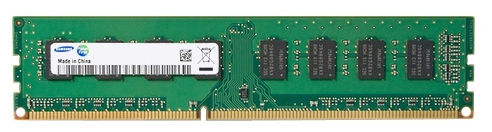
The M393A2K40BB0-CPB is a 16GB DDR4-2133 Registered DIMM with ECC, purpose-built for server workloads where reliability and stability are non-negotiable. Its ECC protection continuously detects and corrects single-bit memory errors, preventing silent data corruption that could crash a virtualized cluster or poison transactions inside an in-memory database like SAP HANA. The registered buffer isolates the memory controller from electrical loading, making it possible to populate all DIMM slots with high-capacity modules without sacrificing signal integrity—a must when you need to consolidate dozens of VMs onto a single host. The single-rank x4 organization cleverly balances capacity and performance: the x4 DRAM chips provide more internal banks for superior parallelism, while the single rank reduces bus contention, delivering predictable low-latency access and the full 17 GB/s bandwidth required for real-time analytics. Finally, the 1.2 V DDR4 voltage shrinks your power footprint and thermal load, which matters greatly in densely packed virtualization clusters and 24/7 database servers where every watt counts. This module transforms raw specifications into tangible business continuity and responsive application performance.
General Virtualization
For a typical hypervisor hosting mixed VMs, start with four to six 16GB RDIMMs (64–96GB total) to balance VM density and cost. Distribute modules evenly across memory channels to maintain bandwidth; with DDR4-2133, latency-sensitive workloads benefit from CL15. Scale by adding identical single-rank modules in matched sets to avoid performance penalties from mixed ranks.
In-Memory Database
In-memory platforms like Redis or SAP HANA demand capacity and reliability above all. Populate all available channels with 16GB RDIMMs — typically twelve or sixteen modules for 192–256GB — using single-rank x4 DIMMs to ensure low latency and ECC protection against bit errors. Configure sparing and mirroring modes only if absolute data integrity is required, sacrificing usable capacity.
High-Performance Computing
HPC clusters prioritize memory bandwidth over raw capacity per node. Install eight 16GB RDIMMs (128GB) in a balanced eight-channel configuration to saturate the memory controller. The registered ECC design at 1.2V keeps power per module low, critical for dense racks. Single-rank modules at 2133MT/s provide predictable timings under sustained parallel I/O, reducing variability in tightly coupled MPI jobs.
Rigorously tested server memory; compatible with Dell PowerEdge R730, HPE ProLiant DL380 Gen9, Lenovo ThinkSystem SR650.
Q: Can I mix this M393A2K40BB0-CPB with other memory modules of different brands or speeds?
A: Mixing is not recommended. Registered ECC modules require identical ranks, timings, and voltage for stable operation. Disparate modules may force the memory controller into lower performance or cause POST failures in server platforms.
Q: Is this memory compatible with my system?
A: Compatibility depends on the server's chipset and CPU. This DDR4-2133 RDIMM is validated for Intel Xeon E5-2600 v3/v4 and select AMD EPYC platforms. Always consult the system's Qualified Vendor List (QVL) for confirmation.
Q: What is the recommended DIMM population order for optimal performance?
A: Populate identical DIMMs per channel, starting with the farthest slot from the CPU. For dual-processor servers, balance memory evenly across both sockets and follow the motherboard's silkscreen labeling for channel matching to maximize bandwidth.
Q: Does this module support overclocking or XMP profiles?
A: No. As a JEDEC-compliant Registered ECC module, it operates solely at fixed JEDEC profiles (DDR4-2133, CL15). Overclocking and XMP are not supported, prioritizing data integrity and 24/7 operational stability for enterprise workloads.
Q: What warranty and typical failure rate can I expect?
A: This module includes a one-year warranty. It utilizes screened Samsung B-die and undergoes rigorous burn-in testing, yielding an Annualized Failure Rate (AFR) typically below 0.2%, consistent with mission-critical server memory standards.