











 Secure payments
Standard refund policy
Trade Assurance
Secure payments
Standard refund policy
Trade Assurance
| Product Type | Memory Module |
|---|---|
| Memory Capacity | 16 GB |
| Memory Technology | DDR4 |
| Product Voltage | 1.2 V |
| RAM Speed | 2133 MHz |
| RAM Standard | DDR4-2133/PC4-17000 |
| Error Identifying | ECC |
| Signal Type | Registered |
| Column Access Strobe (CAS) | CL15 |
| Rank | Single Rank x4 |
| Quantity of Pins | 288-pin |
| RAM Genre | RDIMM |
This RDIMM with ECC and registered signaling is purpose-built for server platforms running virtualization, in-memory databases, and mission-critical workloads where data integrity and uptime are non-negotiable. Its single-rank x4 organization with CL15 latency delivers balanced electrical loading and consistent signal integrity, ensuring reliable operation in dense multi-DIMM configurations.
1. ECC protection silently corrects single-bit memory errors in real time, preventing silent data corruption that could crash financial transactions or compromise database integrity in always-on server environments.
2. Registered signaling with an onboard command/address buffer stabilizes high-capacity memory buses, allowing fully populated server nodes to run 24/7 without signal degradation or unexpected reboots under heavy load.
3. Sixteen-gigabyte capacity per module enables dense virtualization footprints, letting a single rack server host more concurrent virtual machines without hitting memory bottlenecks during peak business hours.
4. DDR4-2133 operation at 1.2 volts delivers a balanced bandwidth baseline that keeps power-per-gigabyte low across hyperscale deployments, directly reducing cooling and electricity costs in data centers.
5. Single Rank x4 organization reduces electrical loading per channel, so IT architects can populate all DIMM slots while maintaining stable clock frequencies—critical for predictable performance in heavily consolidated server platforms.
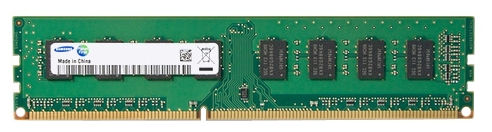
When you power a dense virtualization cluster or an in-memory database, the memory module isn’t just a component—it’s the bedrock of every transaction. The Samsung M393A2K40BB0-CPBQ0 is a DDR4-2133 Registered DIMM purpose-built for such enterprise servers, and four of its architectural choices directly translate into uptime and performance you can bank on.
First, ECC error correction actively detects and corrects single-bit flips caused by background radiation, silently preventing data corruption in a 24/7 virtualized environment. Without it, a flipped bit inside a critical VM’s kernel memory could bring down an entire host. Second, the Registered (buffered) signal type uses an on-DIMM register to stabilize command and address lines. This buffers the memory controller from heavy electrical loads, allowing you to populate all channels with high-capacity modules—essential when you need 1 TB of RAM for a growing VDI farm or a massive Redis cache. Third, the single-rank x4 organization strikes a deliberate balance: it avoids the inter-rank contention penalties that can plague multi-rank DIMMs, delivering lower latency for latency-sensitive in-memory analytics like SAP HANA, while still providing sufficient bandwidth under concurrent read/write streams. Fourth, operating at 1.2 V, the DDR4 standard voltage keeps thermal dissipation remarkably low across a fully loaded chassis. In a data center, that shaves dollars off cooling costs and prevents thermal throttling during sustained database merges. Together, these characteristics mean predictable, error-free performance where every bit and every watt counts.
Capacity Planning for DDR4-2133 16GB Registered ECC RDIMM
This memory module is a server-class RDIMM, designed for stability and data integrity in enterprise environments. Its 2133 MT/s speed and ECC registration suit dense, reliable memory configurations over raw frequency.
General Virtualization
For hypervisor hosts running multiple VMs, populate at least six identical 16GB modules across all memory channels (e.g., six modules for 96GB total) to balance capacity and memory bandwidth. Aim for dual-processor systems with balanced DIMM population per socket, leaving room to scale to 256GB by adding identical sticks later.
In-Memory Database
Maximize capacity per channel while maintaining performance. Install eight to twelve 16GB RDIMMs (128–192GB) in a single-socket system to hold large datasets in RAM. Choose single-rank x4 DIMMs like this one to reduce electrical loading and sustain higher clock speeds under full-load conditions.
High-Performance Computing
Populate all memory channels symmetrically—commonly eight or sixteen modules—to leverage maximum interleaving and bandwidth. Combine this 16GB module with identical units to reach 128GB or 256GB per node, sizing capacity to keep working sets resident and avoid swap. Verify motherboard compatibility with registered 2133MT/s speeds before large-scale deployment.
This server-grade memory is rigorously tested, compatible with Dell PowerEdge R730, HPE DL380 Gen9, Lenovo x3650 M5, and more.
Q: Can I mix this M393A2K40BB0-CPB0Q with other memory modules of different brands or speeds?
A: Mixing is not recommended. Different brands or speeds may cause stability issues and compromise ECC reliability. For guaranteed performance, install identical RDIMMs with matching rank, latency, and frequency.
Q: Is this memory compatible with my system?
A: It is designed for servers using Intel Xeon E5-2600 v3/v4 or AMD EPYC platforms with DDR4-2133 support. Verify your motherboard supports 288-pin registered ECC RDIMMs and consult its qualified vendor list.
Q: What is the recommended DIMM population order for optimal performance?
A: Follow your server board’s memory population guide. Typically, populate identical DIMMs in matching slots across memory channels first, balancing load and ensuring correct rank interleaving for maximum throughput.
Q: Does this module support overclocking or XMP profiles?
A: No. This is a JEDEC-compliant registered ECC server module. It does not support XMP or overclocking, prioritizing data integrity and 24/7 operational stability over higher frequencies.
Q: What warranty and typical failure rate can I expect?
A: It includes a 1-year warranty. Registered ECC DIMMs are built for enterprise reliability, with an expected annualized failure rate well below 0.5% under specified conditions.