











 Secure payments
Standard refund policy
Trade Assurance
Secure payments
Standard refund policy
Trade Assurance
| Product Type | Memory Module |
|---|---|
| Memory Capacity | 16 GB |
| Memory Technology | DDR4 |
| Product Voltage | 1.2 V |
| RAM Speed | 2933 MHz |
| RAM Standard | DDR4-2933/PC4-23400 |
| Error Identifying | ECC |
| Signal Type | Registered |
| Column Access Strobe (CAS) | CL21 |
| Rank | Single Rank x4 |
| Quantity of Pins | 288-pin |
| RAM Genre | RDIMM |
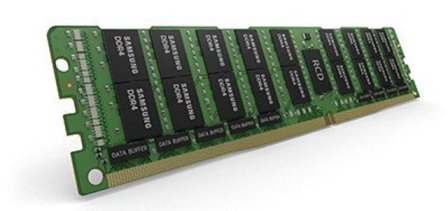
Designed for enterprise server platforms, this Samsung 16GB DDR4-2933 RDIMM (M393A2K40CB2-CVF) leverages registered signal buffering and ECC to maintain data integrity under heavy virtualization and in-memory database workloads. Its single-rank x4 configuration with CL21 timing optimizes memory bandwidth and thermal performance, making it an ideal choice for dense rack deployments that demand high availability and consistent low latency.
1. ECC protection silently corrects single-bit errors, preserving data integrity for mission-critical databases and financial transactions in always-on server environments.
2. Registered signal buffering stabilizes address and control lines, allowing fully loaded memory channels to maintain signal clarity across dense server nodes.
3. A 16 GB module capacity offers ample headroom to run more virtual machines and memory-cached workloads per physical host, raising consolidation density.
4. 2933 MT/s throughput supplies sufficient bandwidth for real-time analytics and in-memory computing, lowering transaction latency under heavy concurrent loads.
5. Single Rank x4 organization reduces electrical loading on the bus, enabling stable high-frequency operation when multiple DIMMs are populated in enterprise servers.
Based on its RDIMM form factor, ECC support, and registered signal type, this Samsung module (M393A2K40CB2-CVF) is unequivocally server memory. For enterprise workloads, its four defining characteristics directly address the real cost of downtime and sluggish data access.
The registered buffer stabilizes signal integrity when you populate all memory channels in a virtualization cluster—imagine a 4-socket host running 30 virtual machines. Without the register, electrical loading would force you to sacrifice capacity or speed, crippling VM density. Meanwhile, ECC corrects single-bit errors silently induced by cosmic radiation, preventing the corruption of a financial transaction in an in-memory database like Redis or SAP HANA; here, one uncorrected bit flip could cascade into a six-figure reconciliation nightmare. The 2933 MT/s speed and single-rank x4 organization combine to deliver low-latency, high-bandwidth throughput under concurrent requests. In a real-time analytics engine, single rank allows the memory controller to issue commands with minimal delay, ensuring query responses arrive in milliseconds rather than seconds. Running at 1.2V, the module also reduces cumulative power draw across a rack of servers, lowering both cooling overhead and operational expense while preserving that critical error protection. This isn’t just memory—it’s a reliability contract for your virtualized and data-intensive infrastructure.
The 16GB DDR4-2933 ECC Registered DIMM is server memory. Below are capacity planning guidelines for typical workloads.
General Virtualization
Populate one DIMM per channel using identical modules to guarantee balanced bandwidth. In a dual‑socket server with six channels per CPU, 12 modules yield 192 GB, comfortably hosting 20–30 moderate VMs. When density outweighs peak speed, add a second DIMM per channel for 384 GB, though the memory controller may drop to 2666 MT/s.
In-Memory Database
Maximize capacity by filling every slot; a 24‑slot system delivers 384 GB, letting entire databases reside in DRAM—ideal for Redis or SAP HANA. Enable memory interleaving to spread access latencies evenly. The single‑rank x4 construction helps preserve signal integrity even in fully loaded configurations.
High-Performance Computing (HPC)
Install exactly one DIMM per channel to sustain the full 2933 MT/s frequency without down‑clocking. In an eight‑channel dual‑socket platform, 16 modules provide 256 GB of symmetrical, high‑bandwidth memory. Bind processes to local NUMA nodes and never mix ranks to keep latency uniform for tightly coupled parallel jobs.
Rigorously tested server memory. Compatible with Dell PowerEdge R750, HPE ProLiant DL380 Gen10 Plus, Lenovo ThinkSystem SR650 V2.
Q: Can I mix this M393A2K40CB2-CVF with other memory modules of different brands or speeds?
A: Mixing is not recommended for server environments. Differing speeds or vendors compromise signal integrity and may force the system to run at the lowest common JEDEC profile, risking stability.
Q: Is this memory compatible with my system?
A: This 16GB DDR4-2933 ECC Registered RDIMM is compatible with servers using Intel Xeon Scalable or AMD EPYC processors. Please verify your motherboard supports PC4-23400 and 288-pin RDIMMs.
Q: What is the recommended DIMM population order for optimal performance?
A: Follow your server’s platform guide to balance memory channels. Typically, populate identical single-rank x4 RDIMMs per channel, starting with the farthest slots from the CPU for best signal integrity.
Q: Does this module support overclocking or XMP profiles?
A: No. As a JEDEC-compliant ECC Registered DIMM, it operates strictly at DDR4-2933 CL21 for data integrity. Overclocking and XMP are not supported on server-grade memory.
Q: What warranty and typical failure rate can I expect?
A: This module includes a one-year warranty. It delivers enterprise-class reliability with an extremely low failure rate, backed by rigorous qualification and error correction to protect critical workloads.