











 Secure payments
Standard refund policy
Trade Assurance
Secure payments
Standard refund policy
Trade Assurance
| Product Type | Memory Module |
|---|---|
| Memory Capacity | 16 GB |
| Memory Technology | DDR4 |
| Product Voltage | 1.2 V |
| RAM Speed | 2933 MHz |
| RAM Standard | DDR4-2933/PC4-23400 |
| Error Identifying | ECC |
| Signal Type | Registered |
| Column Access Strobe (CAS) | CL21 |
| Rank | Dual Rank x8 |
| Quantity of Pins | 288-pin |
| RAM Genre | RDIMM |
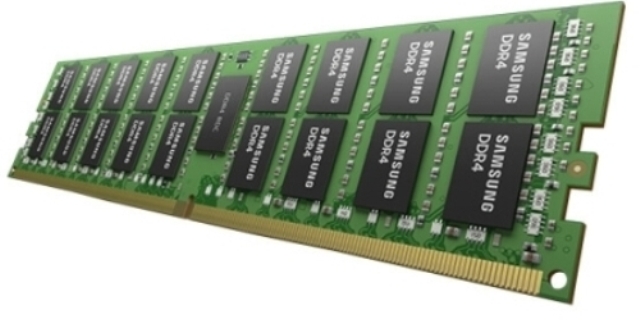
Designed for server and enterprise environments, this Samsung RDIMM leverages ECC and Registered signaling to ensure data integrity and signal stability in multi-DIMM configurations, making it ideal for virtualization, in-memory databases, and latency-sensitive workloads. Its dual-rank x8 organization and CL21 latency at 2933 MT/s optimize memory interleaving for enhanced throughput without sacrificing reliability.
1. ECC error correction detects and fixes single-bit memory faults on the fly, safeguarding transactional databases and preventing silent data corruption in always-on servers.
2. Registered signal buffering stabilizes high-capacity memory configurations, enabling dense server deployments without sacrificing signal integrity under heavy load.
3. Dual Rank x8 organization interleaves memory accesses across two ranks, maximizing throughput for virtualized workloads where multiple VMs compete for memory bandwidth.
4. 2933 MT/s speed elevates data transfer rates to match modern multi-core Xeon processors, reducing latency in memory-intensive analytics and in-memory caching.
5. 16GB capacity per module scales effectively in dual-socket servers, delivering the headroom needed for container orchestration and mid-tier virtualization nodes.
In the mission-critical world of server infrastructure, the Samsung M393A2K43CB2-CVF RDIMM transforms raw specifications into tangible business resilience. This 16 GB DDR4-2933 module is purpose-built for dense virtualization clusters and in-memory databases, where two reliability pillars become non-negotiable. The Error Correction Code (ECC) silently detects and corrects single-bit upsets caused by cosmic radiation, a silent scourge that in a non-ECC system can flip a financial transaction in a Redis queue or corrupt a critical virtualization table, leading to cascading service outages rather than a simple reboot. Meanwhile, the Registered signal type buffers the command and address lines, stabilizing the electrical load so a dual-socket server can populate all 24 DIMM slots without signal degradation. This directly enables you to scale a VMware cluster to terabytes of RAM, confidently hosting hundreds of virtual machines without mysterious crashes at high density. Performance is not compromised: the dual-rank x8 organization interleaves access between internal ranks, masking precharge delays and boosting effective bandwidth well beyond a single-rank stick. For an SAP HANA instance processing real-time analytics, that means faster aggregation queries and smoother multi-user concurrency. The 1.2 V low-power design also keeps thermal loads in check across a packed data center rack. Every feature works in concert to ensure that a memory module becomes a silent guardian of uptime, data fidelity, and predictable performance under extreme virtualization pressure.
General Virtualization
For typical hypervisor hosts running 20–30 VMs, populate at least six 16 GB modules (96 GB total) across all memory channels to balance capacity and bandwidth. The ECC Registered DIMM (RDIMM) design ensures data integrity during live migrations and prevents silent memory errors in multi-tenant environments.
In-Memory Database
In-memory databases like Redis or SAP HANA demand large, resilient memory pools. Deploy eight or more 16 GB RDIMMs per socket (minimum 128 GB, ideally 256 GB) to keep entire datasets resident. The dual‑rank x8 organization delivers strong capacity with only a minor latency trade‑off, while ECC and register buffering maintain uptime under heavy write loads.
High-Performance Computing (HPC)
HPC workloads such as CFD or molecular dynamics scale with memory bandwidth. Install one 16 GB RDIMM per channel (often eight or twelve modules per node) to exploit full DDR4‑2933 throughput. Registered ECC modules enable the stable, long‑duration runs that scientific computing requires, and the dual‑rank configuration helps hide refresh latency, sustaining high utilization of the memory bus.
Rigorously tested server memory, compatible with Dell PowerEdge R740, HPE ProLiant DL380 Gen10, Lenovo ThinkSystem SR650, and more.
Q: Can I mix this M393A2K43CB2-CVF with other memory modules of different brands or speeds?
A: Mixing RDIMMs of different brands, speeds, or ranks is not recommended. It may cause instability, prevent booting, or force lower speeds. For guaranteed compatibility, populate with identical Samsung modules and part numbers.
Q: Is this memory compatible with my Intel Xeon or AMD EPYC server platform?
A: This 288-pin DDR4-2933 ECC Registered DIMM is compatible with most servers using Intel Xeon Scalable (2nd Gen) or AMD EPYC 7002/7003 series CPUs. Verify that your motherboard supports 16GB Dual Rank x8 RDIMMs and its required slot population order.
Q: What is the recommended DIMM population order for optimal performance?
A: Populate memory channels symmetrically, starting with the farthest slot from the CPU per channel (usually white or blue slots). Follow your server’s manual for balanced population. For this dual-rank module, aim for identical DIMMs per channel to maximize throughput.
Q: Does this module support overclocking or XMP profiles?
A: No. As a JEDEC-compliant server RDIMM, this memory operates at fixed 2933 MT/s with CL21 timings. XMP and user overclocking are not supported; stability and reliability are prioritized in enterprise environments.
Q: What warranty and typical failure rate can I expect?
A: This Samsung server memory includes a 1-year warranty. Enterprise-grade RDIMMs have an extremely low annualized failure rate (AFR), typically under 0.5%, ensuring dependable 24/7 operation in data centers.