











 Secure payments
Standard refund policy
Trade Assurance
Secure payments
Standard refund policy
Trade Assurance
| Product Type | Memory Module |
|---|---|
| Memory Capacity | 32 GB |
| Memory Technology | DDR4 |
| Product Voltage | 1.2V |
| RAM Speed | 2933MHz |
| RAM Standard | DDR4-2933/PC4-23400 |
| Error Identifying | ECC |
| Signal Type | Registered |
| Column Access Strobe (CAS) | CL21 |
| Rank | Dual Rank x8 |
| Quantity of Pins | 288-pin |
| RAM Genre | RDIMM |
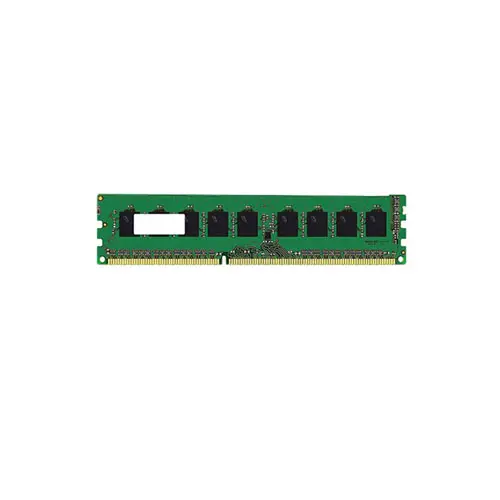
This Samsung M393A4G43AB3-CVF is a 32GB DDR4-2933 Registered ECC RDIMM engineered for enterprise-class servers, where its dual-rank x8 design and fully buffered registered signaling ensure signal integrity and reliable operation in high-density memory configurations essential for virtualization and in-memory databases. The ECC support provides critical single-bit error correction for data integrity, making it an ideal choice for workloads that demand uninterrupted uptime and precise computational accuracy.
1. ECC error correction provides end-to-end data integrity, preventing silent bit flips that could corrupt transactions in financial databases or virtualization hypervisors.
2. Registered signal buffering stabilizes the command and address bus across high-density memory banks, enabling reliable operation in multi-socket servers with massive memory footprints.
3. Generous per-module capacity allows denser memory configurations per server node, directly increasing virtual machine consolidation ratios while reducing software licensing overhead.
4. High memory bandwidth feeds hungry analytics and in-memory caching engines, delivering lower query response times even as concurrent user loads spike.
5. Dual-rank interleaving keeps memory channels fully saturated, sustaining peak throughput and consistent workload performance in heavily consolidated virtual environments.
The Samsung M393A4G43AB3-CVF is a 32GB DDR4-2933 Registered DIMM engineered for mission-critical server deployments. Four attributes define its value. ECC technology silently detects and corrects single-bit errors, preventing in-memory databases like SAP HANA from serving corrupted transactional data that could lead to financial discrepancies. The Registered buffer stabilizes command and address lines when all channels are populated, enabling you to consolidate a high-density virtualization cluster without risking parity-check hangs or unexpected host reboots. The Dual Rank x8 organization interleaves memory banks, lifting effective bandwidth for concurrent VM workloads and smoothing response times during live migrations. Lastly, the 1.2V operating voltage minimizes power consumption per module; across a rack of servers, this reduces thermal strain and cooling overhead, directly improving infrastructure efficiency. Whether hosting transaction-heavy databases or dense virtualized environments, this module delivers the reliability your operations demand.
General Virtualization
For general virtualization hosts, populate memory channels symmetrically to maximize bandwidth. A balanced configuration of six or eight identical 32GB RDIMMs (192–256GB total) per CPU allows dozens of moderate VMs while leaving headroom for failover. Stick to one DIMM per channel initially to preserve full 2933MHz speed, then add a second DIMM per channel only when scale demands it, accepting the slight latency increase.
In-Memory Database
In-memory databases thrive on capacity and low latency, so fully populate all memory channels with these 32GB dual-rank RDIMMs. A two-socket server with 16 DIMMs provides 512GB, fitting large Redis or SAP HANA datasets entirely in RAM. Keep population balanced per CPU to maintain NUMA locality and avoid remote memory access penalties that degrade transactional throughput.
High-Performance Computing
HPC workloads require the highest sustainable bandwidth. Install exactly one DIMM per channel—typically eight 32GB modules per socket—to run at 2933MHz without downgrades, yielding 256GB per node. This configuration delivers peak memory throughput for simulation and modeling codes. If capacity demands grow, a second identical set can be added, though you’ll trade some clock speed for double the memory footprint.
Validated for Dell PowerEdge R760, HPE ProLiant DL380 Gen10, Lenovo ThinkSystem SR650 — rigorously tested.
Q: Can I mix this M393A4G43AB3-CVF with other memory modules of different brands or speeds?
A: Mixing is not recommended. For RDIMMs in servers, identical part numbers ensure signal integrity and stable ECC operation. Mixing speeds forces all modules to the lowest common frequency, potentially reducing performance.
Q: Is this memory compatible with my system?
A: This is a DDR4-2933 32GB ECC Registered RDIMM designed for server platforms. It requires systems using Intel Xeon Scalable or AMD EPYC processors with 288-pin RDIMM slots. Verify with your board’s qualified vendor list.
Q: What is the recommended DIMM population order for optimal performance?
A: Populate identical modules per channel, following your server motherboard’s slot numbering—usually filling all blue slots first. Balanced loading across memory controllers maximizes throughput and ensures symmetric memory configuration.
Q: Does this module support overclocking or XMP profiles?
A: No. This JEDEC-standard RDIMM runs at fixed 2933MHz with CL21 timings and 1.2V. Server-class ECC memory does not support XMP or overclocking; reliability and data integrity are prioritized over frequency headroom.
Q: What warranty and typical failure rate can I expect?
A: This module comes with a 1-year warranty. Actual failure rates are very low in server-grade components, typically below 0.2% annually under proper operating conditions, thanks to rigorous screening and error correcting code protection.