











 Secure payments
Standard refund policy
Trade Assurance
Secure payments
Standard refund policy
Trade Assurance
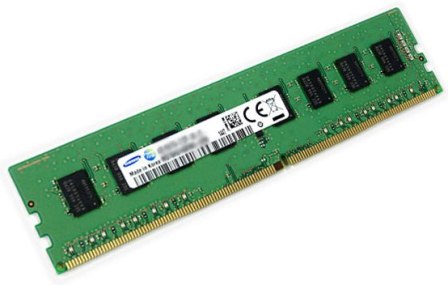
| Product Type | Memory Module |
|---|---|
| Memory Capacity | 64 GB |
| Memory Technology | DDR4 |
| Product Voltage | 1.2 V |
| RAM Speed | 2666 MHz |
| RAM Standard | DDR4-2666/PC4-21300 |
| Error Identifying | ECC |
| Signal Type | Registered |
| Column Access Strobe (CAS) | CL19 |
| Rank | Quad Rank x4 |
| Quantity of Pins | 288-pin |
| RAM Genre | RDIMM |
This is a server-grade DDR4-2666 Registered ECC memory module, ideally suited for virtualization hosts, in-memory databases, and mission-critical enterprise workloads where data integrity is non-negotiable. Its Quad Rank x4 organization maximizes capacity density while the registered signaling ensures stable operation under heavy multi-DIMM configurations, and ECC protection corrects single-bit errors to prevent silent data corruption.
1. ECC protection silently corrects single-bit errors in real time, preserving data integrity in financial transactions and mission-critical databases.
2. Registered signal buffering stabilizes high-density memory configurations, allowing the server to support hundreds of virtual machines without signal degradation.
3. Quad Rank x4 organization maximizes memory bank interleaving, sustaining peak bandwidth under the relentless concurrent requests of multi-tenant cloud workloads.
4. DDR4-2666 speed delivers the balanced throughput needed to feed modern multi-core server CPUs without introducing excessive power consumption in dense rack environments.
5. Sixty-four gigabytes of capacity supplies ample headroom for memory-hungry in-memory analytics and large-scale container orchestration platforms, reducing costly disk swaps.
The M393A8K40B22-CWD is unequivocally a server-grade RDIMM, and its four defining characteristics directly address the unforgiving demands of enterprise data centers. In dense virtualization clusters, its 64 GB capacity built on Quad Rank x4 architecture becomes transformative. Each rank acts as an independent set of memory banks, allowing the memory controller to interleave commands and hide refresh latency. For a hypervisor juggling dozens of virtual machines, this translates into visibly higher transactional throughput and smoother VM responsiveness, not just a larger memory pool. In memory-intensive database engines like SAP HANA, the combination of ECC and Registered signaling proves non-negotiable. ECC silently corrects single-bit errors caused by background radiation, preventing the data corruption that could cascade into financial inaccuracies or runtime crashes during in-memory analytics. Meanwhile, the Registered buffer stabilizes the electrical load on the CPU’s memory controller, making it possible to populate all channels with massive 64 GB DIMMs at 2666 MT/s without signal degradation. What this means for you is an infrastructure where larger datasets stay hot in DRAM, calculations remain provably accurate, and unplanned downtime from memory faults is dramatically reduced—keeping your SLAs intact and your critical services always on.
General Virtualization
A 64GB quad-rank RDIMM provides the high capacity and reliability required for dense VM hosting. For a typical dual-socket server, populate six to eight of these modules per CPU to deliver 384–512 GB of ECC-protected memory, easily supporting 50+ moderate VMs. Distribute modules symmetrically across all memory channels to ensure balanced, consistent memory bandwidth under mixed-workload conditions.
In-Memory Database
In-memory databases demand both capacity and data integrity, making this ECC registered DIMM an ideal fit. Deploy two to four modules per node for a 128–256 GB footprint on single-socket systems, or scale to 512 GB and beyond on dual-socket platforms, keeping channels populated evenly. The quad-rank design trades a slight latency increase for superior density, accelerating large cached datasets and real-time analytics.
High-Performance Computing
HPC workloads benefit from the module's 64GB density to reduce DIMM count while maximizing per-node capacity. For memory-bandwidth-sensitive simulations, equip all eight channels of a dual-socket server with one DIMM each, yielding 512 GB total and sustaining peak throughput. In capacity-focused clusters, using two DIMMs per channel can achieve 1 TB per node, enabling large-scale computational models while the ECC and registered signaling ensure run-time stability.
Rigorously tested for compatibility with Dell PowerEdge R740, HPE ProLiant DL380 Gen10, Lenovo ThinkSystem SR650, and more.
Q: Can I mix this M393A8K40B22-CWD with other memory modules of different brands or speeds?
A: Mixing RDIMMs with different brands, speeds, or ranks is not recommended. It can cause signal integrity issues, prevent ECC functionality, and force all modules to the lowest common speed, compromising stability in server environments.
Q: Is this memory compatible with my server system (e.g., Intel Xeon Scalable or AMD EPYC)?
A: This DDR4-2666 ECC Registered DIMM is compatible with Intel Xeon Scalable (Skylake-SP/Cascade Lake) and AMD EPYC 7001/7002 platforms using C602/C621 or equivalent chipsets. Verify quad-rank support in your server's memory QVL.
Q: What is the recommended DIMM population order for optimal performance with this quad-rank module?
A: For quad-rank RDIMMs, populate identical modules per channel, starting with the farthest slot from the CPU. Follow the manufacturer’s balanced configuration guide to maximize interleaving and avoid bandwidth degradation.
Q: Does this module support overclocking or XMP profiles?
A: No. As a JEDEC-compliant server RDIMM, it runs at fixed DDR4-2666 with CL19. It does not support XMP or overclocking, which is standard for ensuring data integrity and reliable 24/7 operation in enterprise hardware.
Q: What warranty and typical failure rate can I expect for this memory?
A: This product includes a 1-year warranty. Enterprise-grade Samsung RDIMMs exhibit an extremely low annualized failure rate (typically <0.5%), backed by rigorous testing to ensure long-term mission-critical reliability.