











 Secure payments
Standard refund policy
Trade Assurance
Secure payments
Standard refund policy
Trade Assurance
| Product Type | Memory Module |
|---|---|
| Memory Capacity | 128 GB |
| Memory Technology | DDR4 |
| Product Voltage | 1.2 V |
| RAM Speed | 2933 MHz |
| RAM Standard | DDR4-2933/PC4-23400 |
| Error Identifying | ECC |
| Signal Type | Registered |
| Column Access Strobe (CAS) | CL21 |
| Rank | Quad Rank |
| Quantity of Pins | 288-pin |
| RAM Genre | RDIMM |
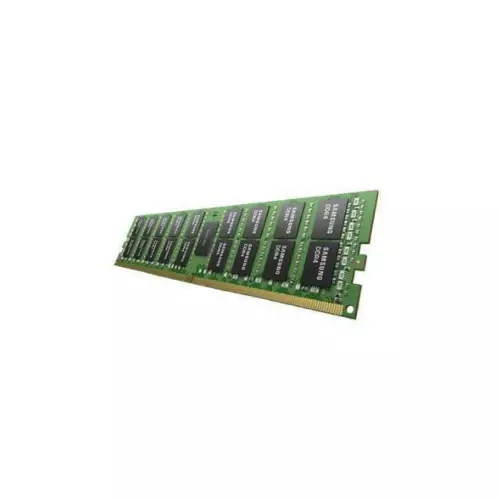
This 128GB DDR4-2933 Registered ECC RDIMM (PC4-23400) with quad-rank configuration is purpose-built for enterprise servers and high-density virtualization platforms, where data integrity and massive memory capacity are critical for in-memory databases and hyper-converged infrastructure. The registered signal type, combined with ECC and a conservative CL21 latency, ensures stable multi-DIMM operation at full speed by reducing electrical load on the memory controller, making it an optimal choice for scaling to terabytes of reliable memory in mission-critical workloads.
1. 128GB capacity per module allows deeper virtual machine consolidation on a single node, directly raising data center compute density without adding server count.
2. DDR4 technology provides the foundational efficiency and reliability expected in enterprise servers, ensuring broad compatibility with mainstream platforms while reducing power envelope versus older generations.
3. 2933 MT/s speed elevates memory bandwidth to feed multi-core server CPUs effectively, accelerating in-memory databases and real-time analytics under heavy query loads.
4. ECC protection detects and corrects single-bit errors in real time, shielding long-running enterprise workloads from silent data corruption that could compromise financial or scientific results.
5. Registered DIMM signaling stabilizes high-capacity memory configurations by buffering command and address lines, essential for scaling to quad-rank setups without risking signal degradation or system crashes.
For data centers running virtualized clusters and in-memory databases, the Samsung M393AAG40M3B-CYFBY RDIMM delivers uncompromising stability and speed. Its ECC error correction silently intercepts bit flips induced by background radiation, preserving data integrity across hundreds of virtual machines and preventing application crashes that cost revenue. The registered buffer isolates memory chip loads, allowing stable 128 GB capacity per module even in fully populated servers—directly enabling multi-terabyte footprints for VMware ESXi hosts without signal degradation. Quad-rank architecture multiplies concurrent page accesses, saturating DDR4-2933 bandwidth to accelerate analytical queries in SAP HANA or Redis, where every transaction must complete in microseconds. With 1.2 V low-power operation, thermal loads stay manageable inside dense rack enclosures, ensuring round-the-clock reliability. This translates to zero-downtime SLAs for your virtual infrastructure and lightning-fast, consistent responses for real-time decision-making.
Capacity Planning Guide for Server Memory (DDR4-2933 RDIMM, 128GB Quad Rank ECC)
General Virtualization
With 128 GB registered DIMMs, dense virtualization hosts can maximize VM density per socket. In dual-socket servers, populate six to eight modules per CPU to balance memory bandwidth and capacity, typically using two or four modules per channel. This configuration supports hundreds of light to medium VMs while maintaining reliable ECC protection.
In-Memory Database
In-memory databases like SAP HANA or Redis demand both large capacity and high data integrity. Deploy a balanced DIMM layout with one 128 GB quad-rank module per memory channel, avoiding mixed ranks on the same channel. For a two-socket server, aim for 12–16 modules to reach 1.5–2 TB total, ensuring full memory speed and low latency under heavy OLAP workloads.
High Performance Computing (HPC)
HPC clusters favor high memory bandwidth for simulation and modeling codes. Install one 128 GB RDIMM per channel to achieve 2933 MT/s speed without throttling. For memory-bound codes, configure all channels equally to leverage the server’s peak bandwidth; quad-rank modules deliver good capacity while maintaining a single slot per channel to avoid signal integrity issues in dense node designs.
Server memory rigorously tested, compatible with Dell PowerEdge R750, HPE ProLiant DL380 Gen10 Plus, Lenovo ThinkSystem SR650 V2.
Q: Can I mix this M393AAG40M3B-CYFBY with other memory modules of different brands or speeds?
A: Mixing is not recommended in server environments. Different brands, speeds, or ranks may compromise signal integrity and cause instability. Even identical specs can have subtle timing mismatches, which risks data integrity in mission-critical workloads.
Q: Is this memory compatible with my system?
A: This 128GB RDIMM requires a platform supporting DDR4-2933 Registered ECC memory. It is validated for specific Intel Xeon Scalable and AMD EPYC series. Always consult your server's Qualified Vendor List (QVL) to confirm compatibility with your exact board and CPU.
Q: What is the recommended DIMM population order for optimal performance?
A: Typically, populate identical Quad Rank DIMMs starting from the farthest slots per channel. For dual-socket servers, balance NUMA nodes symmetrically. Adhere to your server's memory population guidelines to maintain optimal rank interleaving and full memory bandwidth.
Q: Does this module support overclocking or XMP profiles?
A: No. This is an enterprise-grade ECC RDIMM designed for stability under continuous load. It does not support overclocking or XMP. It strictly runs at JEDEC-standard DDR4-2933 with CL21 timings, prioritizing data reliability above clock frequency adjustments.
Q: What warranty and typical failure rate can I expect?
A: It carries a one-year warranty. As an OEM server-grade module built with rigorously screened components and ECC, its annualized failure rate is extremely low, typically below 0.2%, ensuring high reliability in 24/7 enterprise operations.