











 Secure payments
Standard refund policy
Trade Assurance
Secure payments
Standard refund policy
Trade Assurance
| Product Type | Memory Module |
|---|---|
| Compliance Standards | |
| Memory Capacity | 8 GB |
| Memory Technology | DDR3 |
| Product Voltage | 1.35 V |
| RAM Speed | 1333 MHz |
| RAM Standard | DDR3-1333/PC3-10600 |
| Error Identifying | ECC |
| Signal Type | Registered |
| Column Access Strobe (CAS) | CL9 |
| Rank | Dual Rank x4 |
| Quantity of Pins | 240-pin |
| RAM Genre | RDIMM |
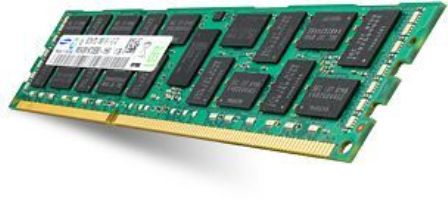
This DDR3-1333 Registered ECC memory module is tailored for legacy server platforms, making it ideal for virtualization farms and memory-intensive database workloads where data correctness is non-negotiable. The registered signal type ensures robust signal integrity across populated channels, while the dual-rank x4 organization and hardware ECC engine work together to maximize interleaved throughput and eliminate silent data corruption in 24/7 operation.
1. ECC error correction actively scrubs single-bit upsets, preserving financial transaction logs and in-memory databases from silent data corruption in always-on enterprise deployments.
2. Registered buffering decouples the memory control signals, allowing ultra-high-capacity configurations that sustain virtual machine density without compromising command bus integrity.
3. A 1.35V operating envelope reduces thermal dissipation and cumulative power draw per rack, directly lowering cooling costs for dense server farms running 24/7 workloads.
4. Eight-gigabyte module granularity provides ideal building blocks for mid-range virtualization hosts, balancing memory footprint per node with cost-effective resource allocation for containers and services.
5. Dual Rank x4 organization interleaves access across multiple internal banks, sustaining channel utilization and steady throughput even under heavy analytical query concurrency.
The M393B1K70CH0-YH9 is a server-grade DDR3 Registered DIMM, purpose-built for mission-critical enterprise environments where failure is not an option. Its four defining characteristics directly address the pain points of IT infrastructure managers.
First, the ECC technology continuously detects and corrects single-bit memory errors caused by background radiation or electrical noise. In a virtualization cluster hosting dozens of virtual machines, an uncorrected bit flip can silently corrupt a live database transaction or crash a hypervisor, cascading to widespread service outages. Second, the Registered signal buffer re-drives commands and addresses, isolating the memory controller from excessive electrical loading. This allows you to populate all 24 DIMM slots on a dual-socket server with 8GB modules, achieving massive total memory capacity without instability, essential for scaling virtual desktops or web server farms. Third, the ultra-low 1.35V operating voltage significantly reduces power consumption and heat output across a fleet of hundreds of servers. For a memory-resident database like Redis or SAP HANA, this translates directly into lower OPEX and denser rack utilization, as cooling demands drop. Finally, the Dual Rank x4 architecture leverages rank interleaving to serve simultaneous read requests more efficiently, boosting bandwidth and lowering average latency. Under heavy transactional loads where microseconds matter, your in-memory analytical queries return faster, making real-time decision-making genuinely responsive. This module is not just a component; it’s a cornerstone of data integrity, scalability, energy efficiency, and raw performance in the data center.
General Virtualization
This 8 GB DDR3-1333 RDIMM operates at 1.35 V with ECC, making it a staple for power-efficient, moderately dense virtualization hosts. In a typical dual-socket server, populate at least six identical modules per CPU (12 total) to balance memory channels and create a 96 GB pool for 20–30 light-to-medium VMs. Stick to identical dual-rank x4 DIMMs to avoid performance penalties from mixing ranks, and leave headroom for hypervisor overhead.
In-Memory Database
Low-latency, high-reliability in-memory databases demand full population of all memory channels with identical ECC RDIMMs to maximize bandwidth. For a dataset near 100 GB, install 12 of these 8 GB modules (96 GB) across both sockets, ensuring two DIMMs per channel where possible. Configure spare ranks or mirroring in the BIOS if the platform supports it—registered dual-rank x4 modules deliver the signal integrity essential for sustained transactional throughput.
High Performance Computing
HPC workloads reward balanced, high-bandwidth memory configurations under registered ECC. Deploy three or four of these 8 GB modules per CPU channel in a densely populated node to exploit dual-rank x4 interleaving and cut access latencies. For nodes targeting 64–128 GB per socket, combine twelve to sixteen identical modules while keeping 1.35 V operation to reduce thermal load in rack-dense clusters, sustaining stable floating-point throughput across MPI jobs.
Rigorously tested, compatible with servers like Dell PowerEdge R720/R620 and HP ProLiant DL380p Gen8.
Q: Can I mix this M393B1K70CH0-YH9 with other memory modules of different brands or speeds?
A: Strictly not advised. Registered ECC memory like this RDIMM requires identical modules for stable operation. Mixing different brands or speeds may cause system errors or boot failure. Use same part number for guaranteed compatibility.
Q: Is this memory compatible with my system?
A: This M393B1K70CH0-YH9 is compatible with server platforms supporting DDR3 Registered ECC memory, such as Intel Xeon E5-2600 v1/v2 or AMD Opteron 6300 series. Please verify your motherboard supports 1.35V low voltage and 240-pin RDIMM.
Q: What is the recommended DIMM population order for optimal performance?
A: Consult your server motherboard manual. Usually, populate DIMMs symmetrically per memory channel, starting with white slots. For dual-socket systems, balance identical capacity Dual Rank x4 RDIMMs across both CPUs for maximum bandwidth.
Q: Does this module support overclocking or XMP profiles?
A: No. This server-grade RDIMM prioritizes stability over overclocking, and does not support XMP. It operates at JEDEC standard DDR3-1333 CL9 to ensure mission-critical reliability. We do not recommend exceeding rated specifications.
Q: What warranty and typical failure rate can I expect?
A: We offer a one-year warranty. This enterprise RDIMM has a very low failure rate, built for longevity with ECC protection. All modules undergo rigorous testing to minimize defects in long-term operation.