











 Secure payments
Standard refund policy
Trade Assurance
Secure payments
Standard refund policy
Trade Assurance
| Product Type | Memory Module |
|---|---|
| Memory Capacity | 16 GB |
| Memory Technology | DDR3 |
| Product Voltage | 1.35 V |
| RAM Speed | 1333 MHz |
| RAM Standard | DDR3-1333/PC3-10600 |
| Error Identifying | ECC |
| Signal Type | Registered |
| Column Access Strobe (CAS) | CL9 |
| Rank | Dual Rank x4 |
| Quantity of Pins | 240-pin |
| RAM Genre | RDIMM |
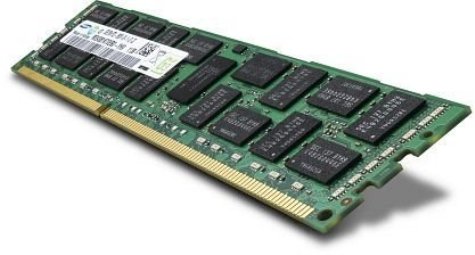
This 16GB DDR3-1333 RDIMM, operating at a low 1.35V with ECC and registered signaling, is engineered for legacy server platforms requiring rock-solid data integrity in virtualized environments, memory-centric databases, and other mission-critical enterprise workloads. Its dual-rank x4 organization enhances memory bandwidth utilization and reduces row conflicts, making it an ideal choice for dense multi-DIMM configurations where stability under sustained load is paramount.
1. ECC protection automatically detects and corrects single-bit errors, preserving transactional data accuracy and uptime in mission-critical enterprise servers.
2. Registered signaling buffers the command and address buses, enabling stable operation across fully loaded memory channels in large-scale server deployments.
3. Dual Rank x4 organization interleaves memory banks to keep server memory channels saturated, delivering consistent throughput for heavy virtualization workloads.
4. A 16GB capacity per module supplies generous memory headroom, allowing higher virtual machine density without sacrificing application responsiveness.
5. 1.35V low-voltage operation cuts datacenter power draw and thermal output, lowering cooling overhead while sustaining dependable registered memory performance.
When your virtualization cluster silently corrupts a transaction or your in-memory database drops a critical record, you lose far more than uptime—you lose trust. The Samsung M393B2G70CB0-YH9, a 16GB DDR3-1333 Registered ECC RDIMM, is engineered precisely to prevent these invisible failures. Its ECC technology actively corrects single-bit errors caused by cosmic radiation or electrical noise, meaning data integrity remains absolute during months-long database uptime, protecting financial transactions or patient records from silent corruption. The Registered buffer stabilizes high-density configurations by reducing the electrical load on the memory controller, so when you populate all 24 DIMM slots in a virtualized host running dozens of VMs, you avoid signal degradation that would otherwise cause random crashes under peak load. With a Dual Rank x4 organization and CL9 latency, this module interleaves memory accesses efficiently, delivering higher bandwidth for memory-hungry applications like SAP HANA or large Redis caches, where sub-millisecond retrieval is non-negotiable. Operating at a low 1.35V, it also reduces thermal footprint across a full rack of servers, lowering cooling costs and extending component lifespan without sacrificing 1333MT/s throughput. For the virtualized data center or real-time analytics engine, this memory transforms abstract specifications into measurable resilience: fewer silent data corruptions, predictable performance under consolidation, and total cost of ownership advantages that directly impact your operational budget.
General Virtualization
For a dual-socket server, install six or eight of these 16GB RDIMMs to balance capacity across all memory channels. Distributing one DIMM per channel (e.g., 3 per CPU, 96GB total) avoids performance penalties and provides ample headroom for multiple VMs. Keep an identical set of spare modules on hand to maintain NUMA symmetry during failover.
In-Memory Database
Populate every available channel with a single 16GB RDIMM, reaching 128GB or 256GB depending on board layout, to maximize bandwidth under heavy read/write loads. The registered ECC design guarantees data integrity, and using all channels prevents interleaving gaps that would throttle in-memory index scans. Match all modules exactly to eliminate clock skew on legacy DDR3 controllers.
High Performance Computing
Install an equal number of DIMMs per socket—typically eight modules (128GB) on a dual 4-channel platform—to supply uniform, high-bandwidth access for parallel numerical workloads. Filling channels without resorting to dual-rank-per-channel configurations keeps the memory bus at its full 1333 MT/s speed. The consistent CL9 latency and 1.35V operation reduce thermal strain in dense cluster nodes during sustained computational runs.
Rigorously tested, this DDR3 ECC Registered DIMM is compatible with Dell PowerEdge R720/R730, HP ProLiant DL380p Gen8, and similar servers.
Q: Can I mix this M393B2G70CB0-YH9 with other memory modules of different brands or speeds?
A: Mixing brands or speeds with registered ECC modules is strongly discouraged. It often causes POST failures or silent data corruption. Always use identical part numbers to guarantee signal integrity and system stability.
Q: Is this memory compatible with my system?
A: This 16GB DDR3-1333 RDIMM is designed for dual-socket servers using Intel Xeon E5-2400/2600 v1/v2 or AMD Opteron 6300 platforms. Verify your board supports 1.35V, registered ECC, and 240-pin modules.
Q: What is the recommended DIMM population order for optimal performance?
A: Always refer to your server manual. Typically, populate the farthest slot per channel first with identical dual-rank DIMMs. Balance across memory channels and fill blue slots before black to maximize throughput.
Q: Does this module support overclocking or XMP profiles?
A: No. This is a server-grade RDIMM built for mission-critical reliability. It runs exclusively at JEDEC-standard DDR3-1333 CL9 timings without any support for overclocking or XMP profiles, ensuring 24/7 stability.
Q: What warranty and typical failure rate can I expect?
A: You receive a 1-year warranty. Enterprise registered ECC memory exhibits an extremely low annualized failure rate, typically under 0.5%, making it ideal for mission-critical server environments where uptime is paramount.