











 Secure payments
Standard refund policy
Trade Assurance
Secure payments
Standard refund policy
Trade Assurance
| Product Type | Memory Module |
|---|---|
| Compliance Standards | |
| Memory Capacity | 16 GB |
| Memory Technology | DDR3 |
| Product Voltage | 1.35V |
| RAM Speed | 1066MHz |
| RAM Standard | DDR3-1066/PC3-8500 |
| Error Identifying | ECC |
| Signal Type | Registered |
| Column Access Strobe (CAS) | CL7 |
| Rank | Quad Rank x4 |
| Quantity of Pins | 240-pin |
| RAM Genre | RDIMM |
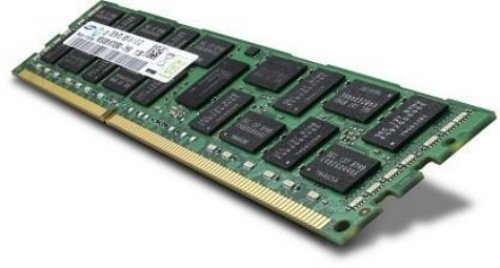
This RDIMM is engineered specifically for server platforms, ideal for virtualization and memory-intensive workloads such as in-memory databases where data integrity is paramount. Its quad-rank x4 configuration maximizes capacity density per channel, while ECC and registered signaling ensure signal stability and error correction in multi-DIMM deployments, complemented by a low CAS latency of CL7 and energy-efficient 1.35V operation.
1. 16GB capacity delivers the overhead crucial for dense virtualization, enabling a higher number of virtual machines per physical host without compromising guest performance.
2. ECC error identification silently corrects single-bit memory faults in real time, shielding transactional databases and financial records from silent data corruption.
3. Registered signal type buffers the command and address buses, maintaining rock-solid stability across fully populated server memory channels even under maximum DIMM count.
4. Quad Rank x4 organization packs more logical banks into a single stick, allowing large-memory-footprint workloads like in-memory analytics to scale without resorting to uncertain mix-and-match configurations.
5. 1.35V low-voltage operation meaningfully reduces the total power draw of rack-scale deployments, trimming both electricity bills and thermal stress inside hot-aisle enclosures.
Designed for server environments, the Samsung M393B2K70CMB-YF8 is a Registered DDR3 ECC module that turns four architectural features into tangible data-center advantages. Its ECC engine silently corrects single-bit errors, safeguarding virtualized clusters from silent data corruption that could crash hypervisors or corrupt transactional records during live migrations. Registered signal buffering re-drives command and address lines, so you can populate all 24 DIMM slots per server with complete electrical stability—this directly means denser VM consolidation without random reboots. The 1.35 V low-power design cuts thermal load and energy cost across a fleet, keeping large-scale deployments sustainable and easing cooling budgets. With a quad-rank x4 organization delivering 16 GB per stick at a responsive CL7 latency, in-memory databases such as Redis or SAP HANA gain both the capacity headroom and the rapid access that real-time analytics demand. For you, that translates to continuous uptime, predictable performance under heavy mixed workloads, and a measurably lower total cost of ownership.
General Virtualization
For virtualized workloads balancing density and cost, populate all memory channels evenly with these 16 GB DDR3L RDIMMs to maximize interleaving. A typical dual‑socket server with three channels per CPU benefits from six identical modules (96 GB total), leaving room for future expansion. Stick to 1.35 V registered DIMMs exclusively to maintain signal integrity in multi‑rank configurations and reduce power overhead across dozens of VMs.
In‑Memory Database
In‑memory databases demand maximum capacity and fault tolerance, making ECC and registered signaling essential. These quad‑rank x4 modules deliver high density per slot; however, validate the platform’s per‑channel rank limit—many servers support only two quad‑rank DIMMs per channel without clock speed degradation. To reach 256 GB or more, fill all slots with identical 16 GB RDIMMs and set the memory operating mode to fully buffered or mirrored if data protection outweighs raw capacity.
High‑Performance Computing
HPC nodes rely on aggregate bandwidth, so fully populate each CPU’s memory channels to compensate for the DDR3‑1066 clock. At CL7 latency, these low‑voltage DIMMs keep thermal load manageable inside dense clusters. Configure 8 or 12 modules per node to run large‑scale simulations without swapping, and avoid mixing quad‑rank DIMMs with other ranks in the same channel to prevent performance penalties. Prioritize total throughput over single‑thread speed by deploying evenly spread, symmetrical memory populations.
This server memory is rigorously tested and compatible with Dell PowerEdge R720, HP DL380p Gen8, and Lenovo x3650 M4.
Q: Can I mix this M393B2K70CMB-YF8 with other memory modules of different brands or speeds?
A: Mixing RDIMMs of different brands or speeds is not recommended. The system will downclock to the slowest module, and ECC/register mismatches often cause POST failures or instability.
Q: Is this memory compatible with my system?
A: This DDR3-1066 Registered ECC DIMM requires a server board with a 240-pin socket and Intel Xeon 5500/5600 series or AMD Opteron 6100/6200 series platform supporting quad-rank x4 modules.
Q: What is the recommended DIMM population order for optimal performance?
A: For quad-rank x4 RDIMMs, populate identical DIMMs per channel starting with the slots farthest from the CPU. Balance channels and follow your server’s memory matrix to maintain rank interleaving.
Q: Does this module support overclocking or XMP profiles?
A: No. This is a JEDEC-compliant server memory module. It does not support overclocking or XMP profiles. It operates strictly at the fixed 1066MHz speed for maximum stability.
Q: What warranty and typical failure rate can I expect?
A: This module carries a one-year warranty. As an enterprise-grade Samsung RDIMM with ECC, it has an extremely low annualized failure rate, typically under 0.5% in properly cooled environments.