











 Secure payments
Standard refund policy
Trade Assurance
Secure payments
Standard refund policy
Trade Assurance
| Product Type | Memory Module |
|---|---|
| Memory Capacity | 16 GB |
| Memory Technology | DDR3 |
| Product Voltage | 1.35V |
| RAM Speed | 1333MHz |
| RAM Standard | DDR3-1333/PC3-10600 |
| Error Identifying | ECC |
| Signal Type | Registered |
| Column Access Strobe (CAS) | CL9 |
| Rank | Quad Rank |
| Quantity of Pins | 240-pin |
| RAM Genre | RDIMM |
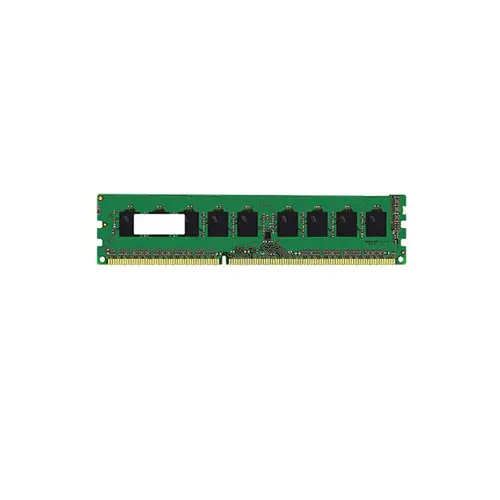
This DDR3L-1333 Registered ECC RDIMM, with its quad-rank configuration and 1.35V low-voltage operation, is purpose-built for dense server environments such as virtualization hosts and in-memory databases where data integrity and high memory capacity per channel are critical. The registered signal type and ECC error correction work in tandem to maintain signal stability and prevent single-bit errors in 24/7 mission-critical workloads, making it ideal for legacy enterprise servers and tier-2 storage arrays that demand reliable, high-density memory expansion.
1. On-the-fly error correction safeguards transactional data integrity, essential for financial databases and mission-critical workloads running 24/7.
2. The registered buffer re-drives address and command signals, enabling reliable operation across fully populated multi-slot servers without signal degradation.
3. Generous module capacity allows higher memory density per server node, supporting larger virtualization footprints and in-memory analytics with fewer DIMM slots.
4. Quad rank organization packs maximum DRAM components onto a single stick, delivering substantial capacity for dense computing environments while maintaining compatibility with registered platforms.
5. Low-voltage operation reduces overall energy draw and thermal output in data centers, contributing to lower cooling costs and improved power usage effectiveness.
The Samsung M393B2K70DMB is a server-grade DDR3 Registered DIMM engineered for mission-critical enterprise environments, where unplanned downtime or data corruption simply is not an option. Its quad-rank, 16 GB capacity means you can populate fewer slots to reach the memory density required by a virtualized cluster running dozens of guests, preserving precious board real estate and easing future scalability. The registered buffer ensures clean command and address signals even when all channels are fully loaded, allowing hypervisors to maintain stability under intense consolidation without signal integrity collapse. In tandem, ECC protection continuously scans for and corrects single-bit errors, shielding your in-memory databases and transactional workloads from silent data corruption that could cascade into financial discrepancies or application failures. Meanwhile, the 1.35 V low-voltage design trims thermal output and power draw across a rack of servers, directly lowering your cooling overhead and electricity bills while sustaining 1333 MHz speed and CL9 latency for predictable response times under heavy query loads. Together, these attributes translate into a memory foundation that prioritizes unwavering data integrity, dense virtualization, and operational efficiency, keeping your database engines and compute nodes running reliably around the clock.
Capacity Planning Guide for 16GB DDR3-1333 ECC Registered Quad-Rank RDIMM
This server-grade RDIMM is built for reliability and moderate capacity. Its quad-rank, 1.35V design demands careful population to balance speed and density across virtualization, in-memory databases, and HPC workloads.
General Virtualization
Quad-rank DIMMs can strain memory channels; install one module per channel to maintain 1333MHz or accept a speed reduction if populating two per channel. For a dual-socket host, start with eight modules (128GB) spread evenly across all channels to optimize NUMA performance and provide headroom for dozens of virtual machines. Scale to sixteen modules (256GB) only if the platform guarantees stable operation at the resulting lower frequency.
In-Memory Database
Maximize capacity by populating every slot with these 16GB DIMMs, as loading the full dataset into RAM is paramount. A 24-slot server yields 384GB, sufficient for large in-memory tables, though interleaving across quad ranks may throttle speed to 800MT/s. If latency is tolerable, this dense configuration delivers the best cost-per-gigabyte for memory-resident analytics.
HPC
Preserve the native 1333MHz clock by installing just one quad-rank DIMM per channel. Configure the minimal capacity each compute node genuinely needs—typically 64GB (four modules) or 128GB (eight modules) for most simulations and models. This strategy cuts access latency and sustains peak bandwidth, aligning with the single-threaded sensitivity common in HPC codes.
Rigorously tested server RDIMM, compatible with Dell PowerEdge R720, HP DL380p Gen8, Lenovo x3650 M4, etc.
Q: Can I mix this M393B2K70DMB with other memory modules of different brands or speeds?
A: Mixing is not recommended. For mission-critical servers, always use identical modules (same MPN, rank, and speed) to prevent stability issues, unexpected downtime, and performance degradation.
Q: Is this memory compatible with my system?
A: This module suits servers with Intel Xeon 5500/5600 or E5-2400/2600 v1/v2 series, or AMD Opteron platforms that support DDR3 Registered ECC memory. Verify your board’s qualified vendor list.
Q: What is the recommended DIMM population order for optimal performance?
A: Follow your server’s technical guide. Typically, populate identical Quad Rank RDIMMs per channel starting with the furthest slot from the CPU, and note that speed may drop to 1066MHz when using multiple ranks.
Q: Does this module support overclocking or XMP profiles?
A: No. This is an enterprise RDIMM adhering to JEDEC standards for guaranteed stability at DDR3-1333 CL9. XMP and overclocking are not supported; reliable operation at rated parameters is assured.
Q: What warranty and typical failure rate can I expect?
A: This module includes a one-year warranty. Enterprise-class RDIMMs demonstrate extremely low failure rates, with an annualized failure rate typically under 0.2% under proper thermal conditions.