











 Secure payments
Standard refund policy
Trade Assurance
Secure payments
Standard refund policy
Trade Assurance
| Product Type | Memory Module |
|---|---|
| Memory Capacity | 4 GB |
| Memory Technology | DDR3 |
| Product Voltage | 1.5V |
| RAM Standard | DDR3-1333/PC3-10600 |
| Error Identifying | ECC |
| Signal Type | Registered |
| Column Access Strobe (CAS) | CL9 |
| Rank | Single Rank |
| Quantity of Pins | 240-pin |
| RAM Genre | RDIMM |
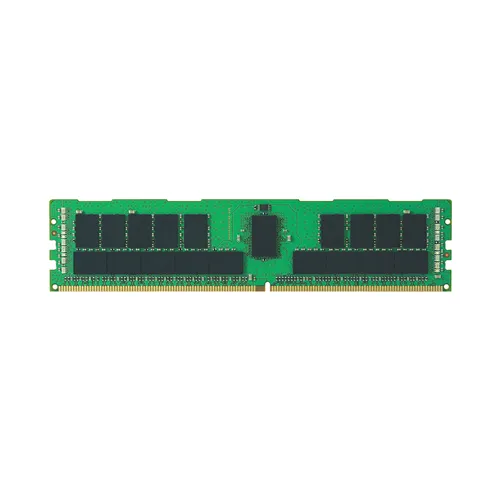
This DDR3-1333 registered ECC memory module (RDIMM) is purpose-built for server platforms, making it an ideal fit for virtualization hosts, in-memory databases, and data-integrity-sensitive enterprise workloads. Its single-rank configuration and registered signal architecture stabilize multi-DIMM channels at CL9 latency, while ECC delivers hardware-level single-bit error correction crucial for 24/7 operational reliability.
1. Error correction code protection detects and corrects single-bit memory faults, crucial for guarding financial transaction integrity and preventing silent data corruption in virtualized environments.
2. Registered clock drivers buffer command and address signals, enabling dense memory configurations per channel necessary for maximizing virtual machine density in enterprise servers.
3. A modest capacity footprint is ideal for dedicated management controllers or lightweight microservice nodes, reducing cost and power without wasting over-provisioned resources.
4. DDR3 mainstream frequency delivers sufficient bandwidth for steady-state web hosting and content caching workloads, balancing performance with thermal headroom in data centers.
5. Single Rank organization minimizes bus loading, allowing all DIMM slots to operate at full speed when scaling out memory capacity in multi-socket platforms.
The Samsung M393B5170EH1 is a registered DDR3 ECC memory module engineered specifically for server infrastructures where absolute data integrity and unshakable stability are non-negotiable. In a dense virtualization cluster hosting dozens of virtual machines, a single undetected bit-flip caused by background radiation can silently corrupt a hypervisor kernel or a financial transaction ledger. The built-in ECC actively detects and corrects single-bit errors, directly preventing these catastrophic silent data corruptions that consumer-grade memory simply cannot address. Simultaneously, the registered design buffers command and address signals, dramatically reducing the electrical load on the memory controller. This means your quad-socket server can operate fully populated with 24 identical DIMMs without timing failures or system crashes, sustaining rock-solid throughput under maximum capacity. For in-memory databases like Redis or SAP HANA, the single-rank configuration provides superior signal integrity and consistent access latency at CL9, delivering predictable low-latency responses even as data sets grow. This prevents the erratic performance dips that degrade real-time analytics during peak transaction loads, keeping your service-level agreements intact.
General Virtualization
For a foundational hypervisor host running a moderate number of virtual machines, populate the server with at least six to eight of these 4GB DDR3-1333 RDIMMs across triple-channel or balanced memory channels to achieve 24–32GB. Registered ECC memory is mandatory to prevent silent data corruption in multi-tenant environments, and single-rank modules provide better signal integrity when fully loading all DIMM slots.
In-Memory Database
Deploy the maximum number of these 4GB RDIMMs the platform supports, typically 12 or 18 modules per server for 48–72GB, to keep entire datasets in RAM with sub-millisecond latency. Capacity takes priority over frequency for in-memory workloads like Redis or SAP HANA, and ECC is non-negotiable to protect critical transactional data against bit errors.
High-Performance Computing (HPC)
Configure one 4GB RDIMM per channel for peak memory bandwidth, leveraging single-rank DIMMs to sustain higher clock speeds in dense, multi-socket nodes. While 4GB per module limits total capacity, a balanced population of 8–12 DIMMs delivers the low-latency, error-corrected throughput required for tightly coupled parallel jobs, provided the cluster scales out across many such nodes.
Rigorously tested, compatible with Dell PowerEdge R720, HP ProLiant DL380p Gen8, and similar servers.
Q: Can I mix this M393B5170EH1 with other memory modules of different brands or speeds?
A: Mixing with other RDIMMs is possible but will downclock to the lowest module’s speed and timings. For mission‑critical stability, we strongly recommend using identical, system‑validated modules.
Q: Is this memory compatible with my system?
A: This DDR3 Registered ECC RDIMM fits servers with Intel Xeon 5500/5600 or AMD Opteron 6000 platforms. Confirm your motherboard’s QVL or manual supports 240‑pin DDR3‑1333 RDIMMs with 1.5V.
Q: What is the recommended DIMM population order for optimal performance?
A: Refer to your server board’s population guide; typically populate identical DIMMs per memory channel, starting with blue slots. Balanced interleaving across channels ensures maximum throughput and reliability.
Q: Does this module support overclocking or XMP profiles?
A: No. This enterprise RDIMM runs at JEDEC DDR3‑1333 CL9 and does not support overclocking or XMP. It is engineered for unwavering stability in continuous 24/7 server operation.
Q: What warranty and typical failure rate can I expect?
A: It carries a 1‑year warranty. Enterprise RDIMMs typically exhibit an annualized failure rate below 0.2% when operated within specified voltage and thermal limits, ensuring long‑term dependability.