

 Secure payments
Standard refund policy
Trade Assurance
Secure payments
Standard refund policy
Trade Assurance
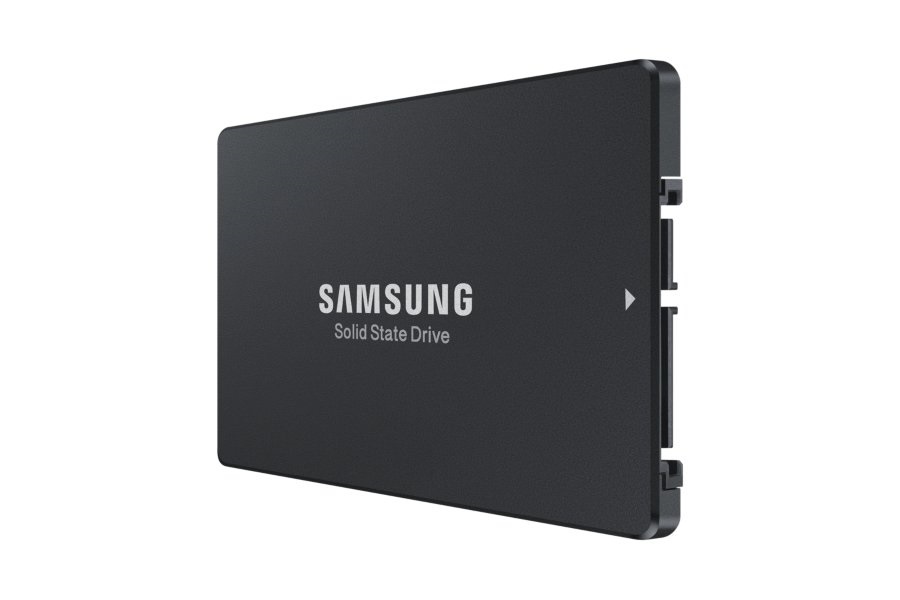
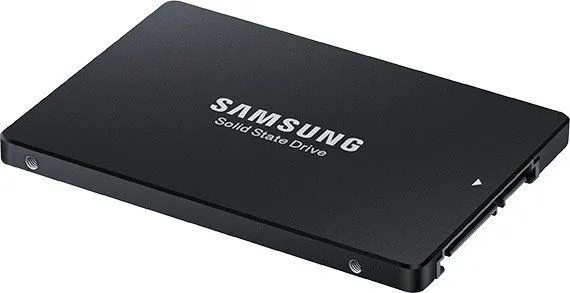
| Brand | Samsung |
|---|---|
| Model | PM883 |
| Capacity | 7.68 TB |
| Usage Class | Read Intensive |
| Host Interface | SATA 6.0 Gbps |
|---|---|
| Total Interface Bandwidth | 6 Gb/s |
| Form Factor | 2.5" |
|---|
| NAND Flash | Samsung V-NAND 64-layer 3D TLC |
|---|---|
| Drive Writes Per Day | 1.3 |
| Total Bytes Written | 10935 TBW |
| Sequential Read | 550 MB/s |
|---|---|
| Sequential Write | 520 MB/s |
| Random Read IOPS | 98000 |
| Random Write IOPS | 28000 |
| Average Latency | 120 μs |
| Mean Time Between Failures | 2 Million Hours |
|---|---|
| Uncorrectable Bit Error Rate | 1.0×10⁻¹⁷ |
| Power Loss Protection | Yes |
| MPN | MZ7LH3T8HMLT |
|---|
Compared with the previous-generation MZ7LH3T8HMLT, the MZ7LH7T6HMLA advances the PM883 family to a 7.68 TB capacity point with Samsung 64-layer 3D TLC V-NAND, giving architects higher storage density and a substantial 10,935 TBW endurance envelope within the same SATA 6.0 Gbps infrastructure. For read-centric virtualization, scale-out storage, and database-serving tiers that still standardize on SATA, it pairs near-interface-limit throughput at 550/520 MB/s with 98,000/28,000 IOPS and 1.3 DWPD, making it a stronger consolidation choice than earlier PM883 builds.
With an endurance rating of 10,935 TBW, the MZ7LH7T6HMLA can absorb about 10.9 petabytes of total host writes over its service life, which is a very strong margin for typical enterprise workloads. Its 1.3 DWPD rating means the drive is designed to be rewritten more than once per day on average, so in lighter-duty roles such as OS, boot, or read-heavy application storage, endurance is unlikely to be a practical concern even over very long deployment periods. For reliability, built-in Power Loss Protection (PLP) helps preserve in-flight data and metadata during an unexpected power interruption, reducing the risk of corruption and improving operational resilience. The specified UBER of 1.0E-17 indicates an enterprise-class uncorrectable bit error rate, meaning the drive is engineered for extremely high data integrity in business-critical environments.
1. The SATA 6.0 Gbps interface gives this drive broad server and storage-array compatibility, making it an easy upgrade for enterprise platforms that prioritize proven infrastructure and low deployment risk.
2. With 550 MB/s sequential read performance, it accelerates large-block workloads such as OS boot, backup restore, and log or media streaming in read-heavy environments.
3. Its 98,000 K IOPS random read capability, paired with a typical latency of 120 µs, helps databases and virtualized workloads respond faster under highly fragmented, transaction-heavy access patterns.
4. A 1.3 DWPD endurance rating supports sustained daily write activity in mixed-use enterprise applications, reducing replacement frequency and improving lifecycle predictability.
5. Samsung V-NAND 64-layer 3D TLC enables a strong balance of density, power efficiency, and reliability, making it well suited for scalable enterprise capacity without sacrificing steady-state performance.
Reference capacities for MPN MZ7LH7T6HMLA (7.68 TB, Samsung PM883 enterprise SATA SSD): - Lower capacity in the same PM883 series: 3.84 TB - Higher capacity: No larger standard capacity is listed in the exact PM883 series; the nearest practical upward reference in Samsung’s adjacent enterprise SATA lineup is 15.36 TB Capacity positioning analysis: At 7.68 TB, this drive sits at the sweet spot of Samsung’s enterprise SATA lineup. Compared with the 3.84 TB option, it gives meaningfully more headroom for dataset growth, denser VM placement, and longer refresh cycles without changing the usual enterprise SATA performance profile. Compared with a 15.36 TB class drive, it typically delivers a better balance of acquisition cost, usable capacity, and deployment flexibility. It is especially well suited for mid-scale virtualization clusters, mixed database nodes, or high-density read-centric application tiers in 1U/2U servers.
Q: Is MZ7LH7T6HMLA suitable for a write-heavy database server?
A: Yes, it is suitable for many enterprise database workloads. With 1.3 DWPD, 10,935 TBW, low 120 µs latency, and enterprise V-NAND, it fits mixed-use and moderately write-heavy servers well.
Q: How many full drive writes per day can it actually endure over its warranty period?
A: It is rated for about 1.3 full drive writes per day. On a 7.68 TB drive, that equals roughly 10 TB of writes daily, matching the published 10,935 TBW endurance.
Q: Does it include power loss protection (PLP) and why is that critical?
A: Yes, this model includes power loss protection. PLP helps preserve in-flight data and metadata during sudden outages, reducing corruption risk and improving reliability in servers, RAID arrays, and database environments.
Q: What RAID level is recommended for this SSD?
A: For most business-critical deployments, RAID 10 is recommended because it balances redundancy, write performance, and rebuild safety. RAID 1 is also suitable for smaller systems requiring strong protection and simplicity.