











 Secure payments
Standard refund policy
Trade Assurance
Secure payments
Standard refund policy
Trade Assurance
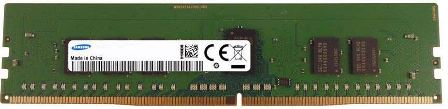
| Model | M391A1G43EB1-CPB00 |
|---|---|
| Product Type | Memory Module |
| Compliance Standards | EU RoHS,FCC |
| Memory Capacity | 8 GB |
| Memory Technology | DDR4 |
| Product Voltage | 1.2V |
| RAM Speed | 2133MHz |
| RAM Standard | DDR4-2133/PC4-17000 |
| Error Identifying | ECC |
| Signal Type | Unbuffered |
| Column Access Strobe (CAS) | CL15 |
| Rank | Dual Rank x8 |
| Quantity of Pins | 288-pin |
| RAM Genre | UDIMM |
This unbuffered ECC UDIMM is engineered for entry-level servers and small-scale virtualization platforms, where the dual-rank x8 organization boosts memory bandwidth and the ECC ensures data integrity for critical applications like file storage or light database workloads. Its 2133MHz DDR4 speed with CL15 latency and 1.2V efficiency delivers reliable, cost-effective stability in platforms that demand error correction without the overhead of registered memory.
1. ECC protection corrects single-bit memory errors in real time, preserving data integrity for 24/7 server workloads where even silent corruption is unacceptable.
2. 8GB capacity per module provides a dense foundation for lightweight virtualization hosts, allowing multiple VMs to run smoothly without immediate overcommit.
3. DDR4-2133 frequency delivers balanced throughput for entry-level server tasks, ensuring stable instruction delivery to the CPU under sustained access.
4. CL15 latency minimizes access delays for memory-bound applications, which translates to faster database query responses in small business servers.
5. Dual Rank x8 organization increases memory bank interleaving, enhancing bandwidth efficiency crucial for consistent performance in multi-threaded workloads.
Designed for entry-level servers and small-business NAS systems, the Samsung M391A1G43EB1-CPB00 is an 8GB DDR4-2133 Unbuffered ECC UDIMM that directly addresses the most painful realities of always-on computing. Its ECC functionality is non-negotiable when you run a virtualized cluster or an in-memory database like Redis. In a hypervisor hosting a dozen VMs, a single undetected bit-flip can corrupt guest filesystems or silently flip a database transaction flag, causing cascading data loss that your backups might not catch; ECC corrects single-bit errors on the fly, turning a potential silent outage into a non-event. The dual-rank x8 organization elevates performance by enabling rank interleaving, which means while one rank completes a write, the other can already surge ahead with a read command, significantly improving bandwidth saturation during heavy OLTP workloads or when a database engine performs large table scans. Unbuffered architecture sidesteps the extra clock cycle of registered memory, keeping memory latency at a lean CL15 so that latency-sensitive microservices remain snappy. Operating at just 1.2V, the module also directly lowers your thermal footprint inside a 1U chassis where every watt contributes to fan noise and long-term energy bills. In scenarios ranging from a ZFS-based file server scrubbing petabytes of data to a virtualization host consolidating branch-office workloads, this module ensures that integrity, throughput, and efficiency are never compromised.
This is an 8GB DDR4-2133 unbuffered ECC UDIMM (288-pin, 1.2V, dual-rank). It is designed for entry-level servers and workstations that require error correction without registered buffering. The capacity planning guidance below assumes a single-socket platform with four or eight DIMM slots and dual-channel memory architecture.
General Virtualization
Stability and moderate capacity are key. Populate all available memory channels symmetrically to enable ECC and dual-channel interleaving—typically four identical 8GB modules for 32GB, or eight for 64GB. This provides headroom for 8–15 light VMs, with ECC safeguarding against data corruption in multi-tenant environments.
In-Memory Database
Maximal capacity and consistent latency are critical for holding entire datasets in RAM. Use a fully populated configuration of eight modules (64GB total) if the board supports it; otherwise, four 8GB DIMMs (32GB) serves smaller in-memory instances. Pairing identical dual-rank modules ensures the memory controller can sustain stable operation under full load.
High-Performance Computing
Memory bandwidth often limits HPC throughput. Install modules in matched pairs across memory channels—four 8GB DIMMs (32GB) is the recommended minimum to saturate dual channels and provide balanced rank interleaving. For memory-capacity-bound workloads, scale to eight 8GB modules (64GB) while keeping the population symmetric to maintain rank interleave and ECC coverage.
Rigorously tested server memory, compatible with Dell PowerEdge T40, HPE ProLiant DL20 Gen10, Lenovo ThinkSystem ST50, and ECC UDIMM servers.
Q: Can I mix this M391A1G43EB1-CPB00 with other memory modules of different brands or speeds?
A: Mixing is not recommended for server environments. For guaranteed stability and ECC functionality, always use identical modules with the same Samsung part number and speed. Mismatched specs may cause system instability or disable ECC.
Q: Is this memory compatible with my system?
A: This DDR4-2133 ECC Unbuffered DIMM is designed for Intel Xeon E3/E-2100/2200 series and AMD Ryzen PRO platforms. Please verify your motherboard or server supports 288-pin ECC UDIMMs and the required memory technology.
Q: What is the recommended DIMM population order for optimal performance?
A: Populate memory channels symmetrically, typically filling blue slots first per channel. Refer to your server board's manual for the exact population sequence to achieve dual-channel interleaving and balanced memory bandwidth across all channels.
Q: Does this module support overclocking or XMP profiles?
A: No, this is a standard JEDEC-compliant server memory module operating at fixed 2133MHz. It does not support overclocking or XMP profiles, as data integrity and reliability are prioritized over speed adjustability in server environments.
Q: What warranty and typical failure rate can I expect?
A: This Samsung module comes with a 1-year warranty. As an OEM-grade component, it is built for high reliability with an extremely low annualized failure rate (AFR), ensuring stable, long-term operation in 24/7 server deployments.