











 Secure payments
Standard refund policy
Trade Assurance
Secure payments
Standard refund policy
Trade Assurance
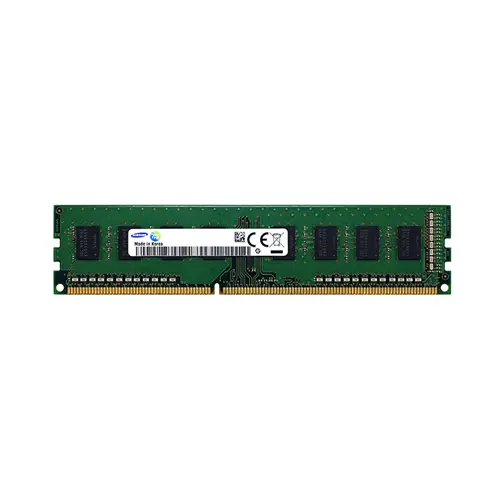
| Model | M392B2G73AM0-CF8 |
|---|---|
| Product Type | Memory Module |
| Compliance Standards | EU RoHS,FCC |
| Memory Capacity | 16 GB |
| Memory Technology | DDR3 |
| Product Voltage | 1.5V |
| RAM Speed | 1066MHz |
| RAM Standard | DDR3-1066/PC3-8500 |
| Error Identifying | ECC |
| Signal Type | Registered |
| Column Access Strobe (CAS) | CL7 |
| Rank | Quad Rank x8 |
| Quantity of Pins | 240-pin |
| RAM Genre | VLP RDIMM |
Ideal for virtualization and in-memory database workloads, this 16GB DDR3-1066 VLP RDIMM (M392B2G73AM0-CF8) leverages ECC and a registered signal type to ensure data integrity and stable operation in dense server environments. The quad-rank x8 organization maximizes capacity density per channel, while the CL7 low latency and very low-profile form factor make it exceptionally suited for 1U rack servers and blade nodes where thermal clearance and memory scalability are critical.
1. A 16GB capacity per module enables higher memory density per channel, allowing virtualization-heavy servers to host more VMs without sacrificing performance.
2. ECC protection silently detects and corrects single-bit memory errors, preserving data integrity in mission-critical database and financial transaction systems.
3. Registered signal buffering stabilizes command and address lines under heavy DIMM configurations, maintaining reliability in large-scale server deployments.
4. Quad Rank x8 organization packs more DRAM devices onto the module, optimizing memory bandwidth utilization for consolidated workloads in blade servers.
5. The Very Low Profile form factor improves airflow and reduces thermal constraints in dense 1U and 2U server chassis, ensuring sustained operation under continuous load.
The M392B2G73AM0-CF8 is a 16GB DDR3-1066 VLP RDIMM, a server-grade memory module engineered explicitly for mission-critical enterprise environments. Its four defining characteristics—ECC error correction, registered signal buffering, a quad-rank x8 architecture, and a very low-profile form factor—translate directly into tangible operational resilience and density. In a virtualization cluster running dozens of mixed-load VMs, ECC silently detects and corrects single-bit upsets caused by cosmic radiation or electrical noise; without it, a flipped bit could corrupt a hypervisor page table, crash multiple tenants, or silently write bad data into a database, turning a microseconds-long error into a weekend-long recovery. The registered buffer amplifies command and address signals, stabilizing the system when all 24 DIMM slots in a dual-socket server are fully populated, which lets you confidently scale to 384GB or more for elastic cloud workloads. The quad-rank design, stacking eight DRAM dies per rank, achieves 16GB in a single socket—a critical enabler for in-memory databases like Redis or financial trading analytics, where latency-sensitive hot datasets must reside entirely in RAM. A larger footprint created by quad-rank modules ensures your temporal data streams never spill to slower NVMe disks. Simultaneously, the VLP shroud drastically reduces the module height, guaranteeing fitment in dense 1U rack servers and blade nodes while improving front-to-back cooling. This prevents thermal throttling of the voltage regulators and extends reliability in the 24/7 drive racks where a single node’s failure is not an option.
General Virtualization
This 16 GB registered ECC DIMM suits dense virtualization hosts where memory reliability is paramount. Populate triple-channel or quad-channel configurations with identical modules for balanced performance — for example, six modules (96 GB) in a dual-socket server to comfortably host 20–30 light to medium VMs. VLP (very low profile) form factor improves airflow in 1U/2U chassis, critical for sustained operation.
In-Memory Database
For Redis or Memcached clusters requiring single-digit microsecond latency, combine multiple quad-rank DIMMs to maximize capacity per channel while observing rank limits. Deploy fully populated memory banks — e.g., 12 × 16 GB (192 GB) per host — to store entire datasets in RAM, drastically reducing disk I/O. Prioritize population order that balances ranks across memory controllers for uniform access times.
HPC
In HPC clusters running MPI workloads, memory bandwidth is king; install at least one DIMM per channel to leverage all available channels. A typical dual-socket configuration with 16 modules (256 GB) eliminates swap reliance during large-scale simulations. The ECC protection guards against silent data corruption during multi-day runs, and the VLP design enables dense node packaging without thermal throttling.
Rigorously tested for server compatibility: Dell PowerEdge R710, HP ProLiant DL380 G7, IBM System x3650 M3.
Q: Can I mix this M392B2G73AM0-CF8 with other memory modules of different brands or speeds?
A: Mixing is not recommended. Heterogeneous modules may cause signal integrity issues and instability. For reliable server operation, always populate with identical, validated modules of the same part number.
Q: Is this memory compatible with my server system?
A: This 16GB DDR3-1066 ECC Registered RDIMM is designed for dual-processor platforms using Intel Xeon 5600/5500 series or AMD Opteron 6100/6200 series. Verify your board supports quad-rank 1.5V modules.
Q: What is the recommended DIMM population order for optimal performance?
A: Follow your server motherboard’s population guide. Typically, fill identical modules across channels, inserting the first quad-rank RDIMM into the farthest slot from the CPU per channel, balancing memory systematically.
Q: Does this module support overclocking or XMP profiles?
A: No. This is a JEDEC-compliant enterprise memory module. It does not support overclocking or XMP profiles, as the registered clock driver and ECC circuitry require standard voltage and timings for guaranteed stability.
Q: What warranty and typical failure rate can I expect?
A: This module includes a 1-year warranty. Enterprise-grade ECC RDIMMs like this typically exhibit an extremely low annualized failure rate (AFR) of approximately 0.2% under nominal operating conditions.