











 Secure payments
Standard refund policy
Trade Assurance
Secure payments
Standard refund policy
Trade Assurance
| Brand | Intel |
|---|---|
| Model | 320 Series |
| Capacity | 160GB |
| Usage Class | Client PC |
| Host Interface | SATA 3Gb/s |
|---|---|
| Total Interface Bandwidth | 3 Gb/s |
| Form Factor | 2.5 |
|---|
| NAND Flash | Intel 25nm MLC |
|---|---|
| Drive Writes Per Day | 0.05 |
| Total Bytes Written | 30 TBW |
| Sequential Read | 270 MB/s |
|---|---|
| Sequential Write | 165 MB/s |
| Random Read IOPS | 39500 |
| Random Write IOPS | 21000 |
| Average Latency | 75 μs |
| Mean Time Between Failures | 1.2 Million Hours |
|---|---|
| Uncorrectable Bit Error Rate | 1.0×10⁻¹⁷ |
| Power Loss Protection | Yes |
| MPN | SSDSA2M160G2GC |
|---|
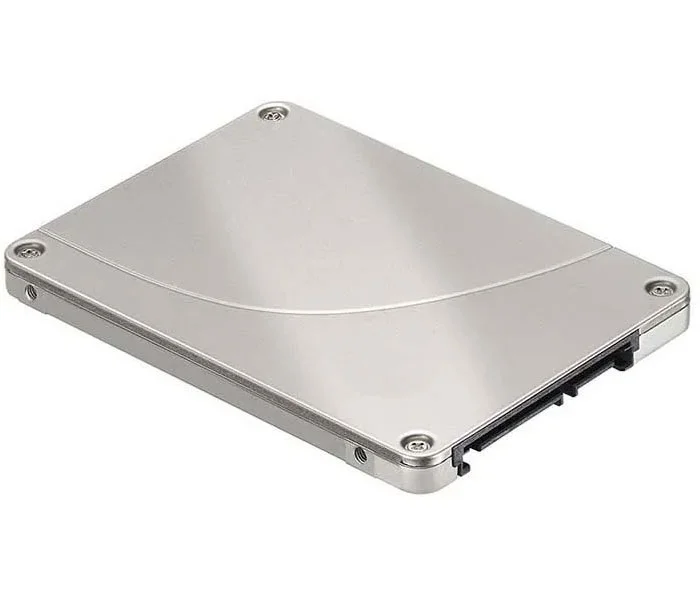
Intel E75495-601 (320 Series 160GB) is a strong fit for read-centric boot, OS, and edge-cache deployments, combining Intel 25nm MLC with 270/165 MB/s throughput and 39,500/21,000 IOPS to deliver predictable performance on legacy SATA 3Gb/s infrastructure. Compared with the previous-generation SSDSA2M160G2GC, this 320 Series drive provides a clear generational upgrade through newer 25nm NAND, higher 165 MB/s sequential write speed, and stronger random write responsiveness, making it the better choice where platform compatibility and low-latency small-block I/O matter most.
With an endurance rating of 30 TBW and 0.05 DWPD, this SSD is well suited for light-write, read-focused applications such as OS boot drives, embedded systems, edge devices, and general client workloads. In typical system-disk usage, where daily writes remain modest, this level of endurance can comfortably support many years of stable operation, making it a practical and low-risk choice for long-term deployment. For reliability, the drive includes power loss protection (PLP), which helps preserve in-flight data and metadata during an unexpected power interruption, reducing the risk of corruption and improving system recovery confidence. Its UBER specification of 1.0E-16, together with a 1.2 million-hour MTBF, reflects a dependable enterprise-class design focused on data integrity and consistent operation.
1. The SATA 3Gb/s interface makes this drive a practical drop-in upgrade for legacy enterprise platforms, improving storage responsiveness without requiring server backplane or controller changes.
2. Its 270 MB/s sequential read speed helps accelerate boot, image loading, and log retrieval in read-focused infrastructure where predictable throughput matters more than cutting-edge bandwidth.
3. With 39,500 random read IOPS, the drive can serve latency-sensitive metadata, index, and lookup workloads far more efficiently than mechanical disks in dense transactional environments.
4. The 0.05 DWPD endurance, paired with Intel 25nm MLC NAND, positions it best for read-centric enterprise use cases such as OS boot, reference data, and content distribution rather than heavy write caching or database logging.
5. A typical latency of 75 µs enables faster application response consistency, helping reduce queueing delays in virtualized servers and lightly mixed enterprise workloads.
Lower-capacity reference: 80GB Higher-capacity reference: 320GB Capacity positioning analysis: In this enterprise SSD family, the 160GB model sits in the sweet spot. Compared with the 80GB option, it gives much better headroom for OS images, logs, patches, and short-term workload growth, reducing the risk of early capacity pressure. Compared with the 320GB version, it usually delivers the most attractive balance of acquisition cost, usable space, and essentially similar enterprise read/write and IOPS behavior. It is best suited for small-to-midsize virtualization clusters, such as hosting boot and utility volumes for about 30 to 50 virtual machines.
Q: Is E75495-601 suitable for a write-heavy database server?
A: The E75495-601 is not ideal for write-heavy database workloads. With 0.05 DWPD and 30 TBW, it is better suited for read-centric, boot, cache, or light mixed-use enterprise applications.
Q: How many full drive writes per day can it actually endure over its warranty period?
A: This SSD is rated at 0.05 DWPD, meaning it supports about 5% of its 160GB capacity in writes per day. That equals roughly 8GB of writes daily over warranty.
Q: Does it include power loss protection (PLP) and why is that critical?
A: Yes, it includes power loss protection. PLP helps preserve in-flight data and metadata during unexpected outages, reducing the risk of corruption and improving reliability in enterprise environments.
Q: What RAID level is recommended for this SSD?
A: RAID 1 or RAID 10 is generally recommended for this SSD, depending on capacity and performance needs. These levels provide redundancy and solid read performance while improving fault tolerance.