











 Secure payments
Standard refund policy
Trade Assurance
Secure payments
Standard refund policy
Trade Assurance
| Brand | Intel |
|---|---|
| Model | Optane SSD DC P4800X |
| Capacity | 1.5 TB |
| Usage Class | Enterprise/Write-Intensive |
| Host Interface | PCIe 3.0 x4, NVMe |
|---|---|
| Total Interface Bandwidth | 32 Gb/s |
| Form Factor | 2.5 inch 15mm (U.2) |
|---|
| NAND Flash | 3D XPoint |
|---|---|
| Drive Writes Per Day | 30 |
| Total Bytes Written | 82000 TBW |
| Sequential Read | 2500 MB/s |
|---|---|
| Sequential Write | 2200 MB/s |
| Random Read IOPS | 550000 |
| Random Write IOPS | 500000 |
| Average Latency | 10 μs |
| Mean Time Between Failures | 2 Million Hours |
|---|---|
| Uncorrectable Bit Error Rate | 1.0×10⁻¹⁷ |
| Power Loss Protection | Yes |
| MPN | SSDPE21K015TA |
|---|
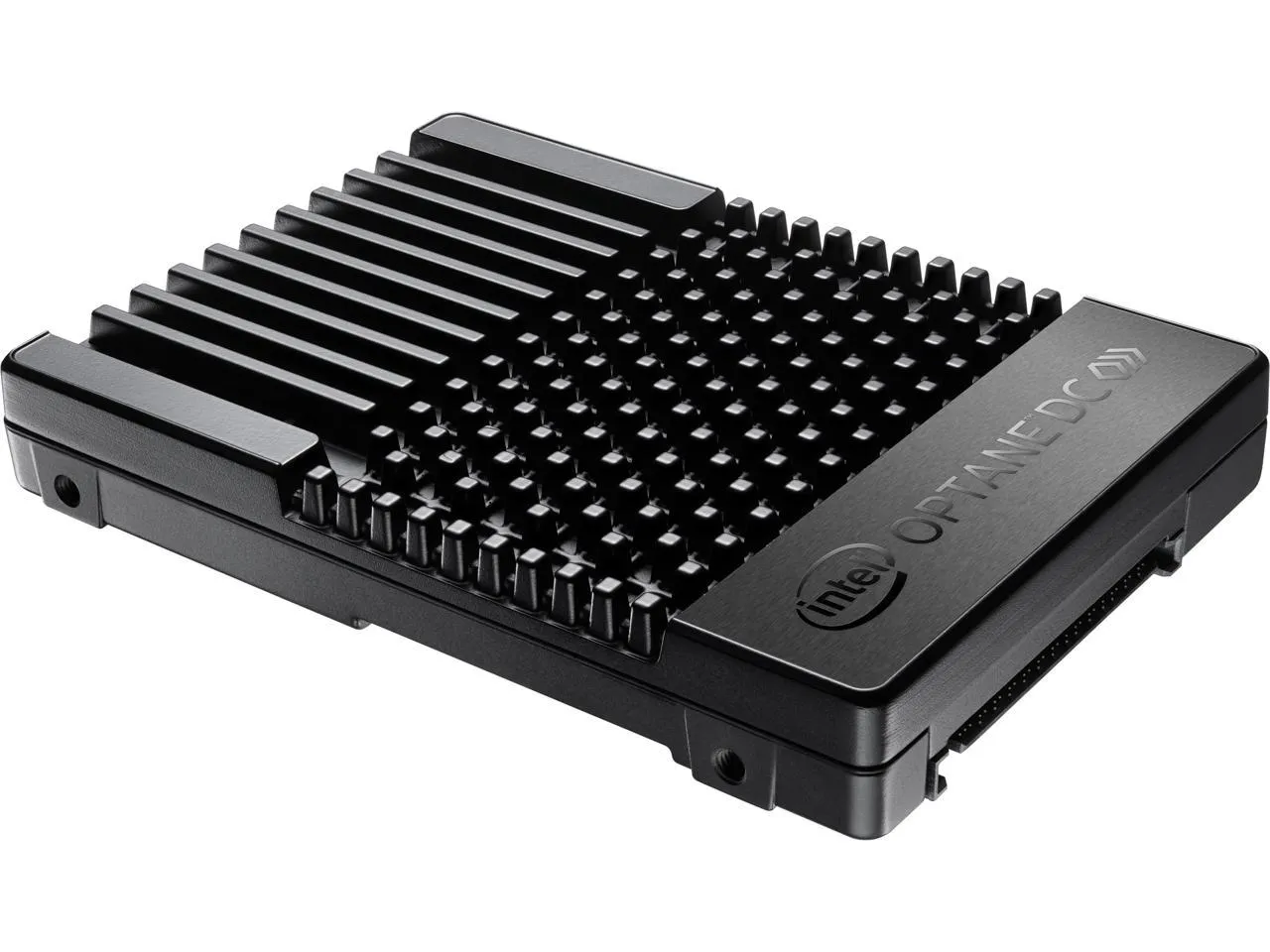
The SSDPE21K015TA01 (Optane SSD DC P4800X 1.5TB) is a drop-in next revision to SSDPE21K015TA, preserving the same ultra-low-latency 3D XPoint architecture while offering a newer A01 platform for improved deployment continuity and lifecycle consistency in enterprise qualification. Versus same-class NAND NVMe drives, it delivers a clear advantage for write-intensive databases, metadata acceleration, and high-frequency transaction logging with 30 DWPD, 82,000 TBW endurance, and up to 550K/500K random read/write IOPS.
With an endurance rating of 82,000 TBW and 30 DWPD, the SSDPE21K015TA01 is built for extremely write-intensive enterprise workloads, allowing the full drive capacity to be written 30 times per day throughout its rated life. In typical deployment scenarios, this level of endurance means it can serve demanding caching, logging, database, or high-transaction system workloads for many years with substantial margin, giving buyers strong confidence in long-term wear performance. For enterprise reliability, the drive includes power-loss protection (PLP), which helps preserve in-flight data and metadata during an unexpected power interruption, reducing the risk of corruption and unplanned recovery events. Its UBER of 1.0E-17, together with a 2 million hour MTBF, reflects a very high standard of data integrity and operational reliability expected for mission-critical data center environments.
1. The PCIe 3.0 x4 NVMe architecture provides a low-overhead, parallel data path that keeps enterprise applications responsive under heavy queue depths and mixed workloads.
2. Its multi-gigabyte sequential read capability accelerates large-scale data scans, backup restores, and analytics jobs, reducing wait time for throughput-driven operations.
3. The very high random read performance makes it well suited for latency-sensitive databases, virtualization clusters, and metadata-heavy transactional environments.
4. Built for extremely intensive full-drive rewrite cycles, this endurance profile supports write-heavy logging, caching, and real-time trading workloads with strong long-term reliability.
5. With 3D XPoint media and near-memory-class response time, the drive dramatically cuts storage access latency for mission-critical systems that depend on consistent microsecond-level performance.
Lower capacity reference: 1.0 TB Higher capacity reference: 2.0 TB In this series, the 1.5 TB model sits in a clear sweet spot. Compared with the 1.0 TB version, it provides more headroom for OS images, application growth, and overprovisioning flexibility, reducing the risk of early capacity pressure in enterprise deployments. Compared with the 2.0 TB option, it usually delivers a better balance between acquisition cost, usable space, and essentially similar enterprise read/write and random IOPS behavior. It is especially well suited for mid-scale virtualization clusters, such as supporting about 60 to 80 mixed-workload virtual desktop instances.
Q: Is SSDPE21K015TA01 suitable for a write-heavy database server?
A: Yes. SSDPE21K015TA01 is well suited for write-heavy database servers, thanks to 30 DWPD endurance, 82,000 TBW, very low 10 µs latency, and durable 3D XPoint media.
Q: How many full drive writes per day can it actually endure over its warranty period?
A: This model is rated for 30 full drive writes per day. With 1.5 TB capacity, that equals about 45 TB of writes daily across its standard warranty period.
Q: Does it include power loss protection (PLP) and why is that critical?
A: Yes, it includes power loss protection. PLP helps preserve in-flight data and metadata during unexpected outages, which is critical for maintaining consistency, integrity, and reducing corruption risk.
Q: What RAID level is recommended for this SSD?
A: RAID recommendation depends on your goal. For performance and redundancy, RAID 10 is commonly preferred for databases. For capacity efficiency with protection, RAID 5 or RAID 6 may fit.