

 Secure payments
Standard refund policy
Trade Assurance
Secure payments
Standard refund policy
Trade Assurance
| Brand | Intel |
|---|---|
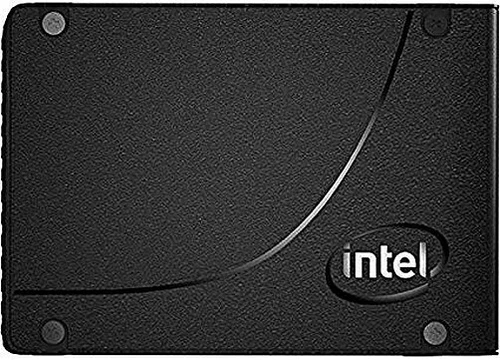
| Model | Optane DC P4800X |
| Capacity | 375 GB |
| Usage Class | Enterprise/Write-Intensive |
| Host Interface | PCIe 3.0 x4, NVMe |
|---|---|
| Total Interface Bandwidth | 32 Gb/s |
| Form Factor | 2.5 inch 15mm (U.2) |
|---|
| NAND Flash | 3D XPoint |
|---|---|
| Drive Writes Per Day | 30 |
| Total Bytes Written | 20500 TBW |
| Sequential Read | 2400 MB/s |
|---|---|
| Sequential Write | 2000 MB/s |
| Random Read IOPS | 550000 |
| Random Write IOPS | 500000 |
| Average Latency | 10 μs |
| Mean Time Between Failures | 2 Million Hours |
|---|---|
| Uncorrectable Bit Error Rate | 1.0×10⁻¹⁷ |
| Power Loss Protection | Yes |
| MPN | SSDPE21K375GA01 |
|---|
Compared with SSDPE21K375GA01, the SSDPE21K375GA represents a later Optane DC P4800X revision that improves platform maturity for enterprise deployment while preserving the series’ defining low-latency 3D XPoint behavior. With 550K/500K random IOPS, 2400/2000 MB/s throughput, and an exceptional 30 DWPD backed by 20.5 PBW endurance, it is a stronger fit than conventional NAND NVMe drives for write-intensive databases, high-frequency logging, and latency-sensitive caching tiers.
With a rated endurance of 20,500 TBW and 30 DWPD, the SSDPE21K375GA is built for extremely write-intensive enterprise use, so under typical OS, application, and server boot workloads its wear life is effectively a non-issue. In practical terms, as a system or infrastructure drive it can be deployed with confidence for many years, including 10+ years of normal system-disk usage without approaching its endurance limit. Its enterprise-grade power loss protection (PLP) safeguards in-flight data and helps prevent metadata corruption during an unexpected outage, which is critical for transactional and always-on environments. Combined with a very low UBER of 1.0E-17 and a 2 million hour MTBF rating, it delivers strong data integrity and dependable long-term operation that procurement teams can trust for business-critical deployments.
1. The PCIe 3.0 x4 NVMe interface gives this drive the low-overhead, parallel data path needed to keep enterprise servers responsive under heavy transactional and virtualized workloads.
2. With sequential read performance of 2400 MB/s, it accelerates bulk data movement such as database snapshots, analytics scans, and large-scale backup recovery.
3. Delivering up to 550,000 random read IOPS, it is well suited for latency-sensitive applications like OLTP databases, metadata services, and high-concurrency cloud platforms.
4. Rated for 30 DWPD, it can sustain extremely write-intensive enterprise workloads day after day, making it a strong fit for logging, caching, and real-time financial systems.
5. Built on 3D XPoint and paired with a typical latency of 10 µs, it provides near-memory-class responsiveness that helps reduce application wait time in mission-critical systems.
Lower-capacity reference: 375 GB is effectively the entry capacity in the SSDPE21K / Intel Optane SSD DC P4800X 2.5-inch series, so there is no mainstream smaller same-series option. Higher-capacity reference: 750 GB At 375 GB, this model sits in the sweet spot of the P4800X family: it delivers enough headroom for metadata, logs, hot tables, and caching layers without pushing budgets into the higher 750 GB tier. Versus a hypothetical smaller entry point, 375 GB offers much better space elasticity for growth and write endurance planning. Versus 750 GB, it keeps acquisition cost tighter while preserving the same low-latency, enterprise-class read/write and random IOPS profile. It is best suited for mid-scale database acceleration, storage journaling, or a 3- to 6-node virtualization cluster cache tier.
Q: Is SSDPE21K375GA suitable for a write-heavy database server?
A: Yes. SSDPE21K375GA is well suited for write-heavy database workloads, thanks to its 30 DWPD endurance, 20,500 TBW rating, ultra-low 10 µs latency, and durable 3D XPoint media.
Q: How many full drive writes per day can it actually endure over its warranty period?
A: This model is rated for 30 DWPD, meaning it can support 30 full drive writes per day over its warranty period. For 375 GB capacity, that equals about 11.25 TB written daily.
Q: Does it include power loss protection (PLP) and why is that critical?
A: Yes, it includes power loss protection. PLP is critical because it helps preserve in-flight data and metadata during unexpected outages, reducing corruption risk and improving enterprise data integrity.
Q: What RAID level is recommended for this SSD?
A: RAID recommendation depends on workload goals. For performance and redundancy, RAID 10 is commonly preferred. For capacity efficiency with protection, RAID 5 or RAID 6 may also be considered.