











 Secure payments
Standard refund policy
Trade Assurance
Secure payments
Standard refund policy
Trade Assurance
| Brand | Intel |
|---|---|
| Model | D3-S4620 Series |
| Capacity | 1.92TB |
| Usage Class | Enterprise Data Center / Mixed Use |
| Host Interface | SATA 6Gb/s |
|---|---|
| Total Interface Bandwidth | 6 Gb/s |
| Form Factor | 2.5 (U.2) 7mm |
|---|
| NAND Flash | Intel 144-layer 3D TLC |
|---|---|
| Drive Writes Per Day | 3 |
| Total Bytes Written | 13100 TBW |
| Sequential Read | 550 MB/s |
|---|---|
| Sequential Write | 510 MB/s |
| Random Read IOPS | 91000 |
| Random Write IOPS | 41000 |
| Average Latency | 36 μs |
| Mean Time Between Failures | 2.0 Million Hours |
|---|---|
| Uncorrectable Bit Error Rate | 1.0×10⁻¹⁷ |
| Power Loss Protection | Yes |
| MPN | SSDSC2KG019T8 |
|---|
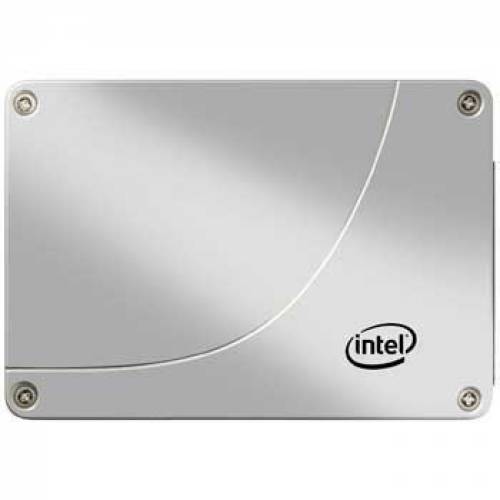
The SSDSC2KG019TZR in Intel’s D3-S4620 Series is a 1.92TB, 3-DWPD SATA SSD engineered for write-intensive enterprise workloads, combining 13,100 TBW endurance with 550/510 MB/s sequential performance and up to 91K/41K IOPS to keep database logs, virtualization, and cache tiers stable under sustained duty. Compared with the previous-generation SSDSC2KG019T8, this revision advances to Intel 144-layer 3D TLC NAND, providing a clear generational improvement in flash efficiency and lifecycle value while preserving the proven SATA 6Gb/s deployment model for straightforward drop-in upgrades.
With an endurance rating of 13,100 TBW and 3 DWPD, the SSDSC2KG019TZR is built for sustained write-intensive enterprise workloads over its service life. In practical terms, this level of endurance is far beyond typical OS, application, and general server usage, making it a dependable choice for long-term deployment with substantial write margin. The SSDSC2KG019TZR also includes power loss protection (PLP), which helps preserve in-flight data and metadata during unexpected power interruptions, reducing the risk of corruption and improving operational stability. Its UBER of 1.0E-17, together with a 2 million hour MTBF, reflects enterprise-class data integrity and reliability, giving procurement teams confidence for business-critical environments.
1. The SATA 6Gb/s interface, paired with 550 MB/s sequential read performance, enables fast drop-in upgrades for legacy enterprise platforms while shortening boot, restore, and large-file retrieval times without requiring PCIe infrastructure changes.
2. With 91,000 K random read IOPS, the drive can sustain highly responsive access to small-block data, making it well suited for virtualized workloads, metadata-heavy applications, and read-intensive transactional environments.
3. A 3 DWPD endurance rating gives IT teams the confidence to run sustained daily write activity over the drive’s service life, supporting logs, caching, and mixed enterprise workloads with lower replacement risk.
4. Built on Intel 144-layer 3D TLC NAND, the SSD balances enterprise-grade capacity efficiency, predictable performance, and cost effectiveness for large-scale datacenter deployments.
5. A typical latency of 36 µs helps reduce storage response time at the microsecond level, improving application consistency and user experience in latency-sensitive server workloads.
Reference capacities in the same series for MPN SSDSC2KG019TZR (1.92TB): Lower capacity: 960GB Higher capacity: 3.84TB Typical enterprise-class performance positioning for the series: 960GB: roughly similar sequential read/write and random IOPS to the 1.92TB model 1.92TB: roughly similar sequential read/write and random IOPS to adjacent capacities 3.84TB: roughly similar sequential read/write and random IOPS to the 1.92TB model Capacity positioning analysis: The 1.92TB version is the sweet-spot capacity in this SSD family. Compared with the 960GB model, it gives much better headroom for OS images, application stacks, logs, and steady data growth, reducing early capacity pressure. Compared with the 3.84TB model, it usually delivers the best balance of acquisition cost, usable capacity, and enterprise-grade performance consistency. It is well suited for medium-scale virtualization, such as supporting boot and application volumes for about 40 to 60 general-purpose virtual machines in a dense server node.
Q: Is SSDSC2KG019TZR suitable for a write-heavy database server?
A: Yes. With 3 DWPD endurance, 13,100 TBW, low 36 µs typical latency, and Intel 144-layer 3D TLC NAND, it is well suited for write-intensive database and transactional server workloads.
Q: How many full drive writes per day can it actually endure over its warranty period?
A: This model is rated for 3 drive writes per day. For a 1.92TB SSD, that equals about 5.76TB of writes daily across the specified warranty period.
Q: Does it include power loss protection (PLP) and why is that critical?
A: Yes, it includes power loss protection. PLP helps preserve in-flight data and metadata during unexpected outages, which is critical for maintaining data integrity and preventing corruption in enterprise systems.
Q: What RAID level is recommended for this SSD?
A: RAID 10 is typically recommended for performance-sensitive and write-heavy applications, offering both redundancy and strong I/O performance. RAID 1 is also suitable when capacity needs are lower.