











 Secure payments
Standard refund policy
Trade Assurance
Secure payments
Standard refund policy
Trade Assurance
| Brand | Intel |
|---|---|
| Model | DC S4600 |
| Capacity | 960 GB |
| Usage Class | Enterprise |
| Host Interface | SATA 6Gb/s |
|---|---|
| Total Interface Bandwidth | 6 Gb/s |
| Form Factor | 2.5 inch 7mm |
|---|
| NAND Flash | 3D TLC |
|---|---|
| Drive Writes Per Day | 3 |
| Total Bytes Written | 5260 TBW |
| Sequential Read | 500 MB/s |
|---|---|
| Sequential Write | 490 MB/s |
| Random Read IOPS | 72000 |
| Random Write IOPS | 60000 |
| Average Latency | 36 μs |
| Mean Time Between Failures | 2 Million Hours |
|---|---|
| Uncorrectable Bit Error Rate | 1.0×10⁻¹⁷ |
| Power Loss Protection | Yes |
| MPN | SSDSC2KG960G6 |
|---|
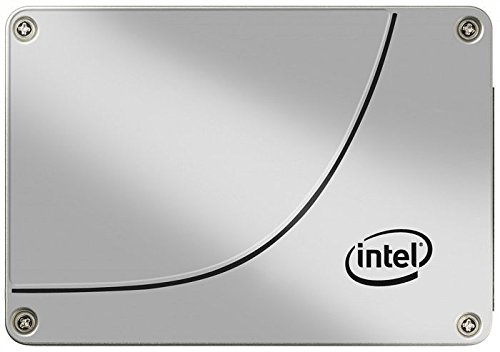
Compared with the previous-generation SSDSC2KG960G6, the Intel DC S4600 SSDSC2KG960G7R strengthens the platform for write-intensive enterprise use with 3 DWPD and 5,260 TBW of endurance, while sustaining up to 500/490 MB/s sequential throughput and 72,000/60,000 IOPS random performance. Its combination of high endurance, SATA 6Gb/s compatibility, and mature 3D TLC media makes this 960 GB model a stronger choice for database logs, virtualization, and read/write-caching tiers where lifecycle consistency matters more than peak interface speed.
With an endurance rating of 5,260 TBW and 3 DWPD, the SSDSC2KG960G7R is designed for sustained write-intensive enterprise workloads and can handle approximately three full drive writes per day across its warranty period. In typical server or system-disk usage, this level of endurance provides a very large margin, making it a dependable choice for long-term operation without concern over normal write wear. For enterprise reliability, the drive includes power loss protection (PLP), which helps preserve in-flight data and maintain metadata integrity if power is suddenly interrupted. Its UBER rating of 1.0E-17 indicates an extremely low probability of unrecoverable bit errors, supporting high data integrity expectations in business-critical environments.
1. The SATA 6Gb/s interface, paired with 500 MB/s sequential read performance, provides a stable drop-in upgrade for legacy enterprise platforms, accelerating boot, log replay, and bulk data retrieval without requiring a PCIe infrastructure refresh.
2. With 72,000 IOPS in random reads, the drive can sustain responsive access to heavily fragmented datasets, helping virtualized workloads and transactional databases serve more concurrent requests with less queue buildup.
3. A 3 DWPD endurance rating makes it well suited for write-intensive enterprise use cases such as OLTP, logging, and mixed-workload caching, where predictable lifespan under constant daily rewrites is critical.
4. Built on 3D TLC NAND, the SSD balances cost efficiency, capacity density, and dependable enterprise performance, making it a practical choice for scaling storage footprints without moving to more expensive flash tiers.
5. The typical 36 µs latency supports fast command completion and tighter QoS behavior, which is valuable for latency-sensitive applications that depend on consistent response times rather than peak bandwidth alone.
Lower capacity reference: 480 GB Higher capacity reference: 1.92 TB Typical same-series performance reference: 480 GB: up to 560 MB/s read, 510 MB/s write, up to 96K random read IOPS, 36K random write IOPS 960 GB: up to 560 MB/s read, 510 MB/s write, up to 96K random read IOPS, 36K random write IOPS 1.92 TB: up to 560 MB/s read, 510 MB/s write, up to 96K random read IOPS, 36K random write IOPS At 960 GB, this SSD sits at the sweet spot of the series. Compared with the 480 GB model, it gives much better capacity headroom for OS, logs, patch growth, and application overhead, reducing the risk of early space pressure. Compared with the 1.92 TB option, it keeps acquisition cost and fleet budget under tighter control while delivering essentially the same enterprise SATA performance. It is especially well suited for mid-size virtualization clusters, such as hosting boot and utility volumes for around 40 to 60 general-purpose virtual machines.
Q: Is SSDSC2KG960G7R suitable for a write-heavy database server?
A: Yes. With 3 DWPD, 5260 TBW, 3D TLC NAND, and 36 µs typical latency, SSDSC2KG960G7R is well suited for write-intensive database and transactional server workloads.
Q: How many full drive writes per day can it actually endure over its warranty period?
A: This model is rated for 3 DWPD, meaning it can handle about three full 960 GB drive writes per day throughout its warranty period, assuming standard warranty conditions.
Q: Does it include power loss protection (PLP) and why is that critical?
A: Yes, it includes power loss protection. PLP helps preserve in-flight data and metadata during sudden power failure, which is critical for enterprise systems requiring data integrity and consistency.
Q: What RAID level is recommended for this SSD?
A: The recommended RAID level depends on your goal. RAID 1 suits redundancy, RAID 10 is ideal for performance and resilience, and RAID 5/6 works for capacity-focused deployments.