











 Secure payments
Standard refund policy
Trade Assurance
Secure payments
Standard refund policy
Trade Assurance
| Brand | Micron |
|---|---|
| Model | M500 |
| Capacity | 240GB |
| Usage Class | Client |
| Host Interface | SATA 6Gb/s |
|---|---|
| Total Interface Bandwidth | 6 Gb/s |
| Form Factor | 2.5" 7mm |
|---|
| NAND Flash | 20nm MLC |
|---|---|
| Drive Writes Per Day | |
| Total Bytes Written | 72 TBW |
| Sequential Read | 500 MB/s |
|---|---|
| Sequential Write | 250 MB/s |
| Random Read IOPS | 72000 |
| Random Write IOPS | 60000 |
| Average Latency | μs |
| Mean Time Between Failures | 1.2 Million Hours |
|---|---|
| Uncorrectable Bit Error Rate | 1.0×10⁻¹⁷ |
| Power Loss Protection | Yes |
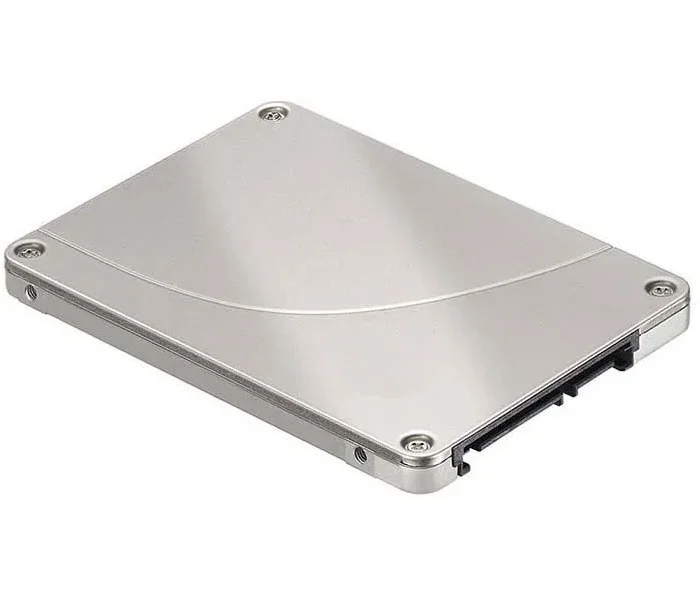
The Micron M500 240GB (MTFDDAK240MAV-1AE1ZAC) is best suited for read-centric server boot, edge cache, and light virtualization tiers where its 20nm MLC NAND and 72 TBW deliver stronger endurance consistency than typical same-class TLC SATA SSDs. With up to 500/250 MB/s sequential throughput and 72,000/60,000 IOPS, it offers a balanced SATA 6Gb/s profile for infrastructure workloads that need predictable low-queue-depth responsiveness rather than peak-capacity optimization.
With an endurance rating of 72 TBW, the MTFDDAK240MAV-1AE1ZAC is well suited for typical read-heavy and OS/application drive workloads, where daily write volumes are usually modest. In practical terms, 72 TBW supports about 20 GB of host writes per day over 10 years, making it a dependable choice as a boot or system drive in standard business use. For reliability, built-in power-loss protection helps preserve in-flight data and protects metadata integrity if power is interrupted unexpectedly, reducing the risk of corruption during sudden shutdowns. Its UBER specification of 1.0E-15 means the drive is designed for a very low unrecoverable bit error rate, while the 1.2 million-hour MTBF further supports confidence in stable long-term operation.
1. The SATA 6Gb/s interface, paired with strong sequential read performance, enables straightforward integration into legacy enterprise backplanes while accelerating OS boot, dataset loading, and backup restore operations.
2. Its high random read capability helps virtualized environments and read-heavy databases respond faster under mixed workloads, improving transaction throughput and user experience at scale.
3. The rated endurance of [dwpd] DWPD supports sustained daily full-drive writes, making it suitable for enterprise logging, caching, and always-on application workloads without premature wear concerns.
4. Built on 20nm MLC NAND, this drive delivers a balanced mix of endurance, data retention, and cost efficiency that aligns well with long-life business infrastructure deployments.
5. With typical latency of [latency] µs, the drive helps reduce storage wait time for latency-sensitive applications such as OLTP systems, VDI boot storms, and real-time service platforms.
Lower capacity reference: 120GB Higher capacity reference: 480GB In this enterprise SSD family, the 240GB model sits at the practical sweet spot. Compared with the 120GB version, it provides much better capacity headroom for OS images, logs, metadata, and application growth, reducing the risk of early space pressure. Compared with the 480GB option, it delivers nearly the same enterprise-class sequential throughput and random IOPS while keeping acquisition cost and overprovisioning budgets under tighter control. This makes 240GB especially well suited for small-to-midsize virtualization clusters, such as boot and utility storage for about 20 to 30 compute nodes.
Q: Is MTFDDAK240MAV-1AE1ZAC suitable for a write-heavy database server?
A: This model is better suited for read-intensive or mixed workloads rather than highly write-heavy database servers. Its 72 TBW and estimated low DWPD make it less ideal for sustained heavy writes.
Q: How many full drive writes per day can it actually endure over its warranty period?
A: Based on 72 TBW and 240GB capacity, it supports about 300 full drive writes total, or roughly 0.16 drive writes per day over a 5-year warranty period.
Q: Does it include power loss protection (PLP) and why is that critical?
A: Yes, it includes power loss protection. PLP helps preserve in-flight data and metadata during sudden power failure, which is critical for preventing corruption and maintaining storage reliability.
Q: What RAID level is recommended for this SSD?
A: For most business applications, RAID 1 or RAID 10 is recommended for redundancy and performance. RAID 5 may work for read-focused workloads, but write-intensive environments should prefer RAID 10.