











 Secure payments
Standard refund policy
Trade Assurance
Secure payments
Standard refund policy
Trade Assurance
| Brand | Micron |
|---|---|
| Model | M500 |
| Capacity | 480GB |
| Usage Class | Client |
| Host Interface | SATA 6Gb/s |
|---|---|
| Total Interface Bandwidth | 6 Gb/s |
| Form Factor | 2.5" 7mm |
|---|
| NAND Flash | 20nm MLC |
|---|---|
| Drive Writes Per Day | 0.08 |
| Total Bytes Written | 72 TBW |
| Sequential Read | 500 MB/s |
|---|---|
| Sequential Write | 400 MB/s |
| Random Read IOPS | 80000 |
| Random Write IOPS | 80000 |
| Average Latency | μs |
| Mean Time Between Failures | 1.2 Million Hours |
|---|---|
| Uncorrectable Bit Error Rate | 1.0×10⁻¹⁷ |
| Power Loss Protection | Yes |
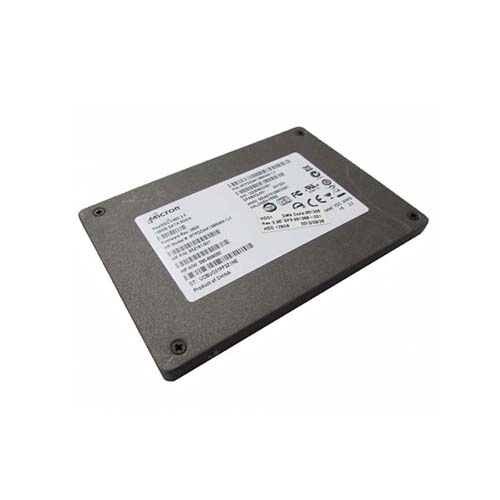
The Micron M500 480GB (MTFDDAK480MAV) is best suited for read-centric boot, caching, and edge-content delivery workloads where consistent 80K/80K IOPS and 500/400 MB/s SATA performance matter more than write endurance. Its 20nm MLC NAND gives it a durability and latency-consistency advantage over many same-class client-grade TLC SATA SSDs, making it a dependable choice for infrastructure nodes that need predictable performance within a 72TBW, 0.08 DWPD profile.
With an endurance rating of 72 TBW, the MTFDDAK480MAV can sustain about 72 terabytes of total host writes over its service life, which is well suited for read-intensive and light-write applications. In typical use as an OS boot drive, thin client storage device, or appliance/system disk, this level of endurance translates to many years of reliable operation and can comfortably support around 20 GB of writes per day for 10 years. From a reliability perspective, built-in power-loss protection (PLP) helps preserve in-flight data and metadata during an unexpected power interruption, reducing the risk of corruption and improving recovery confidence. Its UBER rating of 1.0E-15 and MTBF of 1.2 million hours indicate enterprise-class data integrity and dependable long-term operation, giving procurement teams added assurance for stable deployment.
1. The SATA 6Gb/s interface ensures broad compatibility with mainstream enterprise servers and storage arrays, enabling cost-effective SSD upgrades without changes to the existing backplane or controller architecture.
2. A sequential read speed of 500 MB/s accelerates boot imaging, log scanning, and bulk data retrieval, helping shorten maintenance windows and improve application start-up responsiveness.
3. Random read performance of 80,000 IOPS supports virtualized workloads and metadata-heavy applications with faster access to small-block data, reducing queue buildup during peak demand.
4. With an endurance rating of 0.08 DWPD, this drive is best aligned with read-centric enterprise environments where capacity, stability, and low operating cost matter more than sustained daily write volume.
5. Built on 20nm MLC NAND, it delivers a stronger balance of reliability, data retention, and write consistency than typical client-grade flash, making it a safer fit for always-on business infrastructure.
Reference capacities in the same series: Lower capacity: 240GB, MPN MTFDDAK240MAV Higher capacity: 960GB, MPN MTFDDAK960MAV Positioning analysis: The 480GB MTFDDAK480MAV sits at the sweet spot of this enterprise SSD family. Compared with the 240GB model, it offers much better headroom for OS images, logs, metadata, and short-term workload growth, reducing the risk of early capacity pressure. Compared with the 960GB option, it keeps acquisition cost and per-node storage sizing more disciplined while delivering essentially the same enterprise-class sequential throughput and random IOPS. It is best suited for medium-scale virtualization or container clusters, such as hosting boot and application volumes for about 40 to 60 mixed business workloads.
Q: Is MTFDDAK480MAV suitable for a write-heavy database server?
A: Not ideally. With 0.08 DWPD and 72 TBW, MTFDDAK480MAV is better suited for read-intensive or light mixed workloads rather than sustained write-heavy database environments.
Q: How many full drive writes per day can it actually endure over its warranty period?
A: It is rated for about 0.08 full drive writes per day over a 5-year warranty, which equals roughly 38.4 GB of writes per day on average.
Q: Does it include power loss protection (PLP) and why is that critical?
A: Yes, it includes power loss protection. PLP helps preserve in-flight data and metadata during sudden power failure, reducing corruption risk and improving storage reliability in enterprise systems.
Q: What RAID level is recommended for this SSD?
A: RAID 1 or RAID 10 is generally recommended for this SSD, especially for business applications needing redundancy and stable performance. Avoid parity-heavy RAID if write endurance is a concern.