











 Secure payments
Standard refund policy
Trade Assurance
Secure payments
Standard refund policy
Trade Assurance
| Brand | Micron |
|---|---|
| Model | 5300 MAX |
| Capacity | 480GB |
| Usage Class | Enterprise |
| Host Interface | SATA 6Gb/s |
|---|---|
| Total Interface Bandwidth | 6 Gb/s |
| Form Factor | 2.5-inch 7mm |
|---|
| NAND Flash | 3D TLC |
|---|---|
| Drive Writes Per Day | 5 |
| Total Bytes Written | 4380 TBW |
| Sequential Read | 540 MB/s |
|---|---|
| Sequential Write | 460 MB/s |
| Random Read IOPS | 95000 |
| Random Write IOPS | 75000 |
| Average Latency | 175 μs |
| Mean Time Between Failures | 3 Million Hours |
|---|---|
| Uncorrectable Bit Error Rate | 1.0×10⁻¹⁷ |
| Power Loss Protection | Yes |
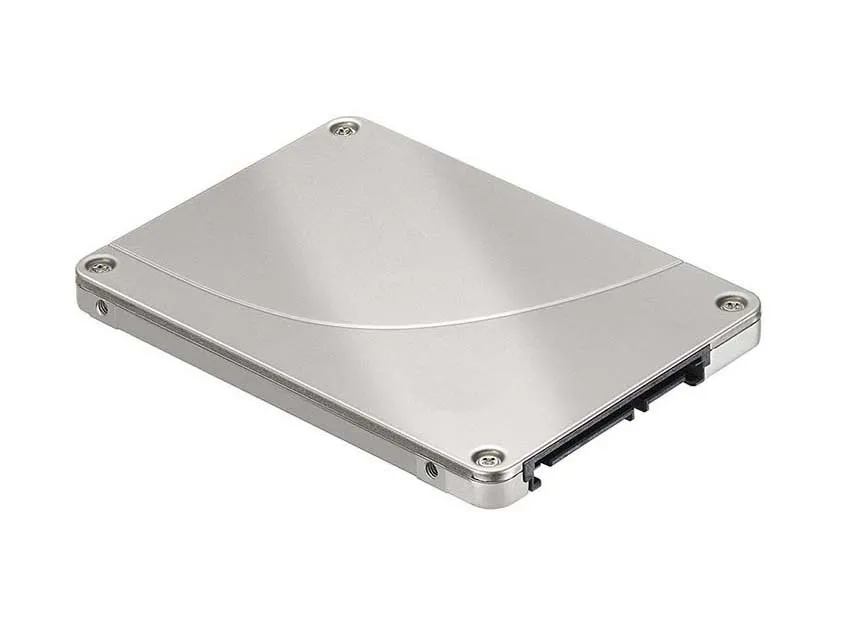
The Micron 5300 MAX 480GB (MTFDDAK480TDT) is purpose-built for write-intensive enterprise workloads such as database logging, OLTP journals, metadata tiers, and virtualization boot/storage nodes, combining 5 DWPD endurance and 4,380 TBW with dependable SATA 6Gb/s deployment. Compared with typical read-centric SATA SSDs in the same class, it delivers a much stronger sustained write profile while still reaching 540/460 MB/s and up to 95,000/75,000 IOPS, making it a high-endurance drop-in choice for legacy server and storage platforms.
With an endurance rating of 4,380 TBW, the MTFDDAK480TDT can sustain a very large amount of write activity over its service life, making it suitable not only for boot and system-drive use but also for write-intensive enterprise workloads. In practical terms, under a typical OS or application-drive workload, this level of endurance is comfortably sufficient for well beyond 10 years of normal use, and the 5 DWPD rating further confirms it is designed for frequent daily full-drive writes. For enterprise reliability, built-in power-loss protection (PLP) helps preserve in-flight data and metadata if power is suddenly interrupted, reducing the risk of corruption and improving operational stability. Its 1.0E-17 UBER rating indicates an extremely low unrecoverable bit error rate, which gives buyers added confidence in data integrity for business-critical storage environments.
1. The SATA 6Gb/s interface enables straightforward drop-in upgrades for mainstream enterprise storage platforms, delivering dependable compatibility without requiring changes to existing backplanes or server designs.
2. With sequential read performance up to 540 MB/s, the drive accelerates bulk data access for boot images, backups, and read-heavy application datasets, helping shorten service startup and file retrieval time.
3. Its random read capability of 95,000 IOPS supports fast response under highly fragmented workloads, making it well suited for virtualization, metadata access, and transaction-oriented applications.
4. Rated for 5 DWPD, this endurance class is built for write-intensive enterprise environments where logs, cache layers, and database updates must be sustained day after day with predictable lifespan.
5. Combining 3D TLC NAND with a typical latency of 175 µs, the drive balances cost-efficient flash density with consistently low access delay, supporting stable QoS in mixed enterprise workloads.
Reference capacities in the same family: Lower capacity: 240GB Higher capacity: 960GB Like the 480GB model, the 240GB and 960GB options in this enterprise SATA series typically deliver broadly similar sequential read/write throughput and random IOPS, with only minor SKU-level variation under standard enterprise workloads. At 480GB, this SSD sits at the sweet spot of the family. Compared with the 240GB version, it offers much better headroom for OS images, logs, metadata, and growth over time. Compared with the 960GB version, it preserves most of the same practical performance profile while keeping acquisition cost and stranded capacity under tighter control. It is especially well suited for mid-scale virtualization, such as a shared boot and application tier for about 40 to 60 light-to-moderate virtual machines.
Q: Is MTFDDAK480TDT suitable for a write-heavy database server?
A: Yes. With 5 DWPD endurance, 4380 TBW, 3D TLC NAND, and 175 µs typical latency, MTFDDAK480TDT is well suited for write-intensive database, logging, caching, and transactional server workloads.
Q: How many full drive writes per day can it actually endure over its warranty period?
A: This model is rated for 5 drive writes per day. For a 480GB SSD, that equals about 2.4TB of writes daily within the specified warranty and endurance conditions.
Q: Does it include power loss protection (PLP) and why is that critical?
A: Yes, it includes power loss protection. PLP helps preserve in-flight data and metadata during sudden power failure, reducing corruption risk and improving reliability for enterprise and database environments.
Q: What RAID level is recommended for this SSD?
A: The recommended RAID level depends on your priority. RAID 1 suits redundancy, RAID 10 is ideal for high performance and resilience, while RAID 5 or 6 balances capacity efficiency and protection.