











 Secure payments
Standard refund policy
Trade Assurance
Secure payments
Standard refund policy
Trade Assurance
| Brand | Micron |
|---|---|
| Model | 5400 MAX |
| Capacity | 480GB |
| Usage Class | Enterprise |
| Host Interface | SATA 6Gb/s |
|---|---|
| Total Interface Bandwidth | 6 Gb/s |
| Form Factor | 2.5" 7mm |
|---|
| NAND Flash | 3D TLC |
|---|---|
| Drive Writes Per Day | 5 |
| Total Bytes Written | 4380 TBW |
| Sequential Read | 540 MB/s |
|---|---|
| Sequential Write | 520 MB/s |
| Random Read IOPS | 95000 |
| Random Write IOPS | 58000 |
| Average Latency | μs |
| Mean Time Between Failures | 3 Million Hours |
|---|---|
| Uncorrectable Bit Error Rate | 1.0×10⁻¹⁷ |
| Power Loss Protection | Yes |
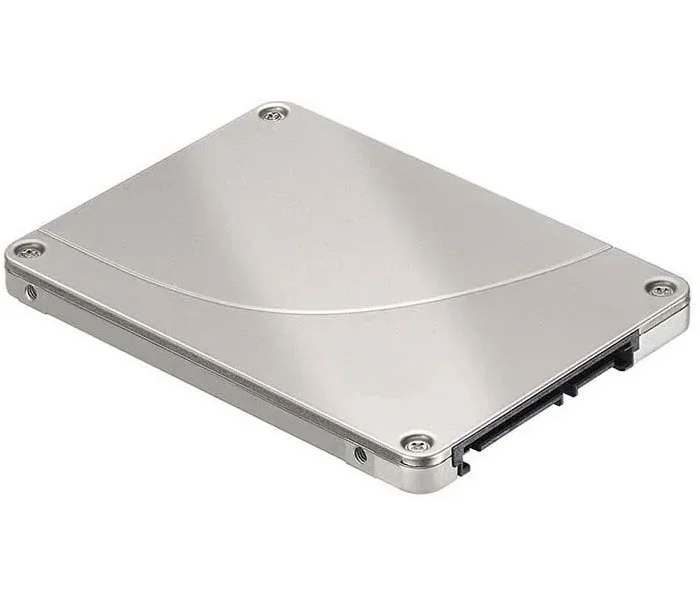
The Micron 5400 MAX 480GB (MTFDDAK480TGB-1BC1ZA) is purpose-built for write-intensive mixed-workload environments such as OLTP databases, metadata logging, and virtualization boot/cache tiers, combining 5 DWPD endurance with 4,380 TBW in a compact SATA deployment. Compared with typical enterprise SATA SSDs in its class, it delivers a stronger balance of sustained reliability and low-latency responsiveness with up to 540/520 MB/s sequential performance and 95K/58K random IOPS from proven 3D TLC NAND.
With an endurance rating of 4,380 TBW and 5 DWPD, the MTFDDAK480TGB-1BC1ZA is built for sustained heavy write activity far beyond typical client or light server usage. In practical terms, under common OS, application, logging, and general enterprise boot-drive workloads, this level of endurance can support long-term deployment with ample write margin, making it a dependable choice for a system drive over many years. For enterprise reliability, the drive includes power-loss protection (PLP), which helps preserve in-flight data and metadata during an unexpected power interruption, reducing the risk of corruption and unplanned recovery events. Its ultra-low UBER of 1.0E-17, together with a 3 million hour MTBF, indicates a very low probability of unrecoverable read errors and strong overall reliability for business-critical environments.
1. The SATA 6Gb/s interface, paired with 540 MB/s sequential read performance, provides a stable drop-in upgrade path for enterprise servers that need faster boot, restore, and bulk data access without changing existing backplanes.
2. With 95,000 K IOPS in random reads, the drive can sustain highly concurrent small-block access patterns, helping virtualized workloads and transactional databases respond more consistently under queue pressure.
3. A 5 DWPD endurance rating makes it well suited for write-intensive enterprise use cases such as logging, caching, and mixed-workload application servers where predictable lifespan is critical.
4. Built on 3D TLC NAND, it balances cost efficiency, capacity density, and operational reliability, making it a practical choice for scaling enterprise storage without moving to a premium media tier.
5. A typical latency of [latency] µs supports faster application response and tighter QoS behavior, which is especially valuable for latency-sensitive business services and multi-tenant environments.
For the Micron MTFDDAK480TGB-1BC1ZA 480GB enterprise SSD, the nearest lower capacity in the same family is 240GB, and the nearest higher capacity is 960GB. Since sequential read/write and random IOPS are broadly consistent across these mainstream enterprise capacities, 480GB is the sweet-spot option. Compared with 240GB, it offers much better headroom for OS images, logs, and application growth. Compared with 960GB, it delivers a more efficient balance of cost, usable capacity, and steady enterprise performance. It is well suited for small-to-mid virtualization clusters, such as hosting boot volumes for about 40-60 virtual machines.
Q: Is MTFDDAK480TGB-1BC1ZA suitable for a write-heavy database server?
A: Yes. With 5 DWPD endurance, 4380 TBW, 3D TLC NAND, and SATA 6Gb/s, MTFDDAK480TGB-1BC1ZA is well suited for write-intensive database, logging, and transactional server workloads.
Q: How many full drive writes per day can it actually endure over its warranty period?
A: This model is rated for 5 DWPD, meaning it can support about five full 480GB drive writes per day throughout its warranty period, assuming operation within specified conditions.
Q: Does it include power loss protection (PLP) and why is that critical?
A: Yes, it includes power loss protection. PLP helps preserve in-flight data and metadata during unexpected power failure, which is critical for maintaining integrity, consistency, and reducing corruption risk.
Q: What RAID level is recommended for this SSD?
A: For most enterprise deployments, RAID 1 or RAID 10 is recommended to balance redundancy and performance. RAID 5 or 6 may suit capacity-focused environments but adds write overhead.