











 Secure payments
Standard refund policy
Trade Assurance
Secure payments
Standard refund policy
Trade Assurance
| Brand | Micron |
|---|---|
| Model | 5300 PRO |
| Capacity | 7.68TB |
| Usage Class | Read-Intensive |
| Host Interface | SATA |
|---|---|
| Total Interface Bandwidth | 6 Gb/s |
| Form Factor | 2.5 |
|---|
| NAND Flash | 96-layer 3D TLC |
|---|---|
| Drive Writes Per Day | 0.65 |
| Total Bytes Written | 9110 TBW |
| Sequential Read | 540 MB/s |
|---|---|
| Sequential Write | 520 MB/s |
| Random Read IOPS | 95000 |
| Random Write IOPS | 11000 |
| Average Latency | μs |
| Mean Time Between Failures | 3 Million Hours |
|---|---|
| Uncorrectable Bit Error Rate | 1.0×10⁻¹⁷ |
| Power Loss Protection | Yes |
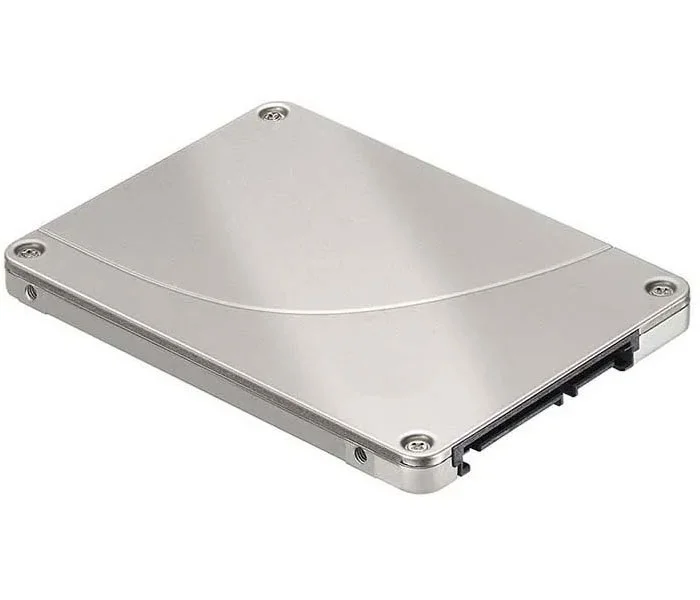
The Micron 5300 PRO 7.68TB (MTFDDAK7T6TDS-1AW15ABYY) is a strong fit for read-intensive virtualization clusters, content delivery/cache tiers, and scale-out cloud storage nodes that need high usable capacity on a proven SATA interface, pairing 96-layer 3D TLC NAND with up to 540/520 MB/s and 95K/11K IOPS for predictable application response. Compared with typical mixed-use SATA SSDs in the same class, its 0.65 DWPD and 9,110 TBW deliver a more durability-focused balance for dense 24x7 deployments where endurance, qualification simplicity, and fleet consistency matter more than migrating to a costlier NVMe stack.
With an endurance rating of 9,110 TBW and 0.65 DWPD, the MTFDDAK7T6TDS-1AW15ABYY is built to handle substantial write activity over its service life, making it well suited for enterprise boot, system, and mixed-read workloads. In practical terms, under typical OS, logging, and application drive usage, this level of endurance supports many years of stable operation and is more than sufficient for use as a long-term system drive in continuously running environments. For reliability, the drive includes power-loss protection (PLP), which helps preserve data in flight during an unexpected power interruption and reduces the risk of corruption to critical writes. Its enterprise-class UBER of 1.0E-17, together with a 3 million hour MTBF, indicates a very low probability of unrecoverable bit errors and a design optimized for dependable operation in data center and business-critical systems.
1. The SATA interface ensures broad drop-in compatibility with mainstream enterprise servers and storage arrays, making refresh cycles simpler and lowering integration risk in legacy-heavy data centers.
2. Its sequential read performance is well suited for accelerating boot volumes, log replay, media distribution, and other throughput-driven workloads where fast data access shortens service response time.
3. Strong random read capability helps databases, virtual desktop pools, and metadata-intensive applications sustain high user concurrency with smoother transaction handling under mixed access patterns.
4. This endurance profile fits read-centric enterprise deployments such as content delivery, analytics query tiers, and boot/storage nodes, providing predictable lifespan without overpaying for unnecessary write headroom.
5. Built on 96-layer 3D TLC NAND, the drive balances capacity density, cost efficiency, and reliable enterprise operation, while typical latency of [latency] µs supports more responsive application behavior in latency-sensitive environments.
Lower reference capacity: 3.84TB Higher reference capacity: 15.36TB At 7.68TB, this SSD sits in the sweet spot of the family. Compared with 3.84TB, it gives materially more headroom for dataset growth, VM density, log retention, and overprovisioning flexibility without changing the expected enterprise-class throughput profile. Compared with 15.36TB, it usually delivers a more efficient balance of acquisition cost, usable capacity, and performance consistency, avoiding unnecessary spend where ultra-high density is not essential. In practice, 7.68TB is well suited for a mid-scale virtualization cluster, such as hosting boot and application volumes for roughly 60 to 80 mixed-workload virtual machines.
Q: Is MTFDDAK7T6TDS-1AW15ABYY suitable for a write-heavy database server?
A: It can support mixed and moderately write-intensive database workloads, but with 0.65 DWPD it is not ideal for extremely write-heavy environments. For sustained heavy writes, a higher-endurance enterprise SSD is recommended.
Q: How many full drive writes per day can it actually endure over its warranty period?
A: This model is rated for 0.65 DWPD, meaning it can sustain about 0.65 full drive writes per day during its warranty period, aligning with its 9,110 TBW endurance specification.
Q: Does it include power loss protection (PLP) and why is that critical?
A: Yes, it includes power loss protection. PLP helps preserve in-flight data and mapping tables during unexpected power failure, which is critical for data integrity, consistency, and enterprise system reliability.
Q: What RAID level is recommended for this SSD?
A: The recommended RAID level depends on workload priorities. RAID 1 suits redundancy, RAID 10 is preferred for database performance and resilience, while RAID 5 or 6 may fit capacity-focused deployments.