











 Secure payments
Standard refund policy
Trade Assurance
Secure payments
Standard refund policy
Trade Assurance
| Brand | Micron |
|---|---|
| Model | 5300 BOOT |
| Capacity | 240GB |
| Usage Class | Enterprise |
| Host Interface | SATA III |
|---|---|
| Total Interface Bandwidth | 6 Gb/s |
| Form Factor | M.2 2280 |
|---|
| NAND Flash | 3D TLC |
|---|---|
| Drive Writes Per Day | 1 |
| Total Bytes Written | 438 TBW |
| Sequential Read | 540 MB/s |
|---|---|
| Sequential Write | 215 MB/s |
| Random Read IOPS | 50000 |
| Random Write IOPS | 12000 |
| Average Latency | 100 μs |
| Mean Time Between Failures | 3 Million Hours |
|---|---|
| Uncorrectable Bit Error Rate | 1.0×10⁻¹⁷ |
| Power Loss Protection | Yes |
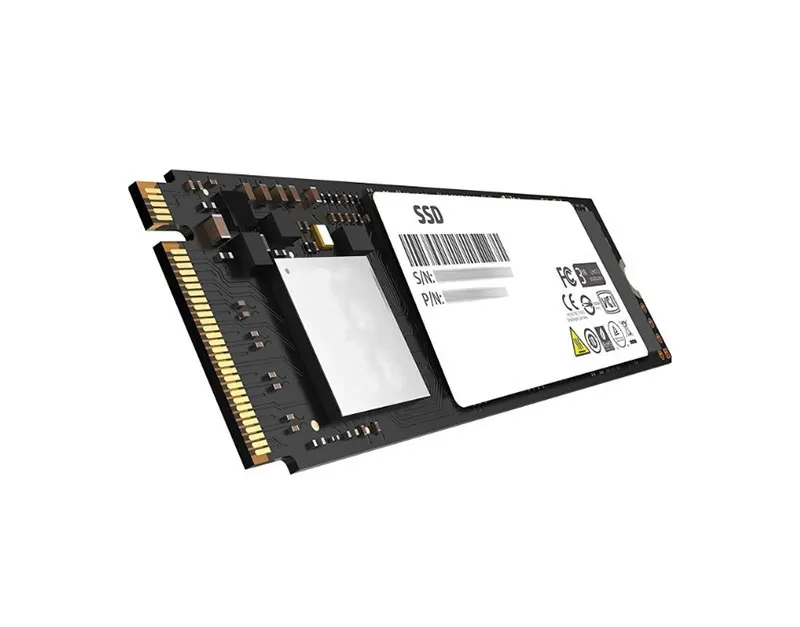
The Micron 5300 BOOT 240GB (MTFDDAV240TDU-1AW1ZABYY) is purpose-built for server boot, hypervisor, and read-centric OS-volume deployments, combining SATA III drop-in compatibility with 3D TLC endurance rated at 1 DWPD and 438 TBW for significantly stronger lifecycle reliability than typical boot drives. For data center nodes that do not need high-capacity mixed-use SSDs, it delivers a balanced 540/215 MB/s and 50K/12K IOPS profile that helps lower boot-media cost while maintaining enterprise-grade consistency and serviceability.
With an endurance rating of 438 TBW and 1 DWPD, the MTFDDAV240TDU-1AW1ZABYY is built to handle consistent daily write activity across its warranty life, making it well suited for boot, OS, and general business workloads. In typical system-disk usage, where actual daily writes are usually far below the maximum rating, this level of endurance can support many years of stable operation with comfortable margin. For enterprise reliability, built-in power-loss protection (PLP) helps preserve in-flight data and maintain drive integrity if power is interrupted unexpectedly, reducing the risk of corruption during sudden shutdowns. Its ultra-low UBER of 1.0E-17 and 3 million-hour MTBF indicate a highly dependable design optimized for data accuracy and long-term operational stability in professional environments.
1. The SATA III interface, paired with its top-end sequential read capability, makes this drive a practical drop-in upgrade for enterprise platforms that need fast boot, imaging, and large-file retrieval without changing existing storage infrastructure.
2. Its strong random read performance helps databases, virtual desktop environments, and metadata-heavy workloads respond more smoothly under highly fragmented access patterns.
3. A 1 DWPD endurance rating gives IT teams the confidence to run steady daily write activity across the warranty period, making it well suited for read-centric and mixed-use enterprise deployments.
4. Built on 3D TLC NAND, the drive balances cost efficiency, capacity scalability, and dependable performance, making it a smart fit for organizations optimizing storage TCO at scale.
5. With typical latency around 100 µs, the drive helps reduce storage wait time for transactional applications, improving consistency for user-facing services and time-sensitive enterprise workloads.
For the MTFDDAV240TDU-1AW1ZABYY 240GB enterprise SSD, the closest lower-capacity option in the same family is typically 120GB, while the next higher-capacity option is 480GB. In this lineup, 240GB is the sweet spot: it offers noticeably more headroom than 120GB for OS growth, logs, patching, and overprovisioning, while avoiding the higher acquisition cost of 480GB when that extra space is not required. Since sequential throughput and random IOPS are broadly similar across these capacities, 240GB usually delivers the best cost-performance balance for small-to-midsize virtualization clusters, database boot volumes, or 25-40 application server system drives.
Q: Is MTFDDAV240TDU-1AW1ZABYY suitable for a write-heavy database server?
A: MTFDDAV240TDU-1AW1ZABYY can support moderate write-intensive workloads, but with 1 DWPD and 3D TLC NAND, it is better suited for mixed-use enterprise applications rather than very heavy database write environments.
Q: How many full drive writes per day can it actually endure over its warranty period?
A: This model is rated for 1 DWPD, meaning it can sustain one full 240GB drive write per day over its warranty period, aligned with its total endurance rating of 438 TBW.
Q: Does it include power loss protection (PLP) and why is that critical?
A: Yes, it includes power loss protection. PLP is critical because it helps preserve in-flight data and metadata during unexpected power failures, reducing corruption risk and improving enterprise data integrity.
Q: What RAID level is recommended for this SSD?
A: The recommended RAID level depends on your goal. RAID 1 is ideal for redundancy, RAID 10 for performance plus protection, and RAID 5 or 6 for balanced capacity efficiency.