











 Secure payments
Standard refund policy
Trade Assurance
Secure payments
Standard refund policy
Trade Assurance
| Brand | Micron |
|---|---|
| Model | 1100 |
| Capacity | 256GB |
| Usage Class | Client |
| Host Interface | SATA 6Gb/s |
|---|---|
| Total Interface Bandwidth | 6 Gb/s |
| Form Factor | M.2 2280 |
|---|
| NAND Flash | 3D TLC |
|---|---|
| Drive Writes Per Day | |
| Total Bytes Written | 120 TBW |
| Sequential Read | 530 MB/s |
|---|---|
| Sequential Write | 500 MB/s |
| Random Read IOPS | 55000 |
| Random Write IOPS | 83000 |
| Average Latency | μs |
| Mean Time Between Failures | 1.5 Million Hours |
|---|---|
| Uncorrectable Bit Error Rate | 1.0×10⁻¹⁷ |
| Power Loss Protection | No |
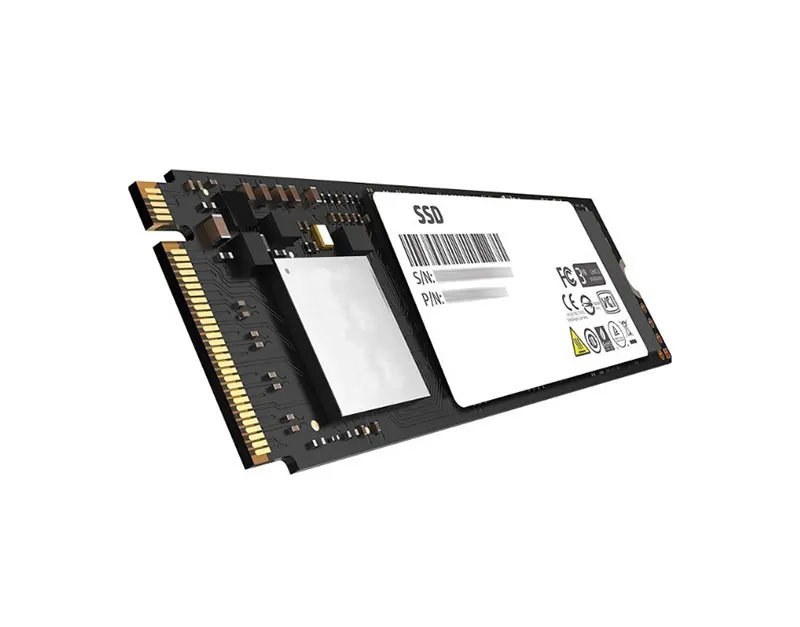
The Micron 1100 256GB (MTFDDAV256TBN-1AR1ZABDA) is best suited for read-centric server boot volumes, security appliances, and edge systems that need SATA compatibility with predictable endurance, pairing 3D TLC NAND with 120TBW to deliver a stronger reliability profile than typical entry SATA SSDs. With 530/500 MB/s sequential performance and an unusually strong 83,000 random-write IOPS at this capacity point, it offers faster small-block update behavior and better steady responsiveness than many same-class 256GB SATA drives.
With an endurance rating of 120 TBW, this 256GB SSD can sustain about 33GB of host writes per day for 10 years, or roughly 65GB per day for 5 years, which is more than sufficient for typical OS, boot, and general-purpose read-centric workloads. In practical procurement terms, that means it is a solid choice as a system drive and can deliver long service life in normal business use without endurance concerns. From a reliability perspective, the specified UBER of 1.0E-15 indicates a very low unrecoverable bit error rate, supporting dependable data reads in everyday enterprise and industrial operation, while the 1.5 million-hour MTBF further reflects strong long-term hardware reliability. This model does not include power-loss protection (PLP), so while it remains well suited for boot and standard application storage, systems that must guarantee in-flight write protection during sudden power interruption should pair it with external power safeguards such as a UPS or controlled shutdown design.
1. The SATA 6Gb/s interface ensures broad compatibility with mainstream enterprise backplanes and legacy server platforms, enabling cost-efficient upgrades without infrastructure changes.
2. With sequential read performance of 530 MB/s, the drive accelerates boot storms, large file retrieval, and backup restoration in read-centric business environments.
3. Delivering 55,000 K IOPS in random reads, it helps databases, virtual desktop pools, and metadata-heavy workloads respond faster under highly fragmented access patterns.
4. Built with 3D TLC NAND and rated for [dwpd] DWPD, the drive balances capacity economics with the write endurance needed for always-on enterprise applications.
5. A typical latency of [latency] µs supports more predictable QoS, helping latency-sensitive services maintain steady responsiveness during peak demand.
For the same series, the lower-capacity reference is 128GB and the higher-capacity reference is 512GB. In this enterprise SSD family, sequential read/write performance and random IOPS are generally close across these capacities, so capacity planning is the main differentiator. At 256GB, this model sits at the sweet spot of the family. Compared with 128GB, it gives meaningfully better space flexibility for OS images, logs, metadata, and application growth, reducing early capacity pressure. Compared with 512GB, it usually delivers a better cost-to-usable-capacity balance while keeping similar enterprise-class performance. It is well suited for mid-scale deployments, such as a shared boot and utility tier for about 40 to 60 lightweight application or infrastructure nodes.
Q: Is MTFDDAV256TBN-1AR1ZABDA suitable for a write-heavy database server?
A: Not ideal for write-heavy database workloads. With 3D TLC NAND, 120TB TBW, and no PLP, this 256GB SATA SSD is better suited for read-centric, boot, or general-purpose enterprise applications.
Q: How many full drive writes per day can it actually endure over its warranty period?
A: Based on 120TB TBW and 256GB capacity, the drive supports about 0.26 full drive writes per day over a typical 5-year warranty, equivalent to roughly 66GB of writes daily.
Q: Does it include power loss protection (PLP) and why is that critical?
A: No, this model does not include power loss protection. PLP is critical in enterprise environments because it helps prevent data loss or metadata corruption during unexpected power interruptions.
Q: What RAID level is recommended for this SSD?
A: For most deployments, RAID 1 or RAID 10 is recommended to balance redundancy and performance. RAID 5 may be used cautiously, but parity writes can increase write amplification and endurance consumption.