











 Secure payments
Standard refund policy
Trade Assurance
Secure payments
Standard refund policy
Trade Assurance
| Brand | Micron |
|---|---|
| Model | 2300 |
| Capacity | 1TB |
| Usage Class | Client |
| Host Interface | PCIe Gen3 x4 NVMe |
|---|---|
| Total Interface Bandwidth | 31.5 Gb/s |
| Form Factor | M.2 2280 |
|---|
| NAND Flash | 3D TLC |
|---|---|
| Drive Writes Per Day | |
| Total Bytes Written | 600 TBW |
| Sequential Read | 3300 MB/s |
|---|---|
| Sequential Write | 2700 MB/s |
| Random Read IOPS | 380000 |
| Random Write IOPS | 50000 |
| Average Latency | μs |
| Mean Time Between Failures | 2 Million Hours |
|---|---|
| Uncorrectable Bit Error Rate | 1.0×10⁻¹⁷ |
| Power Loss Protection | No |
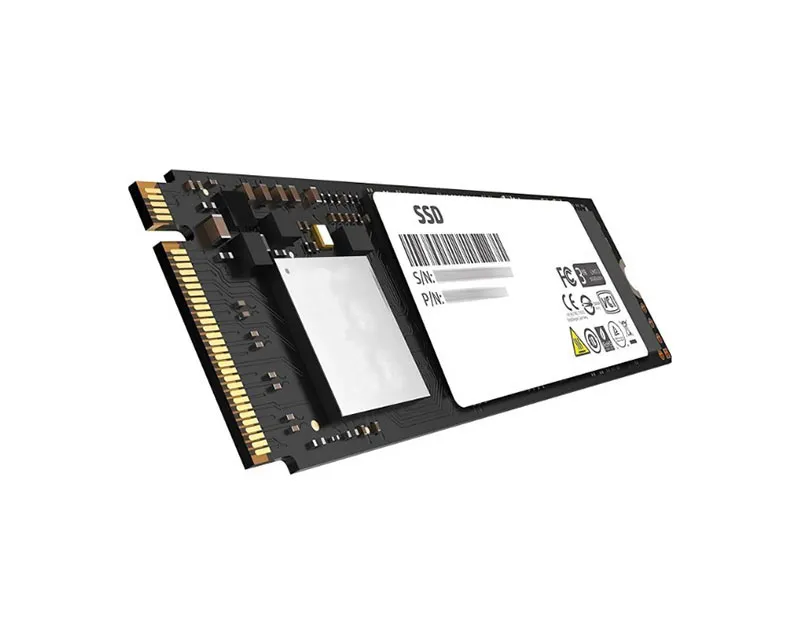
The Micron 2300 1TB (MTFDHBA1T0TDV-1AZ1AABDA) is a strong fit for read-intensive CDN edge cache nodes, combining PCIe Gen3 x4 NVMe performance up to 3300/2700 MB/s with 380,000 random-read IOPS to accelerate hot-content delivery and metadata access. Compared with SATA SSDs and entry-level NVMe alternatives in the same capacity class, it offers substantially higher sequential bandwidth and read concurrency while still providing 600 TBW endurance from 3D TLC NAND for dependable long-term deployment.
With a rated endurance of 600 TBW, this 1TB SSD can sustain 600 terabytes of total host writes over its service life, which is far beyond the write volume of a typical OS, boot, and application drive. In practical terms, even a workload of around 150 GB of writes per day would take nearly 11 years to reach this limit, so it can be used confidently as a system drive for long-term everyday operation. From a reliability perspective, the drive’s 2 million hour MTBF and 1.0E-15 UBER indicate a highly dependable design, with an extremely low rate of unrecoverable read errors in normal operation. This model does not include power-loss protection (PLP), so it is best suited to environments with stable power or UPS support, but for standard enterprise boot, edge, and read-centric workloads it remains a reliable and cost-effective choice.
1. The PCIe Gen3 x4 NVMe interface provides a low-overhead, high-bandwidth data path that helps enterprise servers accelerate virtualization, database access, and storage consolidation.
2. Its 3300 MB/s sequential read performance shortens large-file ingestion, backup restore, and analytics scan times, improving throughput for data-intensive business operations.
3. With 380,000 K IOPS random read capability, the drive sustains responsive performance under highly concurrent transaction loads such as OLTP, VDI, and metadata-heavy applications.
4. Built on 3D TLC NAND and rated for [dwpd] DWPD, it delivers a practical balance of capacity efficiency and write endurance for mainstream enterprise workloads running around the clock.
5. A typical latency of [latency] µs helps reduce application wait time and tail-latency risk, supporting more predictable QoS in latency-sensitive production environments.
Reference capacities in the same family are typically 960GB as the next lower point and 1.92TB as the next higher point, with broadly similar enterprise-class sequential read/write behavior and random IOPS. At 1TB, the MTFDHBA1T0TDV-1AZ1AABDA sits in the sweet spot of the lineup. Versus 960GB, it gives slightly more headroom for OS growth, logging, patching, and moderate data expansion, reducing early capacity pressure. Versus 1.92TB, it preserves nearly the same mainstream enterprise performance profile while offering a more efficient cost-per-deployment balance. It is well suited for a mid-sized virtualization cluster, such as hosting boot and application volumes for roughly 40 to 60 general-purpose virtual machines.
Q: Is MTFDHBA1T0TDV-1AZ1AABDA suitable for a write-heavy database server?
A: Not ideal for a write-heavy database server. This 1TB PCIe Gen3 x4 NVMe SSD uses 3D TLC NAND, has 600TBW endurance, and lacks PLP, making it better for mixed or read-focused workloads.
Q: How many full drive writes per day can it actually endure over its warranty period?
A: With 600TBW and 1TB capacity, the drive supports about 600 full drive writes total. Assuming a 5-year warranty, that equals roughly 0.33 DWPD, or one full write every three days.
Q: Does it include power loss protection (PLP) and why is that critical?
A: No, it does not include power loss protection. PLP is critical because it helps protect in-flight data and metadata during sudden outages, reducing corruption risk in transactional or enterprise environments.
Q: What RAID level is recommended for this SSD?
A: RAID 1 or RAID 10 is generally recommended for this SSD, especially for business-critical workloads. These levels provide strong redundancy and consistent performance, while avoiding the write penalty of RAID 5.