











 Secure payments
Standard refund policy
Trade Assurance
Secure payments
Standard refund policy
Trade Assurance
| Brand | Micron |
|---|---|
| Model | 3400 |
| Capacity | 1TB |
| Usage Class | Client |
| Host Interface | PCIe Gen4 x4 NVMe |
|---|---|
| Total Interface Bandwidth | 63 Gb/s |
| Form Factor | M.2 2280 |
|---|
| NAND Flash | 3D TLC |
|---|---|
| Drive Writes Per Day | |
| Total Bytes Written | 600 TBW |
| Sequential Read | 6600 MB/s |
|---|---|
| Sequential Write | 5000 MB/s |
| Random Read IOPS | 630000 |
| Random Write IOPS | 700000 |
| Average Latency | μs |
| Mean Time Between Failures | 2 Million Hours |
|---|---|
| Uncorrectable Bit Error Rate | 1.0×10⁻¹⁷ |
| Power Loss Protection | No |
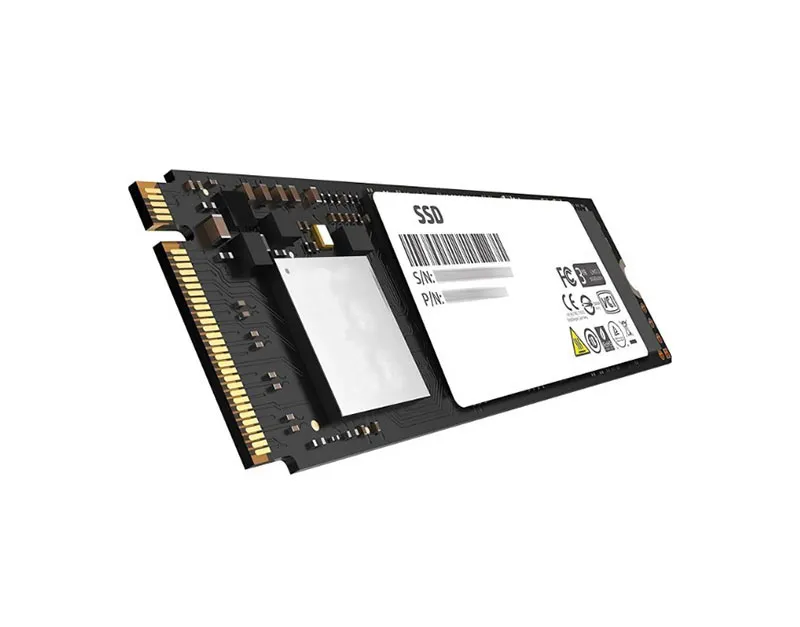
The Micron 3400 1TB (MTFDKBA1T0TFH-1BC15ABYYR) is an excellent fit for high-performance client workstations and developer systems that need fast game/content loading, large project builds, and responsive virtual machine or scratch-disk performance, thanks to its PCIe Gen4 x4 interface, up to 6600/5000 MB/s sequential throughput, and 630K/700K IOPS random performance. Compared with typical PCIe Gen3 or mainstream DRAM-less SSDs in the same capacity class, it delivers a clear step up in mixed-read/write responsiveness while maintaining enterprise-leaning durability with 3D TLC NAND and 600 TBW for sustained heavy daily use.
With an endurance rating of 600 TBW, this 1TB SSD can sustain a substantial amount of host writes over its service life, making it well suited for typical OS, boot, office, and general business workloads. In practical terms, under normal system-drive usage patterns, this level of endurance is generally more than sufficient for many years of reliable operation, often supporting around a decade of everyday client or light mixed-use deployment. From a reliability standpoint, the specified UBER of 1.0E-15 indicates a very low uncorrectable bit error rate, helping ensure strong data integrity during normal read operations, while the 2 million hour MTBF further supports confidence in long-term device stability. This model does not include power-loss protection, so while it is a dependable choice for standard platforms and controlled IT environments, applications with frequent unexpected power interruptions or strict in-flight write protection requirements should use system-level safeguards such as a UPS or journaling/file-system protections.
1. The PCIe Gen4 x4 NVMe interface gives this drive the bandwidth and command efficiency needed to keep virtualization clusters, AI pipelines, and scale-out storage nodes fed without becoming a bottleneck.
2. Its sequential read performance enables dramatically faster dataset streaming, backup restore, and large-file access, helping shorten job completion time in data-intensive enterprise workloads.
3. Strong random read capability translates into snappier database queries, higher VM density, and more consistent response times for latency-sensitive transactional applications.
4. The rated endurance supports sustained enterprise write activity with predictable lifespan planning, making it suitable for always-on environments that demand dependable long-term serviceability.
5. Built on 3D TLC NAND, it balances performance, capacity, and cost efficiency, making it a practical choice for enterprises that need reliable flash at scale rather than niche ultra-high-endurance media.
Within this series, the nearest reference points to the 1TB MTFDKBA1T0TFH-1BC15ABYYR are typically 800GB on the lower side and 1.6TB on the higher side, with broadly similar enterprise-class sequential throughput and random IOPS. The 1TB model sits in the sweet spot: compared with 800GB, it gives noticeably better headroom for OS, logs, metadata, and workload growth; compared with 1.6TB, it preserves most of the same practical performance profile while keeping acquisition cost and capacity overprovisioning under tighter control. It is well suited for a mid-scale virtualization cluster hosting about 40 to 60 mixed-use virtual server boot volumes.
Q: Is MTFDKBA1T0TFH-1BC15ABYYR suitable for a write-heavy database server?
A: This model is better suited for mixed or read-intensive workloads than sustained write-heavy database use. Its 3D TLC NAND, 600 TBW rating, and lack of PLP make enterprise write-intensive deployments less ideal.
Q: How many full drive writes per day can it actually endure over its warranty period?
A: Based on 600 TBW and 1TB capacity, it supports about 600 full drive writes total. Assuming a 5-year warranty, that equals roughly 0.33 drive writes per day.
Q: Does it include power loss protection (PLP) and why is that critical?
A: No, it does not include power loss protection. PLP is critical because it helps prevent in-flight data loss and metadata corruption during sudden outages, especially in transactional or database environments.
Q: What RAID level is recommended for this SSD?
A: For business-critical use, RAID 1 or RAID 10 is generally recommended to improve redundancy and performance. Avoid relying on RAID alone to replace PLP, especially for write-sensitive applications.