











 Secure payments
Standard refund policy
Trade Assurance
Secure payments
Standard refund policy
Trade Assurance
| Brand | Samsung |
|---|---|
| Model | 860 PRO |
| Capacity | 2 TB |
| Usage Class | Client / Consumer |
| Host Interface | SATA 6.0 Gbps |
|---|---|
| Total Interface Bandwidth | 6 Gb/s |
| Form Factor | 2.5" |
|---|
| NAND Flash | Samsung V-NAND 2bit MLC |
|---|---|
| Drive Writes Per Day | 0.66 |
| Total Bytes Written | 2400 TBW |
| Sequential Read | 560 MB/s |
|---|---|
| Sequential Write | 530 MB/s |
| Random Read IOPS | 100000 |
| Random Write IOPS | 90000 |
| Average Latency | 120 μs |
| Mean Time Between Failures | 1.5 Million Hours |
|---|---|
| Uncorrectable Bit Error Rate | 1.0×10⁻¹⁷ |
| Power Loss Protection | No |
| MPN | MZ-76P2T0 |
|---|
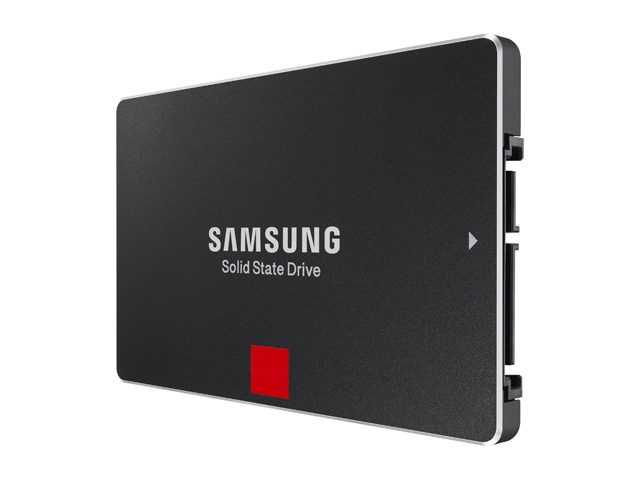
The Samsung 860 PRO 2 TB (MZ-76P2T0BW) stands out in the SATA tier by pairing Samsung V-NAND 2-bit MLC with 2400 TBW endurance, 0.66 DWPD, and sustained 560/530 MB/s plus 100K/90K IOPS performance—making it a stronger fit than typical TLC-based SATA SSDs for write-intensive databases, virtualization, and high-duty workstation caches. Compared with the earlier MZ-76P2T0, the MZ-76P2T0BW serves as the current channel-qualified revision for the same class-leading endurance and peak SATA throughput, giving engineers a lower-risk drop-in choice for long-life deployments where consistency and media durability matter more than headline capacity.
With an endurance rating of 2,400 TBW and 0.66 DWPD, the MZ-76P2T0BW can sustain writing about two-thirds of its full capacity every day across its warranty period, which is more than sufficient for typical OS, application, boot, and general business workloads. In practical terms, for common system-disk or mixed read-heavy deployment scenarios, this level of endurance provides long service life with substantial write headroom and should support many years of stable operation under normal enterprise usage. From a reliability perspective, the specified UBER of 1.0E-15 indicates a very low uncorrectable bit error rate, helping ensure strong data integrity during large-scale read operations, while the 1.5 million hour MTBF further supports dependable long-term use. This model does not include power loss protection (PLP), so it is best suited for environments with controlled shutdown procedures or external power safeguarding such as UPS systems, where buyers can still benefit from solid endurance and predictable reliability for non-write-critical applications.
1. The SATA interface paired with near bus-saturating sequential throughput enables straightforward drop-in upgrades for legacy enterprise platforms while accelerating bulk data movement such as backups, log scans, and VM image loading.
2. Its strong random read capability helps databases, virtualization clusters, and read-heavy application servers sustain fast access under highly fragmented, multi-user workloads.
3. The rated write endurance supports steady day-after-day enterprise operation, making it well suited for mixed-use deployments that need predictable lifespan without stepping up to a full write-intensive class.
4. Samsung’s V-NAND 2-bit MLC architecture provides a reliability-focused flash foundation that balances sustained performance, data integrity, and endurance better than cost-optimized client-grade NAND.
5. The low typical latency improves application responsiveness and transaction consistency, which is especially valuable for OLTP systems, metadata-heavy workloads, and latency-sensitive virtual machines.
For the Samsung 860 PRO series, the next lower capacity below MPN MZ-76P2T0BW 2 TB is 1 TB, and the next higher capacity is 4 TB. Since sequential read/write performance and random IOPS are broadly similar across the family, the 2 TB model represents the practical sweet spot. Compared with 1 TB, it offers noticeably more headroom for OS images, application stacks, logs, and growth. Compared with 4 TB, it delivers a better balance of acquisition cost, usable capacity, and performance consistency, making it ideal for mid-scale virtualization hosts or dense read-intensive database nodes.
Q: Is MZ-76P2T0BW suitable for a write-heavy database server?
A: It can support moderate to heavy mixed workloads, but for highly write-intensive database servers, we recommend evaluating enterprise SSDs with PLP and higher sustained write endurance.
Q: How many full drive writes per day can it actually endure over its warranty period?
A: This model is rated at 0.66 DWPD, meaning it can handle about 0.66 full drive writes per day over its warranty period, consistent with its 2400 TBW rating.
Q: Does it include power loss protection (PLP) and why is that critical?
A: No, it does not include power loss protection. PLP is critical in server environments because it helps prevent in-flight data loss and metadata corruption during unexpected power failures.
Q: What RAID level is recommended for this SSD?
A: For most server deployments, RAID 1 or RAID 10 is recommended to balance redundancy and performance. RAID 5 may be used cautiously, but parity writes can increase SSD wear.