











 Secure payments
Standard refund policy
Trade Assurance
Secure payments
Standard refund policy
Trade Assurance
| Brand | Samsung |
|---|---|
| Model | 870 EVO |
| Capacity | 500 GB |
| Usage Class | Client / Consumer |
| Host Interface | SATA 6.0 Gbps |
|---|---|
| Total Interface Bandwidth | 6 Gb/s |
| Form Factor | 2.5" |
|---|
| NAND Flash | Samsung V-NAND 3-bit TLC |
|---|---|
| Drive Writes Per Day | 0.33 |
| Total Bytes Written | 300 TBW |
| Sequential Read | 560 MB/s |
|---|---|
| Sequential Write | 530 MB/s |
| Random Read IOPS | 98000 |
| Random Write IOPS | 88000 |
| Average Latency | 50 μs |
| Mean Time Between Failures | 1.5 Million Hours |
|---|---|
| Uncorrectable Bit Error Rate | 1.0×10⁻¹⁷ |
| Power Loss Protection | No |
| MPN | MZ-77E500 |
|---|
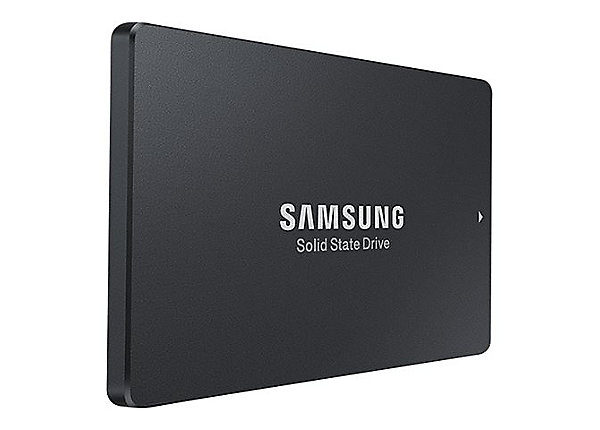
The MZ-77E500E (870 EVO 500GB) is a SATA-optimized client SSD that pushes the interface to near-maximum throughput at 560/530 MB/s while sustaining strong small-block performance at 98K/88K IOPS, making it a high-confidence choice for OS, application, and mixed desktop workloads that still require 2.5-inch SATA compatibility. Compared with the earlier MZ-77E500 designation, the MZ-77E500E preserves the same proven 870 EVO platform but stands out with Samsung V-NAND 3-bit TLC and 300 TBW endurance, giving it a clearer long-life advantage over many entry SATA SSDs that trade away write endurance for lower cost.
With an endurance rating of 300 TBW and 0.33 DWPD, this SSD can support about 82 GB of host writes per day over a 10-year period, which is more than sufficient for typical OS boot, office productivity, web applications, and general business endpoint workloads. In practical terms, when used as a system drive or for read-heavy applications, it should deliver long service life with ample write headroom under normal usage patterns. The specified UBER of 1.0E-15 means the drive is designed for a very low rate of uncorrectable read errors, supporting dependable data integrity in everyday operation. This model does not include power-loss protection (PLP), so while it is well suited for client and non-cache-critical use cases, environments with frequent unexpected power interruptions or write-intensive transactional workloads should pair it with stable power protection or consider a model with PLP.
1. The SATA 6.0 Gbps interface, paired with 560 MB/s sequential read performance, provides a stable upgrade path for legacy enterprise platforms while accelerating large file access, OS boot, and backup recovery workflows.
2. With 98,000 K IOPS random read capability, the drive can handle highly concurrent lookup-heavy workloads such as virtual desktops, metadata access, and read-intensive databases with smoother response under pressure.
3. Rated at 0.33 DWPD, this endurance profile is well suited for mixed-use enterprise environments where predictable daily write volume matters more than extreme write cycling, helping balance lifespan and acquisition cost.
4. Samsung V-NAND 3-bit TLC enables higher storage density and better power and cost efficiency, making it a practical fit for scaling capacity across large server and appliance deployments.
5. The 50 µs typical latency helps reduce storage wait time for transactional workloads, supporting more responsive application behavior and tighter service-level consistency in multi-user environments.
Reference capacities in the same series for MPN MZ-77E500E (500 GB): Lower capacity: 250 GB Higher capacity: 1 TB Typical performance reference for the series: 250 GB: up to 560 MB/s read, up to 530 MB/s write, up to about 98K/88K random read/write IOPS 500 GB: up to 560 MB/s read, up to 530 MB/s write, up to about 98K/88K random read/write IOPS 1 TB: up to 560 MB/s read, up to 530 MB/s write, up to about 98K/88K random read/write IOPS Capacity positioning analysis: Within this series, 500 GB is the sweet-spot capacity. Compared with the 250 GB model, it gives much better headroom for OS images, logs, patch growth, and application data, reducing the risk of early capacity pressure. Compared with the 1 TB version, it keeps acquisition cost and fleet-wide replacement budgets under tighter control while delivering essentially the same everyday SATA performance. It is best suited for small to mid-sized deployments, such as hosting boot and application volumes for around 25 to 40 lightweight virtual desktops or branch-office servers.
Q: Is MZ-77E500E suitable for a write-heavy database server?
A: Not recommended for write-heavy database servers. Its 0.33 DWPD rating, TLC V-NAND design, SATA interface, and lack of PLP make it better suited for client, read-focused, or light mixed workloads.
Q: How many full drive writes per day can it actually endure over its warranty period?
A: It is rated for 0.33 full drive writes per day, which means about one-third of its 500 GB capacity daily, or roughly 165 GB/day, within its 300 TBW endurance specification.
Q: Does it include power loss protection (PLP) and why is that critical?
A: No, this model does not include power loss protection. PLP is critical in server and database environments because it helps prevent in-flight data loss and metadata corruption during sudden power interruptions.
Q: What RAID level is recommended for this SSD?
A: For general business use, RAID 1 is a practical choice for redundancy. If higher performance and fault tolerance are required, RAID 10 is preferred over parity RAID for better write consistency.