

 Secure payments
Standard refund policy
Trade Assurance
Secure payments
Standard refund policy
Trade Assurance
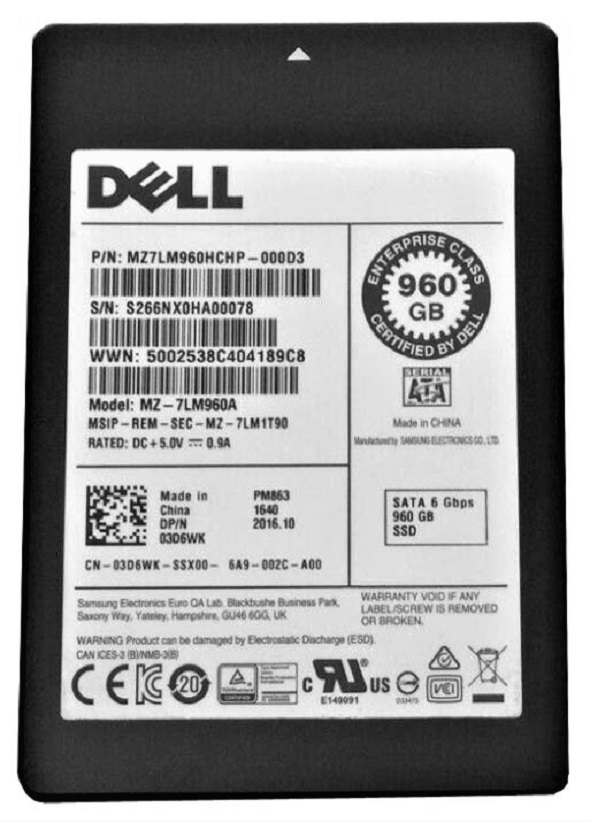
| Brand | Samsung |
|---|---|
| Model | PM863 Series |
| Capacity | 960GB |
| Usage Class | Enterprise Data Center / Mixed Use |
| Host Interface | SATA 6Gb/s |
|---|---|
| Total Interface Bandwidth | 6 Gb/s |
| Form Factor | 2.5 7mm |
|---|
| NAND Flash | Samsung 32-layer 3D V-NAND TLC |
|---|---|
| Drive Writes Per Day | 1.3 |
| Total Bytes Written | 1400 TBW |
| Sequential Read | 520 MB/s |
|---|---|
| Sequential Write | 475 MB/s |
| Random Read IOPS | 99000 |
| Random Write IOPS | 18000 |
| Average Latency | 120 μs |
| Mean Time Between Failures | 2.0 Million Hours |
|---|---|
| Uncorrectable Bit Error Rate | 1.0×10⁻¹⁷ |
| Power Loss Protection | Yes |
| MPN | MZ-7TE960 |
|---|
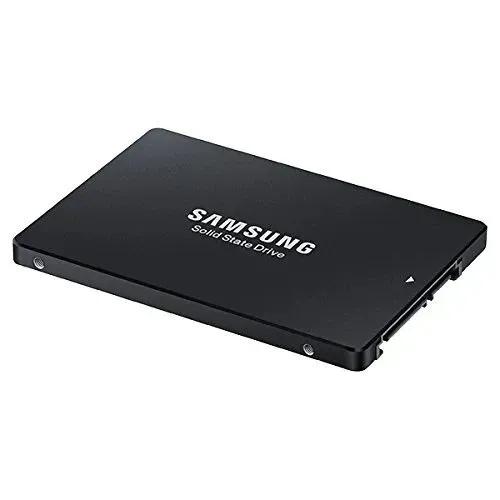
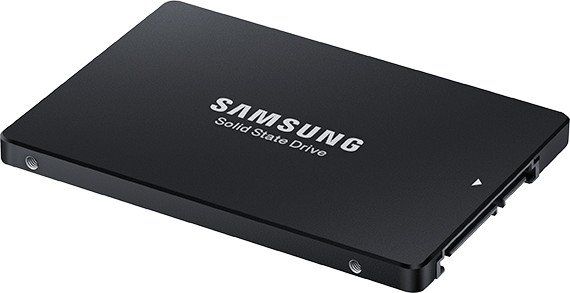
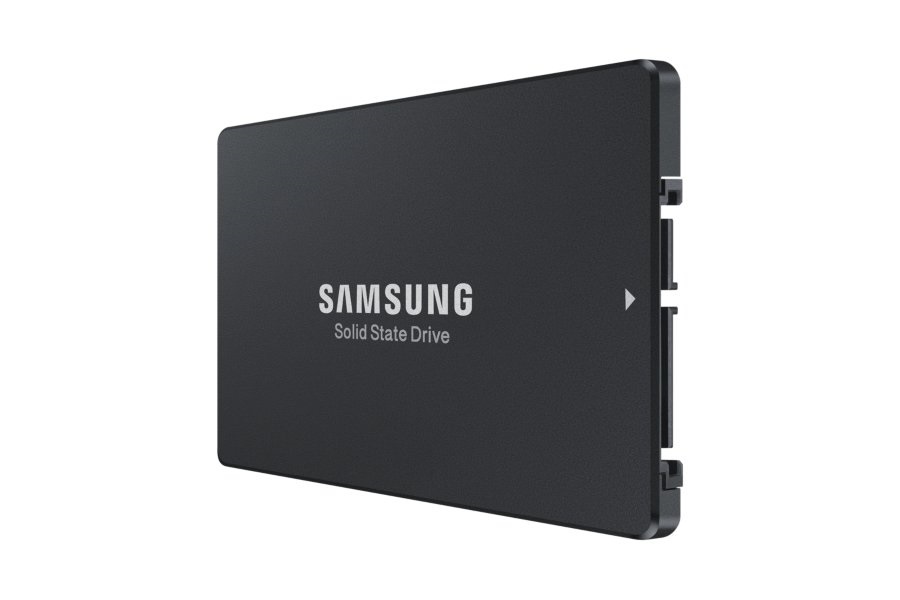
Compared with the previous-generation MZ-7TE960, the Samsung PM863 Series MZ-7LM960A brings a clear generational upgrade with 32-layer 3D V-NAND TLC, enterprise endurance rated at 1.3 DWPD and 1400 TBW, and stronger power efficiency for always-on SATA deployments. At 960GB, it pairs 520/475 MB/s sequential performance with up to 99,000/18,000 IOPS, making it a particularly strong fit for read-intensive virtualization, web hosting, and scale-out server boot or caching tiers that need higher endurance than typical client-class SATA SSDs.
With an endurance rating of 1,400 TBW and 1.3 DWPD, the MZ-7LM960A is designed to handle sustained write activity well beyond typical client or general server boot-drive usage. In practical terms, under normal OS, application, logging, and routine business workloads, it can serve reliably as a system drive for many years, making it a low-risk choice for long-term deployment. For enterprise reliability, the drive includes power-loss protection (PLP), which helps preserve in-flight data and metadata during an unexpected power interruption, reducing the risk of corruption and improving operational stability. Its UBER rating of 1.0E-17, together with a 2 million-hour MTBF, indicates a very low probability of unrecoverable bit errors and strong overall dependability for business-critical environments.
1. The SATA 6Gb/s interface paired with 520 MB/s sequential read performance lets this drive fully exploit existing enterprise SATA backplanes, accelerating OS boot, image pulls, and large-file streaming without requiring a platform upgrade.
2. With 99,000 random-read IOPS, it can sustain highly concurrent access patterns in virtualized databases and read-heavy application clusters, helping reduce queue buildup during peak transaction periods.
3. A 1.3 DWPD endurance rating gives data centers the write headroom needed for mixed-use enterprise workloads, supporting predictable service life under continuous daily overwrite cycles.
4. Samsung 32-layer 3D V-NAND TLC delivers a strong balance of density, cost efficiency, and power-conscious reliability, making it well suited for scaling enterprise flash capacity across mainstream server fleets.
5. The 120 µs typical latency helps keep application response times consistently tight, which is especially valuable for OLTP, VDI, and other latency-sensitive business workloads.
Lower capacity reference: 480GB Higher capacity reference: 1.92TB In this series, the 960GB model sits at the sweet spot. Compared with the 480GB version, it gives much better headroom for OS growth, application updates, logs, and mixed business data, reducing the risk of early capacity pressure. Compared with the 1.92TB model, it keeps acquisition cost lower while delivering essentially the same enterprise-class sequential read/write and random IOPS behavior. That makes 960GB the best balance of usable capacity, predictable performance, and budget efficiency for medium-scale deployments such as a 6 to 10 node virtualization cluster or a compact database tier.
Q: Is MZ-7LM960A suitable for a write-heavy database server?
A: Yes. With 1.3 DWPD, 1400 TBW endurance, low 120 µs typical latency, and enterprise features like PLP, the MZ-7LM960A is suitable for write-intensive database and transactional server workloads.
Q: How many full drive writes per day can it actually endure over its warranty period?
A: This model is rated at 1.3 drive writes per day. For a 960GB SSD, that equals about 1.25TB of writes daily across its warranty period, assuming standard enterprise endurance conditions.
Q: Does it include power loss protection (PLP) and why is that critical?
A: Yes, it includes power loss protection. PLP helps preserve in-flight data and mapping tables during unexpected outages, reducing corruption risk and improving reliability in servers, storage arrays, and databases.
Q: What RAID level is recommended for this SSD?
A: RAID choice depends on workload. RAID 1 or RAID 10 is generally recommended for databases and critical applications, balancing redundancy, performance, and rebuild safety better than parity-based RAID levels.