

 Secure payments
Standard refund policy
Trade Assurance
Secure payments
Standard refund policy
Trade Assurance
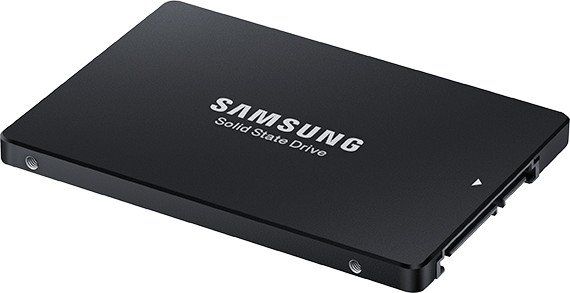
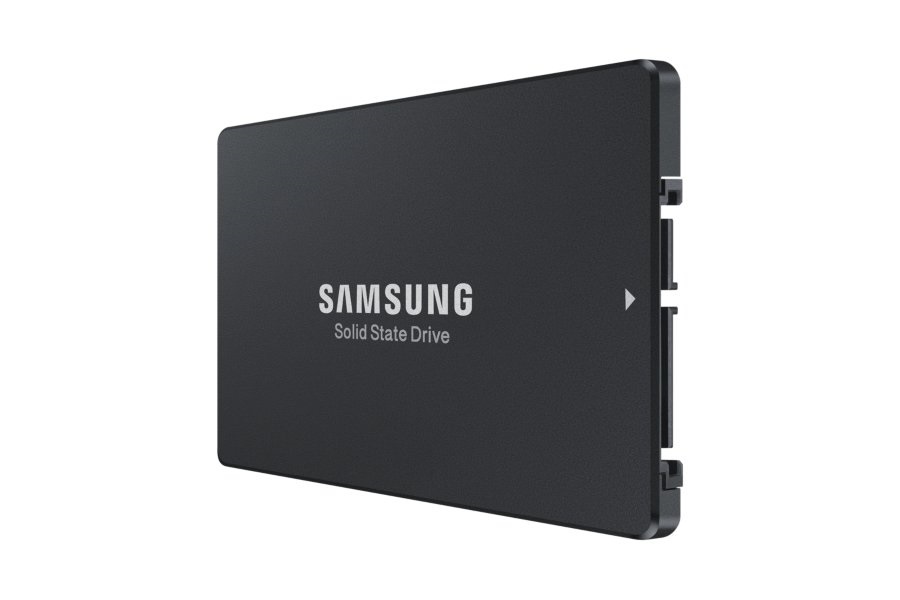
| Brand | Samsung |
|---|---|
| Model | 970 EVO Plus |
| Capacity | 1TB |
| Usage Class | Client |
| Host Interface | NVMe PCIe Gen3 x4 |
|---|---|
| Total Interface Bandwidth | 32 Gb/s |
| Form Factor | M.2 (2280) |
|---|
| NAND Flash | Samsung V-NAND 3-bit MLC |
|---|---|
| Drive Writes Per Day | 0.3 |
| Total Bytes Written | 600 TBW |
| Sequential Read | 3500 MB/s |
|---|---|
| Sequential Write | 3300 MB/s |
| Random Read IOPS | 600000 |
| Random Write IOPS | 550000 |
| Average Latency | 80 μs |
| Mean Time Between Failures | 1.5 Million Hours |
|---|---|
| Uncorrectable Bit Error Rate | 1.0×10⁻¹⁷ |
| Power Loss Protection | No |
| MPN | MZ-V7E1T0 |
|---|
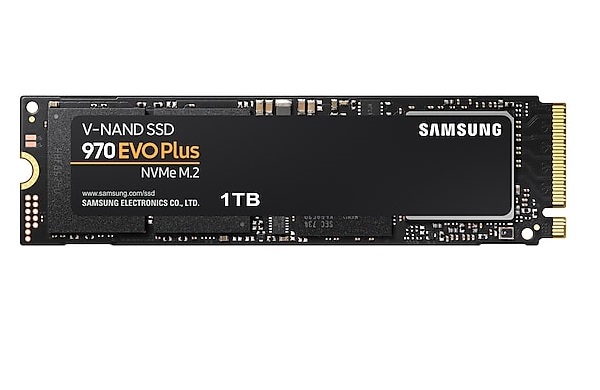
The Samsung 970 EVO Plus 1TB (MZ-V7S1T0) delivers a clear generational step over the MZ-V7E1T0, increasing sequential write performance from 2,500 to 3,300 MB/s (+32%) and random write from 500,000 to 550,000 IOPS (+10%) while maintaining the same 600 TBW endurance. For PCIe Gen3 x4 platforms that need near-flagship responsiveness without moving to Gen4, it is the stronger choice for OS, application, and content-creation scratch workloads thanks to its 3,500 MB/s reads, 600K IOPS random reads, and Samsung V-NAND 3-bit MLC efficiency.
With an endurance rating of 600 TBW, this 1TB SSD can sustain about 164 GB of host writes per day for 10 years, or roughly 328 GB per day for 5 years, which is well above the write volume of most office PCs and system-drive use cases. In practical terms, for OS, applications, documents, and routine business workloads, this level of endurance provides a comfortable margin for long-term deployment. In reliability terms, the UBER specification of 1.0E-15 means the drive is designed for a very low rate of uncorrectable read errors, which is in line with mainstream client SSD expectations and suitable for normal enterprise endpoint and office environments. This model does not include power-loss protection (PLP), so while it is dependable for standard desktops and notebooks, it is best used in systems with stable power or UPS support rather than in write-critical environments where sudden power interruption protection is required.
1. The NVMe over PCIe Gen3 x4 architecture, paired with top-tier sequential bandwidth, accelerates backup windows, VM boot storms, and large dataset streaming in latency-sensitive enterprise environments.
2. Its strong random-read capability enables dense virtualization, metadata-heavy databases, and high-concurrency application tiers to serve far more transactions without becoming storage-bound.
3. The endurance profile is best suited to read-centric enterprise workloads such as content distribution, analytics repositories, and boot or cache layers where write pressure is moderate but uptime still matters.
4. Samsung V-NAND 3-bit MLC delivers a practical balance of flash density, power efficiency, and cost, helping organizations scale capacity economically for mainstream data-center deployment.
5. The very low typical latency improves application responsiveness and tail-latency behavior, which is critical for OLTP systems, virtual desktops, and real-time service delivery.
Lower capacity reference: 500GB Higher capacity reference: 2TB In the MZ-V7S series, the 1TB model is the practical sweet spot. Compared with the 500GB version, it gives much better headroom for OS images, application stacks, logs, and future growth, reducing early capacity pressure in sustained enterprise use. Compared with the 2TB option, it delivers nearly the same class of sequential throughput and random IOPS while keeping acquisition cost and fleet-wide budget under tighter control. This makes 1TB especially well suited for mid-sized virtualization clusters, such as hosting boot and application volumes for around 40 to 60 business service instances.
Q: Is MZ-V7S1T0 suitable for a write-heavy database server?
A: MZ-V7S1T0 is generally not recommended for write-heavy database servers. With 0.3 DWPD and 600 TBW, it is better suited for client, boot, read-focused, or mixed-light enterprise workloads.
Q: How many full drive writes per day can it actually endure over its warranty period?
A: This model is rated for 0.3 drive writes per day, meaning about 300 GB of writes daily on a 1TB drive over the warranty period, consistent with its 600 TBW endurance.
Q: Does it include power loss protection (PLP) and why is that critical?
A: No, this SSD does not include power loss protection. PLP is critical in server environments because it helps prevent in-flight data loss and metadata corruption during unexpected power failures.
Q: What RAID level is recommended for this SSD?
A: For this SSD, RAID 1 or RAID 10 is typically recommended for better redundancy and performance balance. RAID 5 may work, but parity writes can increase write amplification and endurance wear.