

 Secure payments
Standard refund policy
Trade Assurance
Secure payments
Standard refund policy
Trade Assurance
| Brand | Samsung |
|---|---|
| Model | 970 EVO Plus |
| Capacity | 2 TB |
| Usage Class | Client / Consumer |
| Host Interface | PCIe Gen3 x4 |
|---|---|
| Total Interface Bandwidth | 8 Gb/s |
| Form Factor | M.2 2280 |
|---|
| NAND Flash | Samsung V-NAND 3-bit MLC |
|---|---|
| Drive Writes Per Day | 0.33 |
| Total Bytes Written | 1200 TBW |
| Sequential Read | 3500 MB/s |
|---|---|
| Sequential Write | 3300 MB/s |
| Random Read IOPS | 620000 |
| Random Write IOPS | 560000 |
| Average Latency | 30 μs |
| Mean Time Between Failures | 1.5 Million Hours |
|---|---|
| Uncorrectable Bit Error Rate | 1.0×10⁻¹⁷ |
| Power Loss Protection | No |
| MPN | MZ-V7S2T0B/AM |
|---|
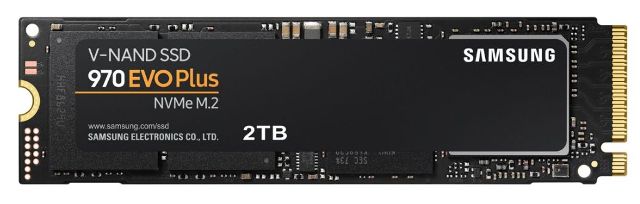
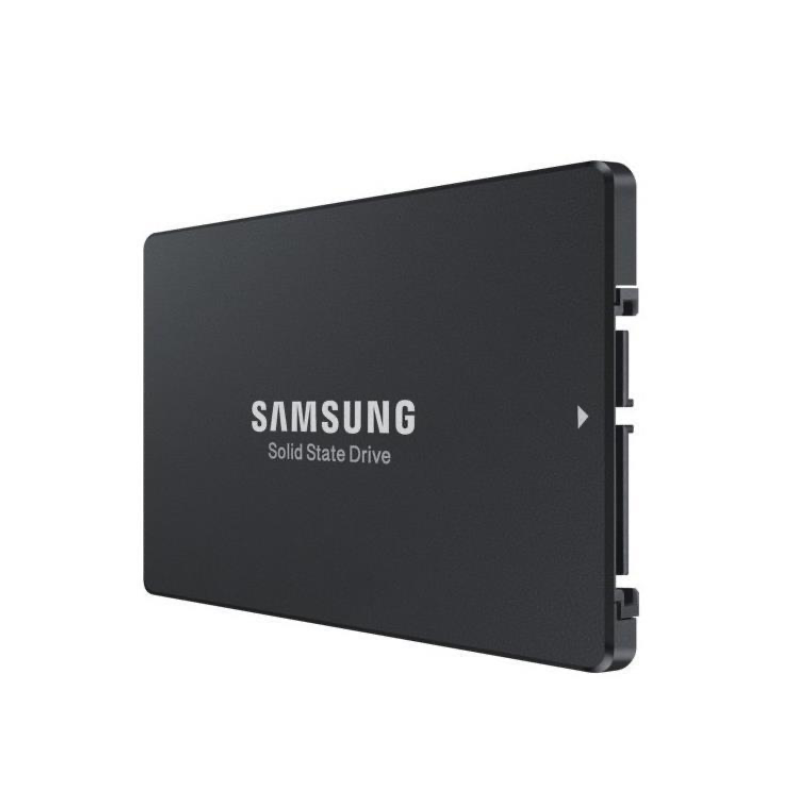
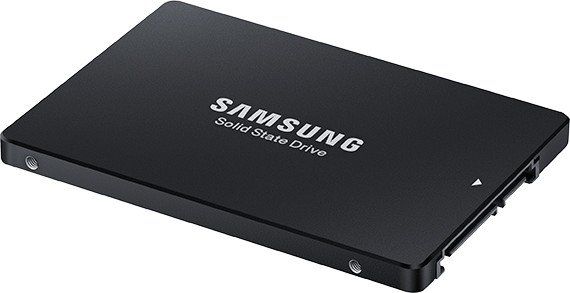
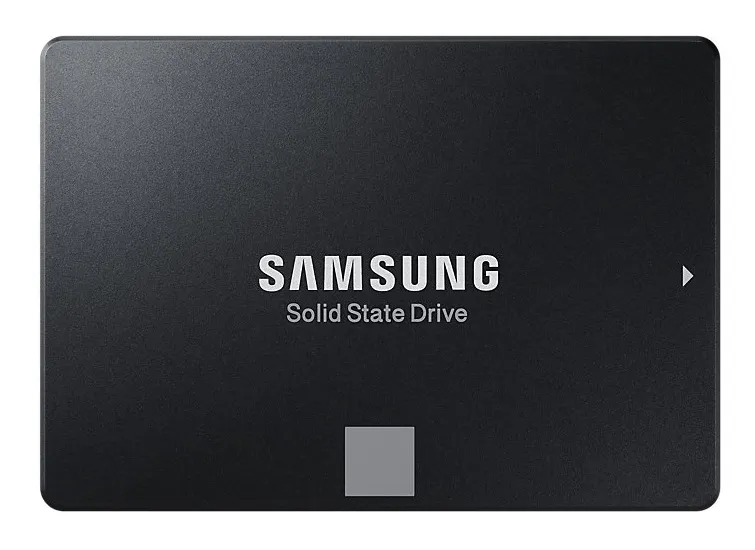
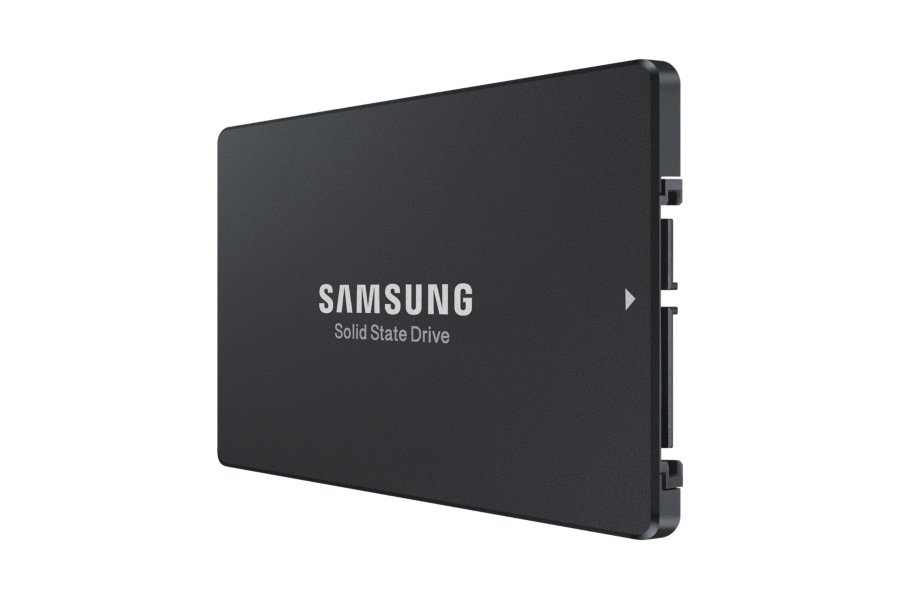
The Samsung 970 EVO Plus 2 TB (MZ-V7S2T0E) is a high-efficiency PCIe Gen3 x4 NVMe SSD that combines 3,500/3,300 MB/s sequential performance with 620K/560K IOPS and 1,200 TBW endurance, making it a strong fit for performance-sensitive client workstations, content creation, and heavy mixed I/O desktop workloads. Compared with the previous MZ-V7S2T0B/AM, it delivers a major generational uplift in sequential write speed from 2,500 to 3,300 MB/s and higher random IOPS, giving engineers faster sustained ingest and better responsiveness without moving beyond the Gen3 platform.
With an endurance rating of 1200 TBW and 0.33 DWPD, this 2TB SSD is designed to handle about 660 GB of writes per day over five years, which is more than sufficient for typical OS, office, and general business workloads. In practical terms, when used as a system or application drive under normal daily usage, it offers long service life with ample write headroom and should operate worry-free for many years. Its UBER rating of 1.0E-15 means the statistical rate of unrecoverable read errors is very low, supporting dependable day-to-day data access, while the 1.5 million-hour MTBF further reflects solid baseline reliability. This model does not include power-loss protection (PLP), so while it is well suited for standard client and business environments, systems requiring protection for in-flight data during sudden outages should pair it with stable power infrastructure such as a UPS.
1. The PCIe Gen3 x4 interface provides a mature, broadly compatible high-bandwidth path that removes storage as a bottleneck in virtualization clusters and transactional application servers.
2. With up to 3500 MB/s sequential read performance, the drive accelerates large-file access, cutting VM boot storms, backup restores, and analytics dataset loading times.
3. Its 620,000 K IOPS random read capability sustains dense mixed-workload environments, improving responsiveness for metadata-heavy databases, VDI, and high-concurrency web services.
4. Backed by Samsung V-NAND 3-bit MLC and rated at 0.33 DWPD, it is best suited for read-centric enterprise deployments where capacity efficiency matters more than sustained write-intensive endurance.
5. A typical latency of 30 µs helps reduce tail-response delays, supporting faster query completion and more predictable SLA performance in scale-out infrastructure.
Lower capacity reference: 1 TB Higher capacity reference: No larger-capacity SKU exists in the exact MZ-V7S / 970 EVO Plus series; 2 TB is the top-end model. Capacity positioning analysis: Within the MZ-V7S family, the 2 TB model is the clear sweet spot. Compared with the 1 TB version, it offers far more room for OS images, application stacks, hot data, and growth buffer, reducing the need for early drive expansion. At the same time, because there is no native higher-capacity model in this series, 2 TB effectively delivers the best balance of usable capacity, steady performance, and cost efficiency. It is best suited for mid-scale deployments, such as supporting 30 to 50 mixed-workload virtual desktops or a compact analytics node.
Q: Is MZ-V7S2T0E suitable for a write-heavy database server?
A: The MZ-V7S2T0E is generally not ideal for write-heavy database servers. With 0.33 DWPD and no PLP, it is better suited for client, read-focused, or mixed-light workload environments.
Q: How many full drive writes per day can it actually endure over its warranty period?
A: This model is rated for 0.33 DWPD, meaning about one-third of its 2 TB capacity can be written daily. That equals roughly 0.66 TB, or around 660 GB, per day.
Q: Does it include power loss protection (PLP) and why is that critical?
A: No, this SSD does not include power loss protection. PLP is critical in server environments because it helps prevent in-flight data loss and metadata corruption during unexpected power interruptions.
Q: What RAID level is recommended for this SSD?
A: For this SSD, RAID 1 or RAID 10 is typically recommended when redundancy and performance are required. RAID 5 may be less desirable due to extra write overhead and no PLP.