











 Secure payments
Standard refund policy
Trade Assurance
Secure payments
Standard refund policy
Trade Assurance
| Brand | Samsung |
|---|---|
| Model | 860 EVO |
| Capacity | 500GB |
| Usage Class | Client |
| Host Interface | SATA |
|---|---|
| Total Interface Bandwidth | 6 Gb/s |
| Form Factor | 2.5 |
|---|
| NAND Flash | TLC V-NAND |
|---|---|
| Drive Writes Per Day | 0.33 |
| Total Bytes Written | 300 TBW |
| Sequential Read | 550 MB/s |
|---|---|
| Sequential Write | 520 MB/s |
| Random Read IOPS | 98000 |
| Random Write IOPS | 90000 |
| Average Latency | 50 μs |
| Mean Time Between Failures | 1.5 Million Hours |
|---|---|
| Uncorrectable Bit Error Rate | 1.0×10⁻¹⁷ |
| Power Loss Protection | No |
| MPN | MZ-75E500 |
|---|
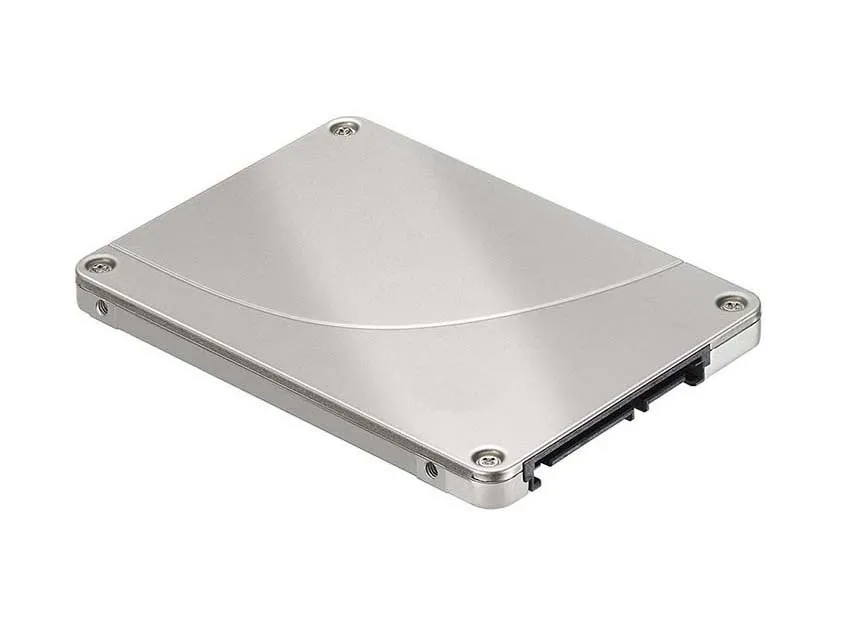
The Samsung 860 EVO 500GB (MZ7LH500HALU) delivers near-SATA-limit performance at 550/520 MB/s and 98,000/90,000 IOPS, making it a strong fit for boot, VDI, and read-heavy application tiers that need consistent latency from TLC V-NAND. Compared with the previous-generation MZ-75E500, it notably doubles endurance to 300 TBW and raises sequential read speed to 550 MB/s, giving architects a longer service life and slightly better top-end throughput in the same SATA footprint.
With an endurance rating of 300 TBW and 0.33 DWPD, this 500GB SSD is well suited for typical read-focused workloads such as OS boot, application hosting, office productivity, and general-purpose server use. In practical terms, for a system drive or light-to-moderate business workload, this level of endurance can comfortably support many years of normal operation, making it a dependable choice for long service life. From a reliability perspective, the 1.5 million-hour MTBF and 1.0E-15 UBER indicate solid enterprise-class media stability and a very low probability of uncorrectable bit errors during data reads. This model does not include power loss protection (PLP), so it is best positioned for environments where unexpected power interruption is controlled at the system or UPS level rather than for write-critical caching or transactional applications.
1. The SATA interface, paired with full bus-saturating sequential read performance, makes this drive a practical drop-in upgrade for enterprise servers and storage arrays that need predictable throughput without changing existing backplane infrastructure.
2. Its 98,000 K IOPS random read capability helps virtualized workloads, metadata-heavy applications, and boot storms complete faster by reducing queue buildup under highly concurrent access patterns.
3. A 0.33 DWPD endurance rating is well suited to read-centric enterprise deployments such as content delivery, analytics serving, and reference data stores where capacity efficiency matters more than heavy daily overwrite tolerance.
4. TLC V-NAND provides a strong balance of cost, density, and operational consistency, enabling enterprise fleets to scale usable flash capacity economically while maintaining dependable service behavior.
5. The 50 µs typical latency supports responsive transaction handling and steadier quality of service, helping latency-sensitive applications avoid the long tail delays that can impact user experience and SLA compliance.
Lower-capacity reference: 240GB Higher-capacity reference: 960GB Capacity positioning analysis: In this series, the 500GB model sits in the practical sweet spot. Compared with the 240GB version, it gives much more headroom for OS images, logs, metadata, and workload growth, reducing the risk of early capacity pressure. Compared with the 960GB option, it preserves broadly similar enterprise SATA performance while keeping acquisition cost and $/usable-deployment more controlled. That makes 500GB the best-balanced choice for mainstream infrastructure, especially for a mid-sized virtualization cluster, a compact database tier, or roughly 25 to 40 mixed application server boot and data volumes.
Q: Is MZ7LH500HALU suitable for a write-heavy database server?
A: Not ideally. With 0.33 DWPD, 300 TBW, TLC V-NAND, and no PLP, this 500GB SATA SSD is better suited for read-intensive or mixed workloads than write-heavy database servers.
Q: How many full drive writes per day can it actually endure over its warranty period?
A: It is rated for 0.33 DWPD, meaning about one-third of the 500GB capacity can be written daily over the warranty period, equivalent to roughly 165GB of writes per day.
Q: Does it include power loss protection (PLP) and why is that critical?
A: No, it does not include PLP. This matters because PLP helps protect in-flight data and metadata during sudden power failure, reducing corruption risk in enterprise or transactional environments.
Q: What RAID level is recommended for this SSD?
A: For most business applications, RAID 1 or RAID 10 is recommended to improve redundancy and read performance. RAID 5 is possible, but parity writes may increase endurance pressure.