











 Secure payments
Standard refund policy
Trade Assurance
Secure payments
Standard refund policy
Trade Assurance
| Brand | Samsung |
|---|---|
| Model | 850 EVO |
| Capacity | 1TB |
| Usage Class | Client |
| Host Interface | SATA |
|---|---|
| Total Interface Bandwidth | 6 Gb/s |
| Form Factor | 2.5 |
|---|
| NAND Flash | TLC V-NAND |
|---|---|
| Drive Writes Per Day | 0.14 |
| Total Bytes Written | 150 TBW |
| Sequential Read | 540 MB/s |
|---|---|
| Sequential Write | 520 MB/s |
| Random Read IOPS | 98000 |
| Random Write IOPS | 90000 |
| Average Latency | 50 μs |
| Mean Time Between Failures | 1.5 Million Hours |
|---|---|
| Uncorrectable Bit Error Rate | 1.0×10⁻¹⁷ |
| Power Loss Protection | No |
| MPN |
|---|
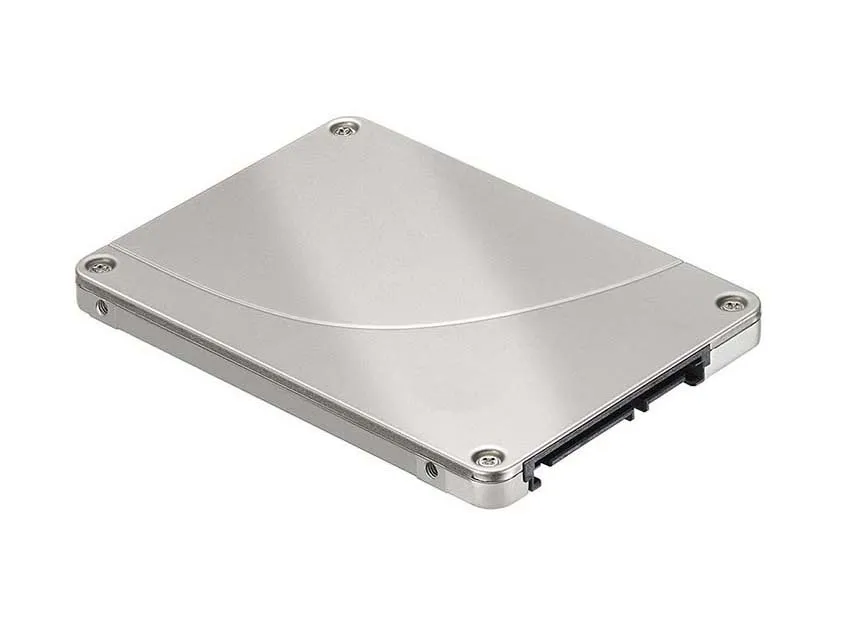
The Samsung 850 EVO 1TB (MZ7LN1T0) is best suited for read-intensive virtualization boot pools, content delivery edge caches, and high-capacity client or SMB server upgrades that need SATA compatibility with near-interface-limit performance, delivering up to 540/520 MB/s and 98K/90K IOPS. Compared with typical planar TLC SATA SSDs in its class, its TLC V-NAND design provides stronger sustained responsiveness and more dependable 150 TBW endurance at 1TB capacity, making it a more balanced choice for dense, read-dominant deployments.
With an endurance rating of 150 TBW and 0.14 DWPD, the MZ7LN1T0 is well suited for typical read-focused workloads such as OS boot, office applications, light caching, and general business PCs. In practical terms, a system writing around 40 GB per day would take more than 10 years to reach the rated TBW, giving procurement confidence for long-term use as a standard system drive. Its UBER rating of 1.0E-15 means the drive is designed for a very low probability of unrecoverable bit errors, supporting dependable data integrity in normal enterprise and commercial operation, while the 1.5 million-hour MTBF further reflects strong expected reliability. This model does not include power-loss protection, so it is best deployed in systems with controlled shutdown behavior or upstream power backup where in-flight write protection is not a strict requirement.
1. The SATA interface makes this drive a low-risk drop-in choice for broad server and storage-array compatibility, simplifying refresh projects without changing the existing backplane or controller stack.
2. Its sequential read performance helps accelerate OS boot, VM image loading, backup recovery, and large-file access in read-heavy enterprise environments.
3. The strong random read capability is well suited to virtual desktops, web serving, and metadata-intensive databases that must handle many small requests concurrently with stable responsiveness.
4. Its low DWPD rating positions it best for read-centric workloads such as boot drives, content repositories, and reference datasets rather than sustained write-heavy logging or caching tiers.
5. TLC V-NAND provides a cost-efficient balance of capacity and reliability, while the very low typical latency helps reduce application wait time and maintain predictable service quality.
Reference capacities in the same series: Lower capacity: 480GB Higher capacity: 1.92TB In this SSD family, the 1TB MZ7LN1T0 sits at the sweet spot for mainstream enterprise deployment. Compared with the 480GB model, it provides far more usable headroom for OS images, application binaries, logs, and short-term data growth, reducing capacity pressure and refresh frequency. Compared with the 1.92TB option, it usually delivers the best balance between acquisition cost, rack-level density, and already-sufficient enterprise SATA performance. It is especially well suited for a mid-size virtualization host, such as supporting about 35 to 50 mixed-use business VMs with comfortable operating margin.
Q: Is MZ7LN1T0 suitable for a write-heavy database server?
A: MZ7LN1T0 is not ideal for write-heavy database servers. With 0.14 DWPD, 150 TBW, and TLC V-NAND, it is better suited for read-intensive or mixed, light-write enterprise workloads.
Q: How many full drive writes per day can it actually endure over its warranty period?
A: This SSD is rated at 0.14 DWPD, meaning about 0.14 full drive writes per day. For a 1TB model, that equals roughly 140GB of writes daily during warranty coverage.
Q: Does it include power loss protection (PLP) and why is that critical?
A: No, it does not include power loss protection. PLP is critical in enterprise systems because it helps prevent in-flight data loss and metadata corruption during unexpected power interruptions.
Q: What RAID level is recommended for this SSD?
A: For this SSD, RAID 1 or RAID 10 is generally recommended when data protection and steady performance matter. RAID 5 may add extra write overhead, reducing endurance efficiency.