











 Secure payments
Standard refund policy
Trade Assurance
Secure payments
Standard refund policy
Trade Assurance
| Brand | Samsung |
|---|---|
| Model | 840 PRO |
| Capacity | 256GB |
| Usage Class | Client |
| Host Interface | SATA |
|---|---|
| Total Interface Bandwidth | 6 Gb/s |
| Form Factor | 2.5 |
|---|
| NAND Flash | MLC |
|---|---|
| Drive Writes Per Day | 0.16 |
| Total Bytes Written | 73 TBW |
| Sequential Read | 540 MB/s |
|---|---|
| Sequential Write | 520 MB/s |
| Random Read IOPS | 100000 |
| Random Write IOPS | 90000 |
| Average Latency | 50 μs |
| Mean Time Between Failures | 1.5 Million Hours |
|---|---|
| Uncorrectable Bit Error Rate | 1.0×10⁻¹⁷ |
| Power Loss Protection | No |
| MPN | MZ7PC256HAFV |
|---|
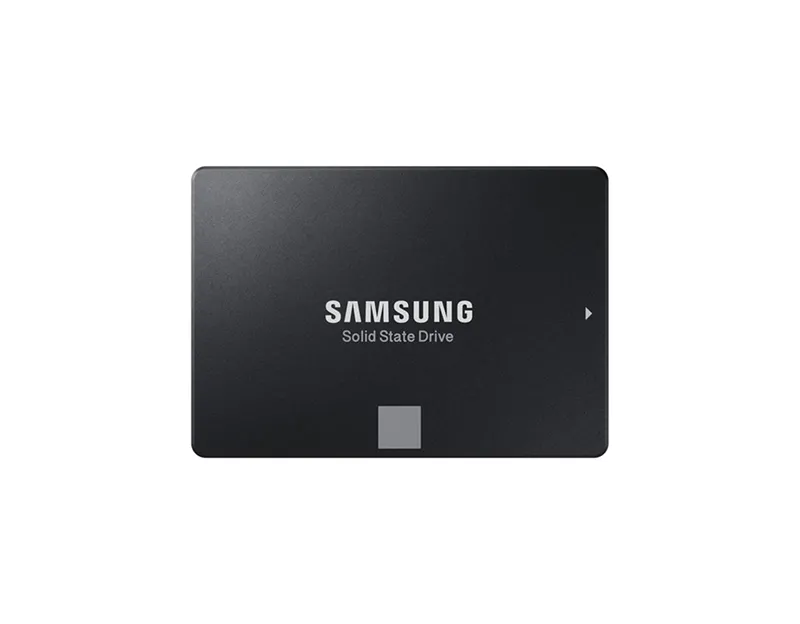
The Samsung 840 PRO 256GB (MZ7PD256HCGM) is a strong upgrade from the MZ7PC256HAFV, delivering up to 540/520 MB/s sequential throughput and 100,000/90,000 IOPS random performance for noticeably faster transactional and mixed-workload response on the same SATA interface. Its MLC NAND and 73 TBW endurance make it a more durable choice than typical client-grade SATA SSDs in its class, especially for write-intensive workstation, boot-volume, and read-cache deployments that need consistent low-latency performance.
With an endurance rating of 73 TBW and 0.16 DWPD, the MZ7PD256HCGM is well suited for light to moderate write workloads such as OS boot, application hosting, and general-purpose office or embedded system use. In practical terms, this level of endurance is typically more than sufficient for a system-drive role over many years, provided the workload is not heavily write-intensive. For reliability, the drive is rated at 1.5 million hours MTBF and an UBER of 1.0E-15, meaning the expected unrecoverable read error rate is extremely low and aligned with standard enterprise SSD expectations. This model does not include power-loss protection, so while it is dependable for stable-power environments, applications with frequent unexpected outages or in-flight write protection requirements should use a platform with UPS support or a drive with PLP.
1. The SATA interface makes this drive easy to deploy in legacy enterprise servers and storage arrays, enabling cost-effective upgrades without changing the existing backplane or controller architecture.
2. Its sequential read performance is well suited for boot volumes, virtual machine image access, and read-heavy application delivery where steady data streaming improves system responsiveness.
3. Strong random read capability helps accelerate transactional databases, VDI environments, and metadata-heavy workloads by reducing storage wait time under concurrent access.
4. The modest endurance rating indicates it is best aligned with read-centric enterprise use cases such as OS drives, caching tiers, and content serving rather than sustained write-intensive logging or analytics.
5. MLC NAND combined with very low typical latency delivers more consistent enterprise-grade response times, supporting predictable performance for latency-sensitive business applications.
For Samsung MPN MZ7PD256HCGM (256GB), the nearest lower capacity in the same family is typically 128GB, while the next higher capacity is 512GB. In this lineup, 256GB is the sweet-spot option: it gives noticeably more headroom than 128GB for OS growth, logs, patches, and overprovisioning, while avoiding the higher acquisition cost of 512GB when extra capacity is not yet required. Because sequential throughput and random IOPS are broadly similar across these tiers, 256GB delivers the best cost-performance balance for mid-scale deployments, such as a 12- to 16-node virtualization cluster boot tier.
Q: Is MZ7PD256HCGM suitable for a write-heavy database server?
A: Not recommended for a write-heavy database server. Its 0.16 DWPD endurance, 73 TBW rating, and lack of PLP make it better suited to read-focused or light mixed workloads.
Q: How many full drive writes per day can it actually endure over its warranty period?
A: This model is rated for about 0.16 full drive writes per day. For a 256GB SSD, that aligns with roughly 73 TB total writes across its standard endurance life.
Q: Does it include power loss protection (PLP) and why is that critical?
A: No, it does not include power loss protection. PLP is critical because it helps protect in-flight data and metadata during sudden outages, reducing corruption and consistency risks.
Q: What RAID level is recommended for this SSD?
A: RAID 1 or RAID 10 is generally recommended, depending on capacity needs. They provide better redundancy and predictable performance, while avoiding the extra write penalty of RAID 5/6.