











 Secure payments
Standard refund policy
Trade Assurance
Secure payments
Standard refund policy
Trade Assurance
| Brand | Intel |
|---|---|
| Model | X25-E Extreme (Single-Level Cell) |
| Capacity | 32 GB |
| Usage Class | Enterprise/High-Endurance |
| Host Interface | SATA 3Gb/s |
|---|---|
| Total Interface Bandwidth | 3 Gb/s |
| Form Factor | 2.5 inch 7mm |
|---|
| NAND Flash | 50nm SLC |
|---|---|
| Drive Writes Per Day | 10 |
| Total Bytes Written | 2000 TBW |
| Sequential Read | 250 MB/s |
|---|---|
| Sequential Write | 170 MB/s |
| Random Read IOPS | 35000 |
| Random Write IOPS | 3300 |
| Average Latency | 75 μs |
| Mean Time Between Failures | 2 Million Hours |
|---|---|
| Uncorrectable Bit Error Rate | 1.0×10⁻¹⁷ |
| Power Loss Protection | No |
| MPN | SSDSA2SH032G1 |
|---|
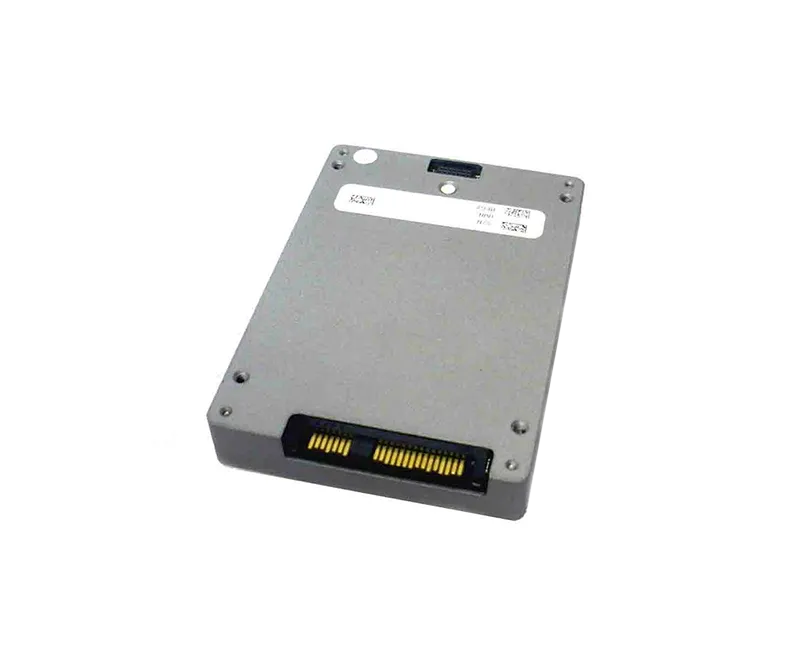
Compared with the earlier SSDSA2SH032G1, the SSDSA2SH032G1SB is the later X25-E revision, offering a more deployment-ready platform while preserving the series’ defining advantage: 50nm SLC endurance at 10 DWPD and 2000 TBW for write-intensive enterprise duty cycles. With 35,000 random-read IOPS, 250/170 MB/s throughput, and SATA 3Gb/s compatibility, it is a stronger choice than same-generation MLC SSDs for boot, logging, journaling, and metadata workloads where low latency consistency and media longevity matter more than capacity.
With an endurance rating of 2000 TBW and 10 DWPD, the SSDSA2SH032G1SB is designed for very write-intensive use far beyond normal client workloads. In typical system-boot, industrial control, or embedded logging applications, this level of endurance can comfortably support long-term operation for many years, making it a dependable choice for a system drive with substantial write headroom. For reliability, the drive is specified at 2 million hours MTBF and an UBER of 1.0E-16, meaning the expected rate of uncorrectable bit errors is extremely low and aligned with enterprise-grade data integrity expectations. This model does not include power-loss protection, so while it is highly robust for controlled-power environments, systems requiring protection against sudden power interruption should pair it with stable power design or backup power support.
1. The SATA 3Gb/s interface provides broad drop-in compatibility with legacy enterprise storage backplanes, making this drive a practical upgrade path for extending the life of existing servers and appliances.
2. With sequential read performance of 250 MB/s, the drive can accelerate boot, image loading, and large-file retrieval in embedded systems and read-centric enterprise workloads.
3. Random read throughput of 35,000 IOPS enables faster access to small-block transactional data, helping reduce application wait time in databases, metadata-heavy platforms, and virtualization environments.
4. Rated for 10 DWPD, this SSD is built for sustained write-intensive duty cycles, giving enterprises the endurance headroom needed for logging, caching, and industrial data capture without frequent replacement.
5. Built with 50nm SLC NAND and a typical latency of 75 µs, the drive delivers highly consistent response times and strong cell reliability for mission-critical systems where determinism matters more than raw capacity.
Lower capacity reference: 16 GB Higher capacity reference: 64 GB In this SSD family, the 32 GB model sits at the practical sweet spot. Compared with the 16 GB version, it offers much better headroom for OS images, logs, patch growth, and basic application footprints, reducing the risk of early capacity pressure. Compared with the 64 GB option, it preserves nearly the same enterprise-class read/write behavior and random IOPS profile while keeping acquisition cost and stranded capacity under tighter control. It is best suited for small-to-mid infrastructure nodes, such as a compact virtualization cluster hosting around 20 to 30 lightweight service instances.
Q: Is SSDSA2SH032G1SB suitable for a write-heavy database server?
A: It can fit write-heavy workloads thanks to 50nm SLC NAND, 10 DWPD, and 2,000 TBW. However, SATA 3Gb/s and no PLP make it better for protected, non-mission-critical database environments.
Q: How many full drive writes per day can it actually endure over its warranty period?
A: This model is rated for 10 full drive writes per day. With 32 GB capacity, that equals about 320 GB of writes daily, within its specified 2,000 TB total endurance.
Q: Does it include power loss protection (PLP) and why is that critical?
A: No, it does not include power loss protection. PLP is critical because it helps prevent in-flight data loss, mapping-table corruption, and unexpected downtime during sudden power interruptions.
Q: What RAID level is recommended for this SSD?
A: RAID 10 is generally recommended for this SSD, especially in database use. It provides strong redundancy and good write performance, while helping reduce risk when PLP is not available.