

 Secure payments
Standard refund policy
Trade Assurance
Secure payments
Standard refund policy
Trade Assurance
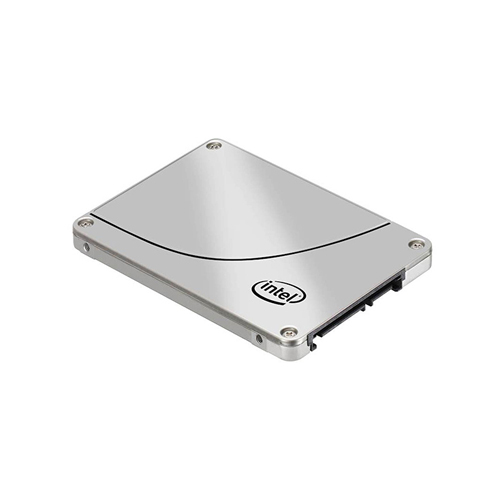
| Brand | Intel |
|---|---|
| Model | DC S3710 |
| Capacity | 800 GB |
| Usage Class | Enterprise/High-Endurance |
| Host Interface | SATA 6Gb/s |
|---|---|
| Total Interface Bandwidth | 6 Gb/s |
| Form Factor | 2.5 inch 7mm |
|---|
| NAND Flash | 20nm MLC |
|---|---|
| Drive Writes Per Day | 10 |
| Total Bytes Written | 16900 TBW |
| Sequential Read | 550 MB/s |
|---|---|
| Sequential Write | 460 MB/s |
| Random Read IOPS | 85000 |
| Random Write IOPS | 43000 |
| Average Latency | 55 μs |
| Mean Time Between Failures | 2 Million Hours |
|---|---|
| Uncorrectable Bit Error Rate | 1.0×10⁻¹⁷ |
| Power Loss Protection | Yes |
| MPN | SSDSC2BA800G4 |
|---|
Compared with the earlier SSDSC2BA800G4, the SSDSC2BA800G401 is the later-qualified DC S3710 revision, preserving the class-leading 10 DWPD and 16.9 PBW endurance while offering a more current enterprise firmware/BOM baseline for smoother lifecycle standardization. For write-intensive OLTP, logging, and virtualization tiers that still depend on SATA 6Gb/s, its 20nm MLC design, 550/460 MB/s throughput, and 85K/43K IOPS deliver a clear endurance and sustained-write advantage over typical read-optimized SATA SSDs in the same capacity class.
With an endurance rating of 16,900 TBW and 10 DWPD, the SSDSC2BA800G401 is designed for very write-intensive enterprise workloads and can comfortably handle frequent full-drive writes over its service life. In typical real-world use, this level of endurance means it can serve reliably for many years as a boot drive, database drive, or cache/storage tier without endurance becoming a practical concern. For enterprise reliability, the drive includes power-loss protection (PLP), which helps preserve in-flight data and metadata during an unexpected power interruption, reducing the risk of corruption and unplanned downtime. Its UBER of 1.0E-17 indicates an extremely low uncorrectable bit error rate, supporting high data integrity standards expected in business-critical storage environments.
1. The SATA interface enables straightforward drop-in deployment across mainstream enterprise servers and storage arrays, making upgrades low-risk and broadly compatible.
2. Its sequential read performance comes close to the practical ceiling of the bus, helping accelerate boot storms, backup restores, and large file retrieval.
3. Strong random read capability keeps transactional databases, virtual desktop pools, and metadata-heavy applications consistently responsive under concurrency.
4. A write endurance rating built for frequent full-drive rewrites makes it well suited to logging, caching, and other write-intensive enterprise workloads.
5. The combination of MLC NAND and very low typical latency prioritizes predictable response time, data retention, and sustained service quality in latency-sensitive production environments.
Lower capacity reference: 400 GB Higher capacity reference: 1.6 TB At 800 GB, the SSDSC2BA800G401 sits in the sweet spot of the series. Compared with the 400 GB model, it gives noticeably better headroom for OS images, logs, hot data, and future growth, reducing the risk of early capacity pressure. Compared with the 1.6 TB version, it keeps acquisition cost and fleet-level budget under tighter control while delivering essentially the same enterprise-class read/write and random IOPS behavior. It is especially well suited for mid-scale virtualization clusters, such as shared boot and application storage for about 40 to 60 virtual machines.
Q: Is SSDSC2BA800G401 suitable for a write-heavy database server?
A: Yes. With 10 DWPD endurance, 16,900 TBW, 20nm MLC NAND, and 55 µs typical latency, SSDSC2BA800G401 is well suited for write-intensive database and enterprise server workloads.
Q: How many full drive writes per day can it actually endure over its warranty period?
A: It is rated for 10 full drive writes per day across its warranty term. For an 800 GB drive, that equals about 8 TB of writes per day.
Q: Does it include power loss protection (PLP) and why is that critical?
A: Yes, it includes power loss protection. PLP helps preserve in-flight data and metadata during sudden outages, reducing corruption risk and improving reliability in transactional or enterprise storage environments.
Q: What RAID level is recommended for this SSD?
A: For most enterprise deployments, RAID 10 is the preferred choice. It delivers strong write performance, low latency, and redundancy, making it ideal for databases and other write-heavy applications.